Massage guns compared: what actually separates a good one
The price range runs from thirty dollars to six hundred for devices that look nearly identical, and the two specifications that genuinely separate them are the ones almost nobody advertises.
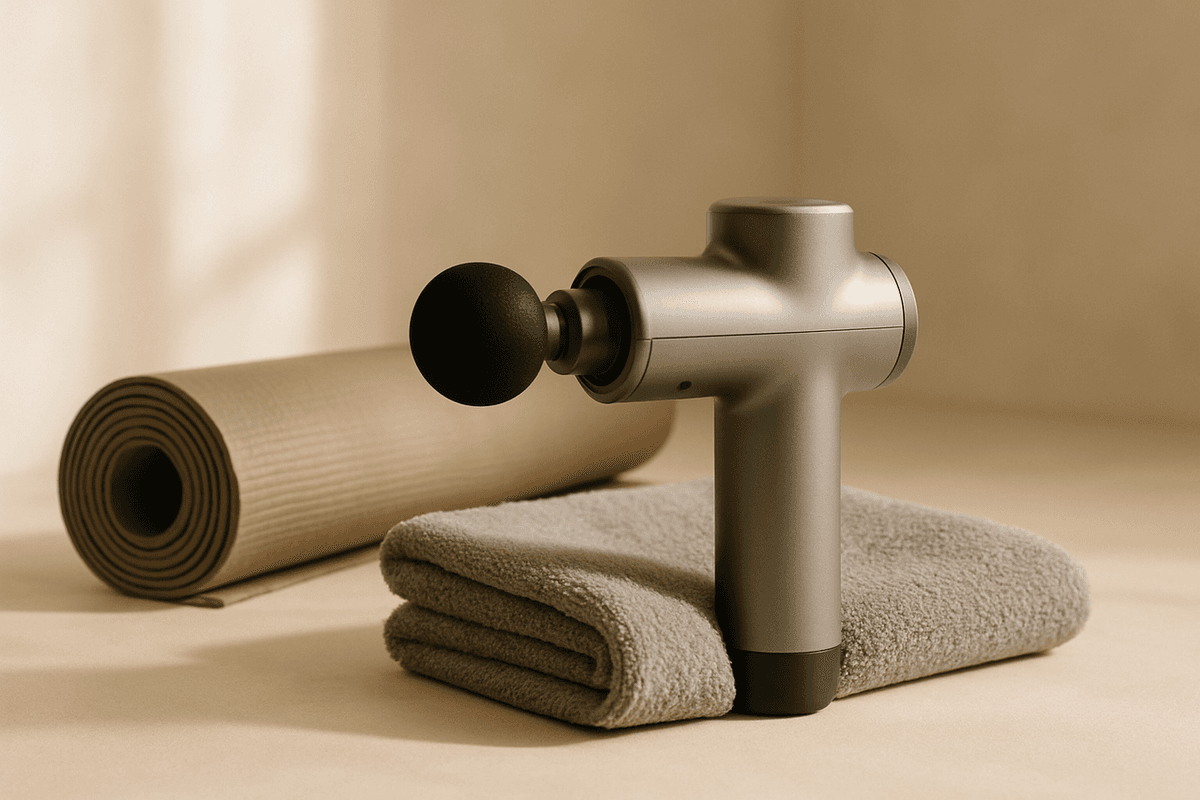
Short answer: Stall force and amplitude separate a good one from a toy: whether the motor keeps going when you lean in, and whether the head travels far enough to reach muscle. Percussions per minute, the advertised number, matters least. Land in the mid tier at $150 to $300; above that you buy quietness and build.
Two specifications decide whether a massage gun is any good, and percussions per minute is not one of them. Amplitude, meaning how far the head actually travels, and stall force, meaning how hard you can press before the motor gives up, are what separate a device that reaches muscle from one that buzzes on skin. Above roughly the mid tier you are mostly buying quietness, battery life and finish, because the evidence for what percussion does caps out well before the price does.
We have not tested these devices and will not pretend otherwise. What follows is what the specifications mean, what each price tier genuinely buys, and how to avoid the failure mode of this category.
Massage gun tiers at a glance
| Budget | Mid | Premium | |
|---|---|---|---|
| Rough price | $40 to $120 | $150 to $300 | $350 to $600 |
| Amplitude | Often 8 to 10 mm | 10 to 12 mm | Up to about 16 mm |
| Stall force | Low, stalls under real pressure | Usually adequate | High |
| Noise | Frequently loud | Moderate | Quietest |
| Battery | Short, often non-replaceable | Several hours | Long, sometimes swappable |
| Build and warranty | Variable, often a year | Solid, one to two years | Best, longest |
| Worth it if | You want to try the idea | You will use it weekly | Noise or daily use matters |
The two specs that actually matter
Amplitude and stall force, and only one brand family made amplitude famous.
Amplitude is how far the head travels on each stroke, usually 8 to 16 mm. It is the difference between percussion that reaches into tissue and vibration that sits on the surface. Most guns cluster around 10 to 12 mm; the deepest consumer devices reach roughly 16 mm, which is the design argument the Therabody line is built on.
Stall force is how much pressure the motor tolerates before it stops. This is the spec that quietly ruins cheap guns: you lean in on a tight calf, the head stalls, and the device is doing nothing. A gun with impressive stated speed and low stall force is a toy with good marketing.
Percussions per minute is the number that gets advertised and matters least. Every device in this category covers a similar range, and faster is not better once amplitude and stall force are adequate.
What each tier buys you
Budget guns are genuinely useful for finding out whether you will use one at all, and the honest risk is stall force and durability rather than the idea itself. If it stalls whenever you press properly, you have learned nothing about percussion and quite a lot about that gun.
Mid-tier guns are where most people should land. Adequate amplitude and stall force, tolerable noise, batteries that last, and warranties that mean something. This is the tier where the device stops being the limiting factor.
Premium guns, including the Therabody and Hyperice flagships, buy deeper amplitude, the quietest motors, better ergonomics for reaching your own back, app connectivity that most people use twice, and the best warranties. Quietness is the underrated one: a gun you can use during a phone call or beside a sleeping household gets used more.
The evidence caps what any of them do
This is the part sellers leave out.
Percussion therapy has modest support for reducing perceived muscle soreness and short-term range of motion, and that is roughly where the evidence stops. It is comparable to other recovery modalities rather than superior to them, and our which recovery tool for which problem guide ranks the options by what the research actually shows, with massage coming out ahead of most gadgets.
What that means practically: the ceiling is set by the modality, not the device. A $600 gun cannot deliver more than percussion delivers. If you are choosing between a premium gun and a monthly massage, our massage gun vs a professional massage comparison makes that case honestly, and foam roller vs massage gun covers the cheaper alternative that does much of the same job.
How to use one without hurting yourself
Short, moving, and off the wrong places.
Keep it moving over a muscle rather than parked on one spot, spend a minute or two per area rather than ten, and let the weight of the device do the work instead of pressing hard. Avoid bone, joints, the front of the neck, the kidneys and anywhere with an injury, varicose veins or numbness. If an area hurts sharply rather than feeling like pressure, that is a stop signal.
Nobody needs six attachments. Most people use the ball and the flat head and lose the rest.
FAQ: massage guns
Which massage gun specification matters most? Stall force first, then amplitude. Percussions per minute is the number that gets advertised and changes the least between devices.
Is an expensive massage gun worth it over a cheap one? Up to the mid tier, yes, because cheap guns stall under real pressure. Above that you are buying quietness, battery and build rather than a better effect.
Do massage guns actually work? For perceived soreness and short-term mobility, modestly, and comparably to other recovery methods. The bigger claims about flushing lactic acid or breaking down scar tissue are not supported.
Can I use a massage gun every day? Most people can, in short sessions on muscle. Daily long sessions on the same spot is how people give themselves bruising rather than recovery.
Where should you never use a massage gun? Bone, joints, the front of the neck, the lower back over the kidneys, and any area with an injury, numbness or vascular problems.
The bottom line on massage guns
Buy for stall force and amplitude, ignore the percussions-per-minute headline, and land in the mid tier unless noise or daily use pushes you higher. The device is not the limiting factor once it stops stalling, because what percussion delivers is modest and well documented, and no amount of money moves that ceiling.