Which recovery tool for which problem: a decision guide
Sauna, cold plunge, massage, compression and foam rolling all get sold as 'recovery', as if they were interchangeable. A meta-analysis ranked them against each other, and the ranking is not what the marketing budgets would suggest.
Short answer: Massage is the best-evidenced tool for soreness and perceived fatigue, ahead of cold water immersion, compression and stretching in a 2018 meta-analysis. Cold works for immediate alertness but blunts strength gains if used in the hours after lifting. Heat suits stiffness and sleep. Sleep outranks all of it.
Massage is the best-evidenced tool for soreness and perceived fatigue, cold water helps soreness but blunts strength gains if used right after lifting, and sore, tired, stiff, stressed and sleeping badly are five different problems with five different best answers. “Recovery” has become a category rather than a question, and the tools inside it get sold as interchangeable. They are not. They do different things, some of them work against each other, and one of them is consistently better than its marketing budget would suggest.
Researchers have actually run this comparison rather than leaving it to opinion, which makes this one of the easier decisions in wellness to make well.
Work out what you are actually trying to fix, then pick.
What did the comparison find?
Massage came out on top, ahead of the flashier options.
The useful reference is Dupuy and colleagues in Frontiers in Physiology in 2018, a systematic review and meta-analysis taking an evidence-based approach to choosing post-exercise recovery techniques, comparing them for muscle soreness, perceived fatigue, muscle damage and inflammatory markers.
Massage performed best overall for reducing delayed-onset muscle soreness and perceived fatigue. Cold water immersion and compression garments showed benefits too, generally smaller. Stretching and active recovery performed poorly for these particular outcomes.
The caveats are the usual ones: pooled studies with varied protocols, mostly in trained young men, and none of these interventions can be blinded. But it is a genuine head-to-head, and the ranking is stable enough to plan around. Our guide on whether massage actually helps recovery covers what massage does and does not do.
Problem to recovery tool at a glance
| Your problem | Best first choice | Why |
|---|---|---|
| Sore muscles after training | Massage | Ranked highest for soreness and perceived fatigue |
| Sore, but building strength | Massage or heat, not cold | Cold after lifting can blunt adaptation |
| General fatigue, heavy legs | Massage or compression | Both showed benefit for perceived fatigue |
| Stiffness, limited range | Movement, then heat | Loading and warmth beat passive stretching |
| Stress, wound up | Sauna, breathwork, massage | Different mechanism from muscle recovery |
| Sleeping badly | Heat before bed, not cold | Cold is alerting; heat suits the wind-down |
| Need to feel alert now | Cold | Its most reliable, most immediate effect |
| Actual injury or persistent pain | None of these; get assessed | Recovery tools are not treatment |
When does cold actively work against you?
After resistance training, if you want the adaptation.
This is the one genuine trap in the category. Roberts and colleagues in The Journal of Physiology in 2015 found that routine cold-water immersion after resistance training blunted long-term gains in muscle mass and strength.
The mechanism is straightforward: the inflammatory signal you are suppressing is part of what tells the muscle to adapt. Reducing soreness and building muscle are, in this specific window, competing goals.
So the rule is about timing rather than avoidance. If you are training for strength or size, keep cold away from the hours after a lifting session and use it on rest days or after endurance work instead. If you have a competition tomorrow and need to feel good regardless of long-term adaptation, cold is a reasonable trade. Our guides on whether a cold plunge after your workout blunts gains and what the cold plunge evidence shows cover it.
What is heat actually best for?
Not muscle recovery, mostly.
A sauna after training feels excellent and there is a decent case for heat acclimation and cardiovascular benefit, but it is not the tool with the strongest evidence for soreness specifically. Our guide on whether a sauna after training makes you fitter covers what heat contributes.
Where heat earns its place is stiffness, general relaxation, sleep, and simply making a recovery day pleasant enough that you take one. Those are real outcomes even if they do not show up in a soreness meta-analysis.
Unlike cold, heat does not appear to blunt training adaptation, which makes it the safer default on lifting days. Our guides on sauna vs exercise and the right order for contrast therapy cover the wider picture.
What about the gadgets?
Real but modest, and mostly convenience.
Compression garments and pneumatic boots showed genuine if modest benefits for perceived fatigue and soreness. Whether that justifies the price of a boot system rather than a pair of compression tights is a personal call. Our guide on whether compression boots actually work covers the evidence.
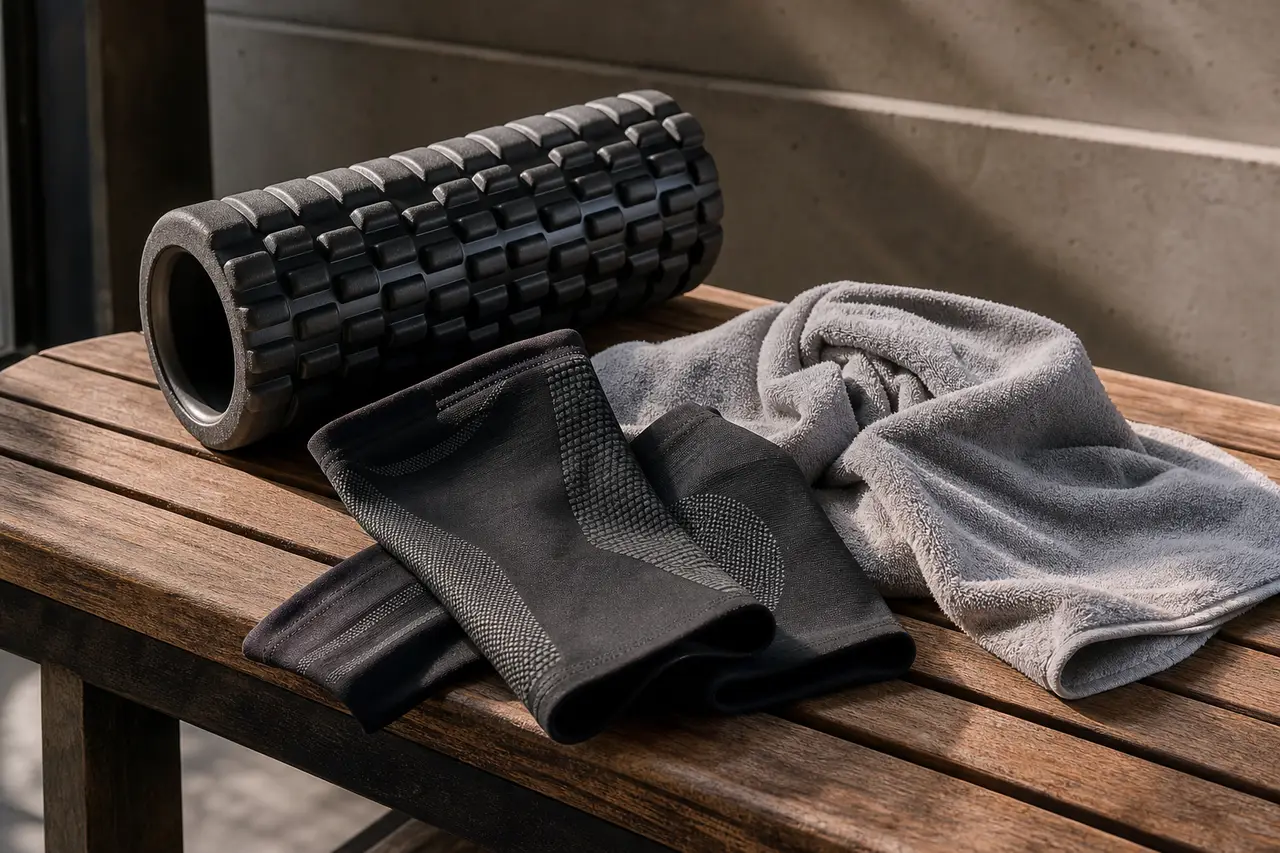
Foam rollers and massage guns produce short-term improvements in range of motion and some reduction in soreness. They are cheap, convenient, and a reasonable substitute for a massage you are not going to book weekly. They are not equivalent to hands-on work. Our comparison of foam roller vs massage gun covers choosing between them.
Stretching is the one worth demoting. It performed poorly for soreness and fatigue in the comparison, and separately does not prevent injury the way strength training does. It has its own value for range and for how it feels; it is just not a recovery tool. Our guides on whether you should stretch before a workout and whether assisted stretching is worth it cover it.
What if the problem is not muscular?
Then none of this ranking applies.
If you are wrung out rather than sore, the target is arousal and sleep, not tissue. Heat, slow breathing, and simply doing nothing for an evening outperform any of the mechanical tools for that, and they are mostly free. Our guides on breathwork benefits and whether massage helps you sleep cover what is supported.
And the honest framing for the whole category: sleep is the recovery intervention with the largest effect size and no price tag, and none of the tools above compensate for consistently not getting it.
If you have pain that persists, worsens, or comes with numbness or weakness, stop optimising recovery and get assessed. Our comparison of massage vs physical therapy covers when that is the right move.
How would you build a week?
Match the tool to the day.
On hard lifting days, skip the cold and use heat or nothing. On endurance or competition days, cold is fine and useful. On rest days, whatever you enjoy, since adherence beats optimisation.
Book hands-on massage for the weeks you are actually sore rather than on a fixed schedule, since that is when it has the most to work with. Use the cheap tools, rolling and compression, as the daily filler between.
Our guide on how to build a weekly recovery routine covers the structure, and recovery for runners covers the endurance-specific version.
FAQ: recovery tools
Is contrast therapy better than either alone? It feels good and the evidence for it beating cold alone is not strong. Our contrast therapy guide covers what is supported.
How soon after training should I use a recovery tool? For cold, the timing matters most and the concern is the few hours after resistance work. For massage, within a day or two of soreness appearing is sensible.
Is an ice bath better than a cold shower? For a full cold stimulus, immersion is more consistent. For most people most of the time the difference is smaller than the price gap. Our cold plunge vs cold shower comparison covers it.
What if I can only do one recovery habit? Sleep. After that, massage when sore and heat when stiff or stressed.
The bottom line on what to use when
A head-to-head meta-analysis put massage ahead of cold water immersion, compression, and stretching for reducing soreness and perceived fatigue, which is close to the reverse of the attention each gets.
Match the tool to the problem: massage for soreness, compression for heavy legs, heat for stiffness and stress, cold for immediate alertness. Keep cold away from the hours after lifting if you want the adaptation, demote stretching from the recovery list, and remember that sleep outranks all of it.