Bathhouses and spas as a trans or non-binary guest
Most of the anxiety is about a policy nobody publishes, at a venue that has usually never been asked. The practical answer is that formats vary enormously, and picking the right format solves more than picking the right venue does.
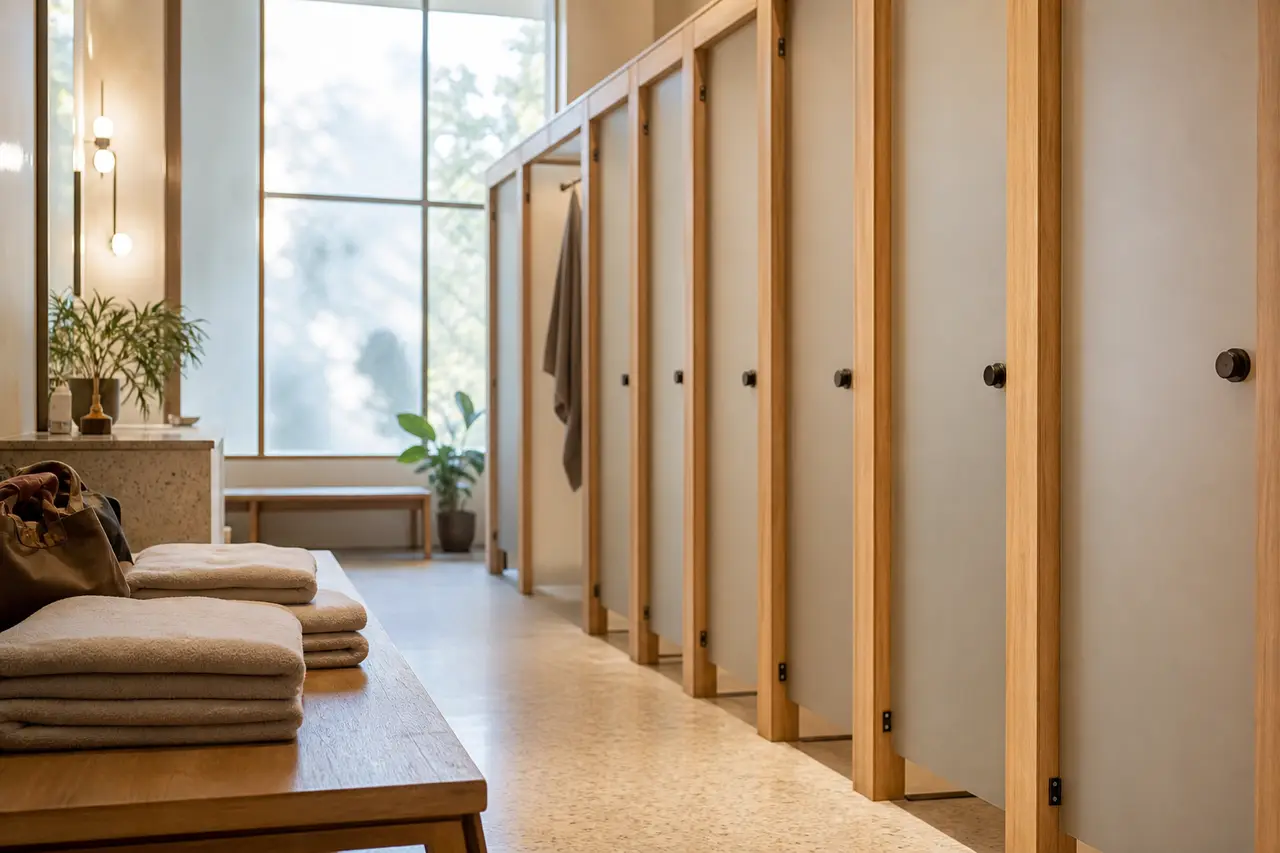
Short answer: Format decides more than policy. Private sauna cabins, swimwear-required Nordic-style spas, mixed-gender bathhouses and treatment-room massage all avoid segregated nude bathing, and they cover most of what the US offers. For segregated venues, email the facility questions ahead and get the answer in writing before you travel. Go off-peak.
The practical problem is narrow and specific: a lot of bathhouse and spa culture runs on gender-segregated, often nude, facilities, and almost none of those venues publish a policy about it.
That silence is what makes it stressful, not usually the venues themselves. Most have simply never been asked and will answer a direct question straightforwardly.
The more useful realisation is that format decides most of it. Several common wellness formats do not involve segregated nude bathing at all, and choosing one of those sidesteps the question entirely rather than negotiating it. This is a practical guide, not a legal one.
Which formats avoid the question entirely?
More than people expect.
Private sauna cabins and recovery studios. You book a room, you are the only person in it, and there is no communal changing at all. This is the simplest option and it is now the dominant model in US recovery studios. Our comparison of private vs communal sauna covers the trade-offs.
Swimwear-required venues. Many US bathhouses, Nordic-style spas, and hotel spas are swimwear-required and mixed-gender throughout. No segregated changing, no nudity, no question.
Treatment-only bookings. A massage in a private treatment room involves a single practitioner, a locked door, and draping. Our guide on mobile massage vs going to a studio covers the at-home option, which removes the venue entirely.
Mixed-gender bathhouses. Some traditional venues run mixed sessions or mixed hours alongside segregated ones.
Which formats are segregated, and how?
Mostly the traditional Asian and Eastern European ones.
Korean spas typically have gender-segregated nude bathing areas plus a large mixed-gender common area where everyone wears provided uniform clothing. That structure matters: the jjimjilbang floor, the heated rooms, the food hall are usually all mixed and clothed, so you can use most of the venue without entering the segregated pools.
Russian banyas vary; many US venues run swimwear-required mixed sessions alongside traditional segregated hours. Hammams are usually segregated by gender or by hours, with wraps or underwear rather than full nudity.
Finnish-tradition saunas in the US are usually mixed and swimwear-required, unlike in Finland. Our guides to your first bathhouse or Korean spa, your first banya, and your first hammam describe how each is laid out.
Venue formats at a glance
| Format | Segregated? | Nudity |
|---|---|---|
| Private sauna cabin | No, you have the room | Your choice |
| Recovery studio, booked slot | No | Swimwear |
| US Nordic-style spa | Usually not | Swimwear required |
| Hotel spa | Usually not | Swimwear |
| Korean spa, common floor | No, mixed | Provided uniform |
| Korean spa, bathing area | Yes | Usually nude |
| Hammam | Usually, or by hours | Wrap or underwear |
| Banya | Varies; many US venues mixed | Often swimwear |
| Treatment room massage | No | Draped throughout |
What should you ask before booking?
Ask about facilities, in writing.
Email rather than call if you would rather have the answer documented and not have the conversation live. Useful questions: are the changing rooms and bathing areas gender-segregated or mixed; is swimwear required, optional, or not permitted; are there private changing cubicles; and are there any mixed-gender or swimwear-required hours.
Those are ordinary facility questions that any guest might ask, and they get you the information without requiring you to disclose anything.
If you want to be more direct, asking whether the venue has a policy for trans and non-binary guests is a reasonable question and some venues have a clear, welcoming answer ready. Getting it in writing is worth doing before you travel any distance. Our guides on finding a good studio in a new city and reading studio reviews cover general vetting.
What does the legal picture look like?
Varies by state, and is not the practical lever.
Public accommodation laws differ substantially between states, and some states and cities include gender identity as a protected characteristic while others do not. Local law is worth knowing if you are somewhere unfamiliar.
In practice, though, law is rarely what determines how a visit goes. Venue culture, staff training, and the format of the facility do far more, which is why the format question above is the more useful one.
If you want reassurance before booking, look for venues that state a policy on their site, that use inclusive language in their booking flow, or that have private options. Community recommendations tend to be more reliable than either policy pages or reviews for this specific question.
Are there physical considerations worth knowing?
A few, and they are about healing rather than identity.
If you have had any surgery, the standard post-operative rules apply and they are the same ones anyone would get: no communal water, hot tubs, plunge pools, or swimming until incisions are fully healed and your surgeon has cleared you, because warm shared water and an open wound is an infection route. Our guide on wellness after surgery covers the timelines and what to ask.
Fresh scars are also sun-sensitive and can react to vigorous exfoliation, so skip the hammam scrub over recent work. Our guide on using a sauna with a tattoo covers the same healing-skin logic.
Some hormone therapies and other medications affect blood pressure, heat tolerance, or clotting risk. That is worth a sentence to your doctor before starting a regular heat habit, in the same way it would be for anyone on similar medication. Our guides on sauna and the heart and what to do if you feel faint in a sauna cover the general cautions.
What makes a first visit easier?
Off-peak, private, and short.
Go at the quietest hours. Weekday mornings and mid-afternoons are far less busy than evenings and weekends at almost every venue, which makes everything more comfortable.
Start with a private or swimwear-required format at a new venue so you can see how the place operates without committing to a communal space. If it goes well, you know more about the venue than any policy page would have told you.
Bring your own robe and sandals if that helps you feel more comfortable; venues almost never object. And keep the first visit short, because a good hour beats a long visit you spend braced. You can browse day experiences by city to see which formats exist near you.
FAQ: trans and non-binary guests
Are Korean spas usable if I skip the bathing area? Often yes. The common floor with heated rooms, lounging areas, and food is mixed-gender and clothed at most jjimjilbangs, and it is a large part of the experience.
Will staff ask questions? Usually not. Front desk interactions are typically a locker key and a wristband. Venues with segregated areas may direct you, which is the moment the format question matters.
Is a private cabin much more expensive? Per hour, yes, though sessions are shorter. Our guide on what a session costs covers typical pricing.
What if something goes wrong at a venue? You can raise it with management and leave a factual review. Our guide on what to do if a treatment goes wrong covers escalation routes.
The bottom line on choosing a venue format
Format decides more than policy does. Private cabins, swimwear-required spas, mixed-gender bathhouses, and treatment-room bookings all avoid segregated nude bathing entirely, and they cover most of what is available in the US.
For venues that are segregated, email ahead and get the facility answer in writing before you travel. Go off-peak, start private, keep the first visit short, and treat post-surgical healing with the same communal-water caution anyone would get.