Where to find a cold plunge: gyms, studios, spas and bathhouses
Four different kinds of venue now have a cold tub, and they differ enormously in water temperature, hygiene, whether anyone is watching, and whether you can stay long enough to do anything useful.
Short answer: Recovery studios and bathhouses run properly cold water, 3 to 12°C, and maintain it; gyms vary the most; hotel plunges are often 15 to 20°C, a cool pool rather than a cold plunge. Ask two questions before you go: what temperature is it kept at, and how is the water filtered and sanitised.
Cold plunges have spread from recovery studios into gyms, hotel spas, and bathhouses, and the tub in each of those is a different product. Some are properly cold and well maintained. Some are a lukewarm tub nobody has tested this week.
Since the two things that determine whether a plunge does anything are temperature and how long you can stay, and the thing that determines whether it is a good idea is water hygiene, the venue type matters more than the marketing.
Here is what each kind of place actually offers, and the two questions worth asking before you get in. We don’t take placement fees, so nothing here points you anywhere.
The four venue types
Each optimises for something different.
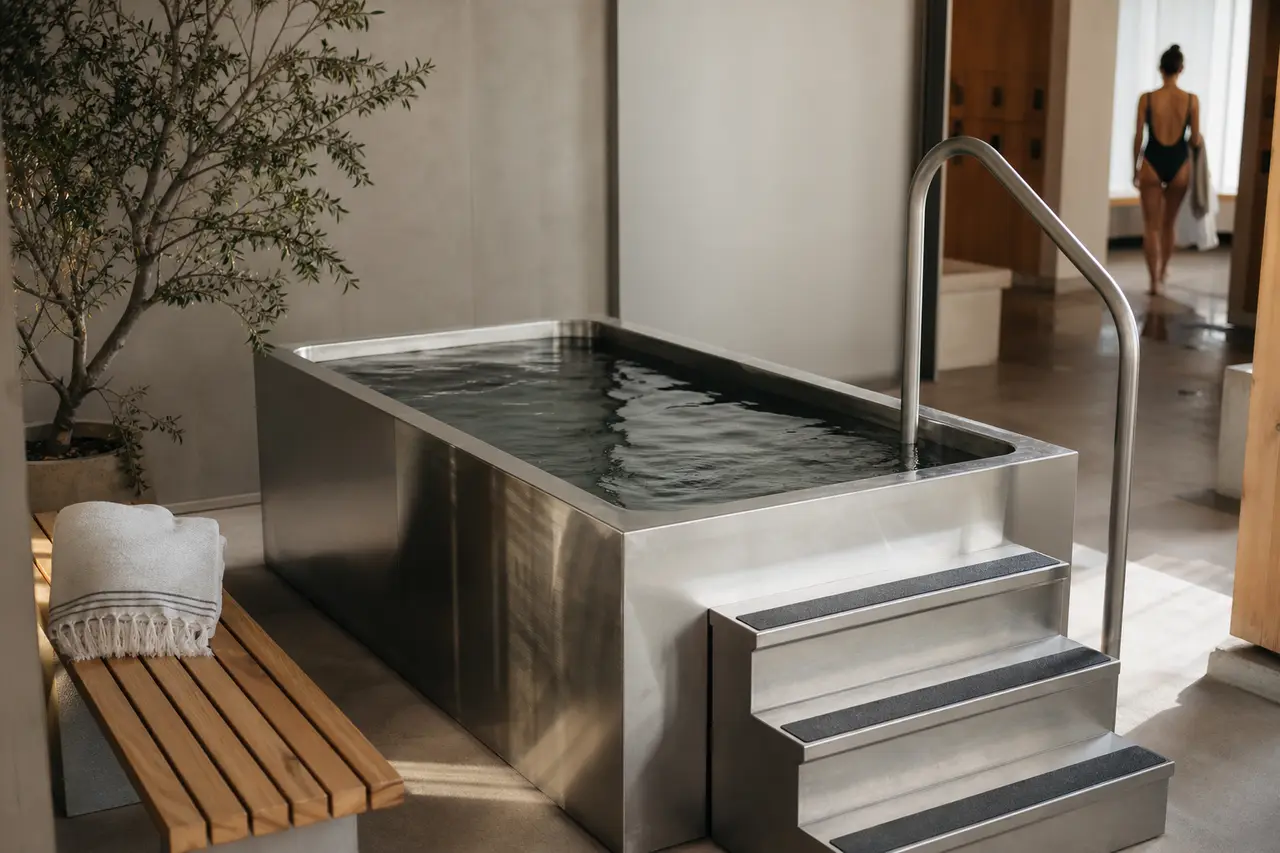
Recovery studios are built for this. Expect a properly chilled tub, usually 3 to 10°C, with filtration and ozone or UV, alongside a sauna. Sessions are timed and booked, which is efficient and can feel rushed.
Gyms increasingly have a tub, often included in membership. Quality varies more here than anywhere: some are excellent, some are a barrel that runs warm and gets tested rarely. It is the cheapest access if your gym already has one.
Bathhouses and Nordic spas treat cold as one part of a hot-cold-rest cycle, with hours rather than a booked slot. This is the best format for actually practising contrast, and usually the best-maintained water.
Hotel spas frequently label a cool pool a plunge. Many sit at 15 to 20°C, which is pleasant and not the same stimulus. Worth checking rather than assuming.
Cold plunge venues at a glance
| Typical temp | Time you get | Hygiene | Cost | |
|---|---|---|---|---|
| Recovery studio | 3 to 10°C | Booked slot, 30 to 60 min | Usually good, purpose-built | $30 to $60 |
| Gym | Highly variable | Unlimited during your visit | Most variable | Included in membership |
| Bathhouse / Nordic spa | 5 to 12°C | Hours; full cycle | Usually good, staffed | $40 to $80 day pass |
| Hotel spa | Often 15 to 20°C | Hours | Usually fine | Guest access or day rate |
| Outdoor / natural water | Seasonal | Yours | Not applicable; other risks | Free |
What two questions should you ask?
Temperature, and how the water is treated.
“What temperature is the plunge kept at?” A venue that runs it properly knows the number and will tell you immediately. A shrug is informative. Anything above about 15°C is a cool pool, which is fine but will not produce the effect you came for.
“How is the water filtered and sanitised, and how often is it changed?” Shared cold water is still shared water. Purpose-built tubs run filtration with ozone, UV, or chlorine and log their checks. A barrel that gets drained occasionally is a different proposition.
Those two answers separate a good venue from a bad one faster than any review. Our guides on choosing a sauna or cold plunge studio and reading studio reviews cover the wider vetting, including the customer photos that show you the actual water.
Which format suits what?
Depends whether you want a plunge or a practice.
If you want a quick cold exposure after training, a gym tub or a booked studio slot is efficient. You are in and out, and the whole thing takes minutes. Just keep cold away from the hours after heavy resistance training if you are chasing strength. Our guide on whether a cold plunge after your workout blunts gains covers the timing.
If you want the actual hot-cold practice, with multiple rounds and proper rest between, a bathhouse or Nordic spa is the only format that gives you the time. Our guides on the right order for contrast therapy and planning a wellness day cover the sequencing, and private vs communal sauna covers the format trade-off.
If you are new and nervous, a studio with a booked private slot removes the audience, which is worth more than most people expect on a first attempt.
What about doing it at home?
Cheaper than people think, with a caveat.
A bathtub with ice is the standard entry point and it works: the water is properly cold, it costs the price of ice, and you can stop instantly. Our guide on starting a home cold plunge safely covers the method.
Dedicated home tubs with chillers have come down in price substantially, and the ongoing job is water treatment rather than ice runs. Our guide on home cold plunge and sauna costs covers the numbers.
The caveat is supervision. At home there is nobody nearby, and the cold shock response is the genuinely risky part. Tell someone, never plunge after alcohol, and get out at the first sign of trouble. Our guides on cold plunge safety and how to breathe during a cold plunge cover both.
What about natural cold water?
A different activity with different risks.
Lakes, rivers, and the sea are free and, for many people, far more enjoyable than a stainless tub. They also carry risks a studio does not: currents, cold water shock away from a handrail, no supervision, and water quality that varies.
Never go alone, never enter from height, know your exit before you get in, and treat the first 30 seconds as the dangerous part. Our guide on wild swimming covers doing it safely.
It is also seasonal in most of the country, which is why the tub exists.
How do you find one near you?
Search by venue type, not just by “cold plunge”.
Searching a modality plus a city surfaces whoever is advertising. It is usually more useful to look at what exists in the city and filter yourself, because a bathhouse, a recovery studio, and a gym with a tub will all match the same search and are not the same thing.
You can browse day experiences by city to see the venues in around two dozen US cities with the modality mix for each, which tells you the format before you click.
Then apply the checks above, and call the top candidate. Our guide on finding a good sauna or studio in a new city covers the full method, which takes about ten minutes.
For some cities we have already done that filtering: the honest city guides to Chicago, Miami, and San Francisco name specific venues with streets and official sites.
FAQ: finding a cold plunge
How cold does the plunge actually need to be? Most of the research uses roughly 10 to 15°C, and colder is not automatically better. A tub at 15°C is legitimate; a pool at 20°C is a cool pool. Our guide on how cold and for how long covers the dosing.
Is a gym tub hygienic? Sometimes excellent, sometimes not. Ask how it is treated and look at the water. This matters more if you are immunosuppressed or have a wound.
Do I need a sauna alongside the plunge? Not necessarily, though contrast is more pleasant and is what most bathhouses are built around. Our guide on sauna or cold plunge if you can only do one covers choosing.
Can I just take a cold shower? For most purposes it is a reasonable substitute and vastly cheaper. Our comparison of cold plunge vs cold shower covers what you gain from immersion.
The bottom line on plunge venues
A gym tub, a studio plunge, a bathhouse cold pool, and a hotel plunge are four different products. Studios and bathhouses are usually properly cold and properly maintained; gyms vary the most; hotel plunges are often 15 to 20°C, which is a cool pool rather than a cold plunge.
Ask two questions before you go: what temperature is it kept at, and how is the water filtered and sanitised. A venue that runs it well answers both instantly, and those two answers tell you more than any review.
One venue type worth knowing by name: our explainer on what a recovery lounge is covers the format that bundles all of these under one roof.
If you want to see what we found in your city, start at our city directory, and read the statistics page for what those counts can and cannot tell you.