Wellness on statins: muscle aches, hard exercise, saunas and the CoQ10 pitch
Atorvastatin and its relatives are among the most-taken tablets on earth, and the one side effect everyone has heard of is the muscle ache. The wellness menu sells three responses: train harder, sweat it out, and buy the supplement. Only one of those has a trial, and it found nothing.
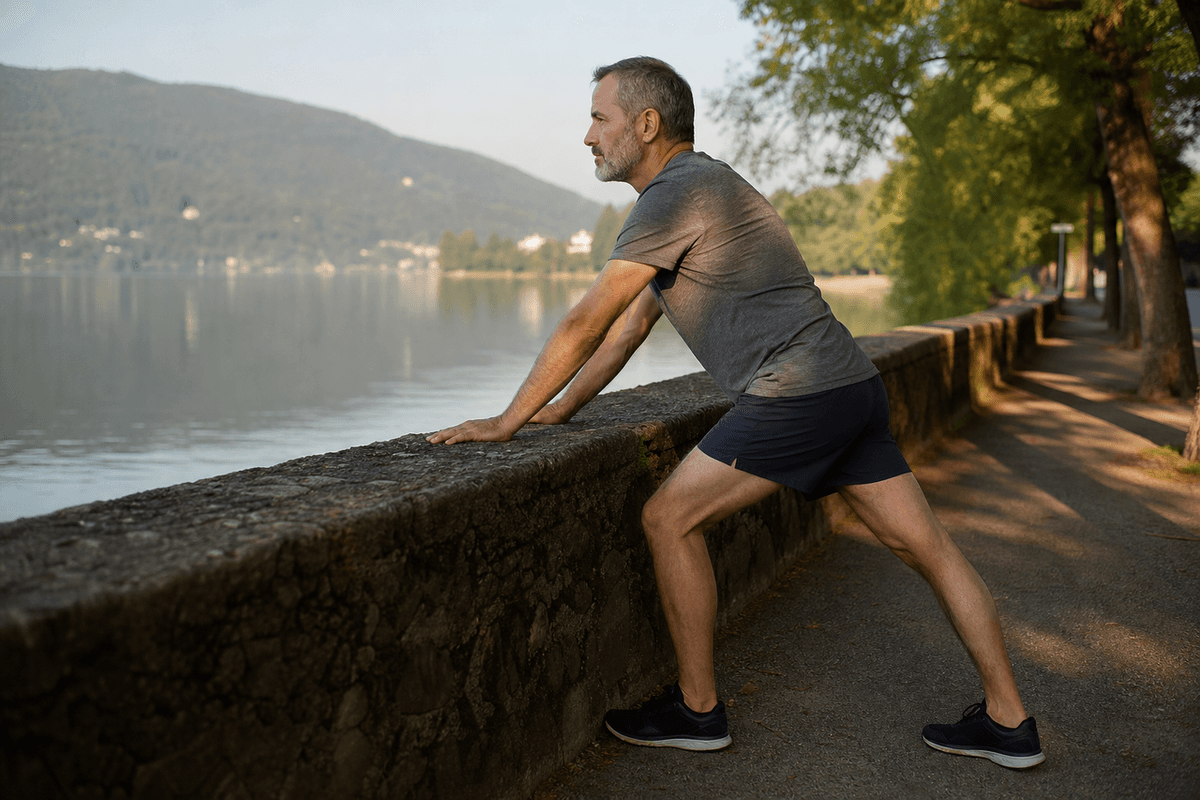
Short answer: Statins are safe to exercise on, and in blinded trials most of the muscle aches blamed on them are not the drug. The rare true injury shows as marked weakness with dark urine and needs a blood test, not a sauna. Heat, cold and massage are fine. CoQ10 failed its meta-analysis.
Statins are safe to exercise on, and most of the muscle aches that people attribute to them turn out, in blinded trials, not to be caused by the drug. The rare true statin muscle injury is real, it shows up as marked weakness with dark urine, and it is a blood test and a stop rather than a sauna or a massage. Around that, the wellness menu is open. Heat, cold, massage, yoga and classes are fine. A sudden jump into very hard exercise deserves a gradual start, as it does for anyone. And the supplement sold to every statin user, coenzyme Q10, failed its meta-analysis.
That makes this a guide about not being sold things. The three pitches aimed at this reader, train through it, sweat it out, and buy the CoQ10, are answered by two documents: a scientific statement on statin safety and a pooled analysis of the supplement trials.
This is general information, not medical advice. Whether you need a statin, which one, and what to do about an ache belong with the prescriber, and the distinction between a nuisance ache and a muscle injury is theirs to make with a blood test.
What statins do, and what the muscle story actually is
Lower cholesterol, fewer heart attacks and strokes, and an ache that is mostly not the drug.
Statins lower LDL cholesterol and, over years, reduce heart attacks and strokes in people at risk, which is why they are prescribed so widely. The side effect everyone has heard of is muscle pain. Newman and colleagues in Arteriosclerosis, Thrombosis, and Vascular Biology in 2019, writing a scientific statement for the American Heart Association on statin safety, set out what the trials show: muscle symptoms are reported by a meaningful share of people taking statins in ordinary practice, but in blinded trials the rate on the drug is close to the rate on placebo, which means most of the aches are expectation, age and ordinary life rather than the tablet. The serious muscle injury, rhabdomyolysis, is rare, and a milder true statin myopathy, with a raised muscle enzyme on a blood test, is uncommon.
That distinction runs through everything below. An ache after a new class is probably the class. Marked weakness, pain out of proportion, and dark, tea-coloured urine are the signs of the rare real thing, and they belong with a doctor the same day.
Exercise, hard classes and the gradual start
Statins are for exercising on. Start the hard stuff gradually.
Exercise on a statin is not only safe, it is part of the same plan: fitness and a statin both lower cardiovascular risk. The one honest caveat is that unaccustomed, very intense exercise raises muscle enzymes in anyone, and on a statin some people find recovery from a sudden hard effort slower and the soreness heavier. The answer is the answer for everyone starting something hard: build gradually, and do not launch from a sedentary year into a bootcamp week at a retreat. Our comparison of massage and physical therapy covers who programs that progression, and our guide to what massage does for recovery covers what eases the soreness afterwards.
Soreness that arrives after a hard session and fades over days is ordinary. Weakness that does not fade, pain that spreads beyond the muscles you used, or dark urine is not, and that is the blood test.
Saunas, cold water and the sweat-it-out pitch
Fine, and neither treats the ache.
Heat and cold have no established interaction with statins, so a sauna, a steam room or a cold plunge carries only its ordinary cautions, which our guides to feeling faint in a sauna and who should avoid cold plunging cover. Many people on a statin are also on a blood pressure drug, and our guide to wellness on blood pressure medication covers the sauna exit for that reader.
The sweat-it-out pitch deserves a plain answer: a sauna does not remove a drug from muscle or “flush” a side effect, and a long dehydrated sweat after a very hard session is the one combination worth avoiding, because dehydration stresses the kidneys that a true muscle injury would also stress. Drink, and treat the sauna as comfort rather than treatment, which our read on whether sweating detoxes anything covers.
Massage and the ache
Welcome, with one thing to tell the therapist.
Massage is fine on a statin and often exactly what an achy body wants. Tell the therapist you take one, so that a muscle that is unusually tender or weak is noticed rather than worked harder, and mention any other drugs, since anticoagulants change the pressure question in a way our guide to wellness on blood thinners covers. Our first massage guide covers how to ask. Massage eases the ordinary ache; it does nothing to a true myopathy, and a muscle that hurts to the touch with weakness is a doctor’s question first.
Coenzyme Q10, red yeast rice and the supplement aisle
The supplement sold to every statin user, and what the pooled trials found.
Statins lower the body’s levels of coenzyme Q10, and from that fact a whole supplement category was built: take CoQ10, and the muscle aches will go. Banach and colleagues in Mayo Clinic Proceedings in 2015 pooled the randomized trials of CoQ10 for statin muscle symptoms and found no significant effect on pain or on muscle enzymes. It is not dangerous, it is simply a product sold on a mechanism that did not survive the trials.
Red yeast rice is the other pitch, sold as a natural alternative to a statin, and it works when it works because it contains a statin, in an unmeasured dose, without the monitoring. Grapefruit juice in quantity raises the blood level of some statins, which is the one genuine food interaction worth knowing at a retreat breakfast. Our guide to spotting a nonsense wellness claim is the filter for the rest.
Statins and wellness at a glance
| Practice | Fine as is | Needs adjusting | Avoid |
|---|---|---|---|
| Exercise, classes | Yes, part of the same plan | A gradual start to anything very hard | A sedentary year into a bootcamp week |
| Sauna, steam | Yes | Drink, especially after hard exercise | Long dehydrated sweats after a hard session |
| Cold plunge | Ordinary cautions | Nothing drug-specific | Nothing specific |
| Massage | Yes | Therapist told; tender weak muscle noticed, not worked | Working a muscle that is weak and painful |
| Yoga, Pilates, floats | Yes | Nothing specific | Nothing specific |
| Coenzyme Q10 | Harmless | Nothing | Paying for it as a treatment for the ache |
| Red yeast rice | Nothing | Nothing | As a statin substitute without monitoring |
| Grapefruit at the retreat | A little | Ask if your statin is one that interacts | Large amounts with some statins |
What is oversold
The supplement, the substitute, and the sweat.
CoQ10 as the fix for the ache, red yeast rice as the natural statin, and the sauna or cleanse that flushes the side effect are the three pitches, and the pooled trials, the pharmacology and the physiology answer each of them in turn. The quieter harm is the ache that leads someone to stop the tablet without telling anyone; stopping a statin is a prescriber’s decision, and there are usually other statins or doses to try.
What belongs to your prescriber
The prescription, the ache, the blood test, and the stop.
Whether you need a statin, which one and at what dose belong with the prescriber, and so does any muscle symptom that persists, because the way to tell an ordinary ache from the rare true myopathy is a blood test and a conversation, not a supplement. Never stop the tablet on your own because of an ache; switching drug or dose usually solves it.
Seek care the same day for marked muscle weakness, pain out of proportion to anything you did, or dark, tea-coloured urine, which are the signs of muscle breakdown. If you book classes or bodywork alongside proper care, check whoever you see with our credential-checking guide. We only recommend what we would send a friend to, and here that means a trainer who builds the program gradually and a shop that does not sell you the CoQ10 at the door.
FAQ
Can I exercise hard on a statin? Yes, exercise and a statin are part of the same risk-lowering plan. Build up to very hard sessions gradually, as anyone should, and take marked weakness or dark urine to a doctor the same day.
Does CoQ10 help statin muscle pain? The pooled randomized trials found no significant effect on pain or muscle enzymes. It is harmless and it is not a treatment.
Is a sauna safe on atorvastatin or other statins? Yes, with the ordinary sauna cautions. It does not flush the drug or treat an ache, and a long dehydrated sweat after a very hard session is the one combination to avoid.
Are my muscle aches from the statin? In blinded trials most are not: the rate on the drug is close to placebo. A persistent ache, weakness or dark urine is a blood test with the prescriber, not a reason to stop on your own.
The bottom line on wellness with statins
Statins are safe to exercise on, most of the aches people blame on them are not the drug, and the rare true muscle injury is a blood test and a same-day call rather than a sauna. Heat, cold, massage and classes are all fine, a very hard new program deserves a gradual start, and dehydration after a hard session is the one thing to avoid.
CoQ10 failed its meta-analysis, red yeast rice is an unmeasured statin, and the sweat-it-out pitch flushes nothing.
Weakness, pain out of proportion or dark urine belong with urgent care, the stop belongs with the prescriber, and a trainer who builds gradually is the one to book.