Wellness on blood thinners: massage pressure, cupping, wet floors and what is actually safe
Deep tissue, cupping and gua sha are sold as the serious end of bodywork, and each one is designed to bruise. On an anticoagulant, the bruise is the point of concern, the wet floor is the real hazard, and the supplement aisle is where the drug interactions live.
Short answer: An anticoagulant makes blood clot slowly on purpose, so bruising techniques, wet floors and the supplement aisle are what to plan around. Moderate massage is fine; cupping, gua sha and aggressive percussion are not. A faint on a sauna bench becomes a head-injury question. Heat itself is fine for the drug. Never skip a dose for a treatment.
An anticoagulant, whether apixaban, rivaroxaban, dabigatran or warfarin, sold as Eliquis, Xarelto, Pradaxa and Coumadin, does one job, it makes blood clot more slowly, and that single fact reorganises a wellness day. The techniques the industry sells as the serious end of bodywork, deep tissue, cupping and gua sha, are designed to mark the skin, and on a blood thinner a mark becomes a bruise that spreads. The wet floor between the changing room and the pool, and the faint at the top of a sauna bench or the edge of a plunge, become a head-injury question rather than an embarrassment. And the supplement aisle, sold as harmless, is where the interactions live.
Around that, more stays open than people expect. Heat is fine. Cold water is a cardiologist’s question for the condition you take the drug for, not for the drug. Massage at moderate pressure is fine. Movement is encouraged. The adjustments are pressure, footing and what you swallow.
This is general information, not medical advice. Which drug you take, why, and how long belong with the prescriber, and any bleeding that does not stop, a fall with a head knock, or black stools is urgent care rather than a booking.
What anticoagulants do, and why the reason you take one matters
Slower clotting, on purpose, for a condition that has its own rules.
Anticoagulants are prescribed to prevent clots: for atrial fibrillation, after a deep vein thrombosis or pulmonary embolism, for some heart valves, and for a few other conditions. The newer direct oral anticoagulants have largely replaced warfarin for most uses. van Es and colleagues in Blood in 2014 pooled the trials comparing the two families for venous clots and found the newer drugs at least as effective with fewer major bleeds, particularly fewer bleeds into the brain, which is reassuring and does not make any of them harmless.
The 2021 European Heart Rhythm Association practical guide by Steffel and colleagues in Europace is the clinicians’ handbook for the newer drugs, and its themes are the ones a wellness day touches: missed doses, interactions, bleeding risk, and the fact that these drugs cannot be casually paused for an appointment. Two things follow. The condition you take the drug for has its own wellness rules, and our guide to atrial fibrillation covers the commonest one. And the drug’s own rules are mostly about bruising, bleeding and what you take alongside it.
Massage, cupping, gua sha and the bruise
Moderate pressure on muscle is fine. Techniques that mark the skin are not.
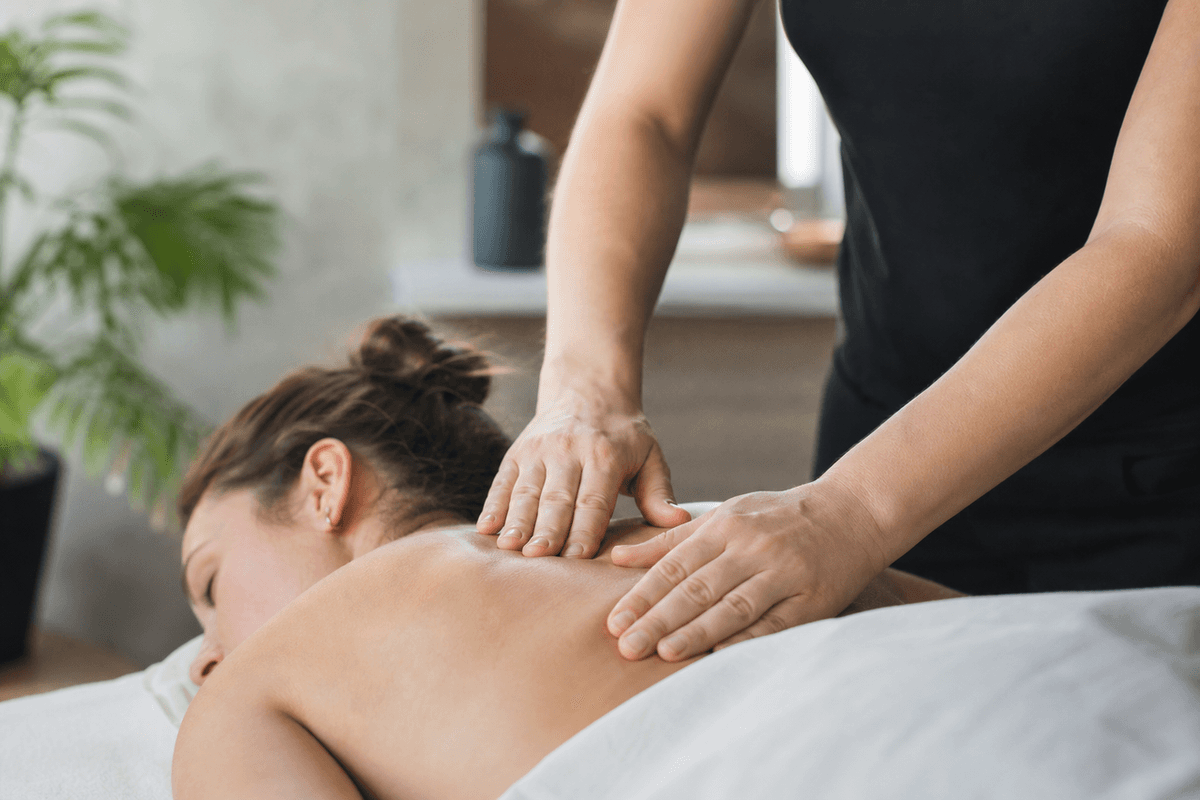
Massage is welcome on an anticoagulant, and the adjustment is pressure. Deep, sustained work bruises more easily and bruises spread further, and any small nick, a hangnail caught, a rough cuticle, bleeds longer. Moderate pressure on muscle is the ask, with the therapist told what you take. Our guide to the types of massage covers which styles rely on deep pressure, and our deep tissue and sports massage explainer already lists blood thinners among the reasons to speak up.
Cupping and gua sha are the techniques to decline outright, because the marks they leave are the mechanism: cupping draws blood into the skin by suction and gua sha does it by scraping, and our cupping explainer and gua sha explainer describe those marks as the expected result. On a blood thinner, expected becomes extensive. Aggressive percussion from a massage gun sits in the same category, and our comparison of massage guns and professional massage already flags it. Dry needling and acupuncture are usually acceptable with a practitioner who knows, with more bruising than usual; tell them, and our dry needling comparison covers the difference.
Wet floors, faints and the head
The real hazard is a fall, and the floor is always wet.
The serious bleed on an anticoagulant is the one you cannot see, and a knock to the head is how it happens. A wellness venue is a sequence of wet, warm floors, hot benches to stand up from and plunge tubs to climb out of, and the ordinary faint that our guide to feeling faint in a sauna describes becomes, on a blood thinner, a fall that needs assessing even if you feel fine afterwards.
That reframes the venue rather than the modality. Rails, non-slip floors, a bench to sit on, staff who do not rush you, and a slow seated exit from any heat are the things to plan for, and our guide to accessible wellness with a disability covers what to ask. Any head knock, however minor it feels, is a call to your care team the same day.
Saunas, cold water and the condition underneath
Heat is fine. Cold depends on why you take the drug.
Heat itself does not change how an anticoagulant works, so a sauna or steam room is fine as far as the drug is concerned, with the fall risk above and the ordinary hydration rules. What decides the sauna and the plunge is the condition underneath. Atrial fibrillation makes heat and cold shock triggers, which the atrial fibrillation guide covers. A recent clot in the leg or lung makes strenuous heat and cold a conversation with the prescriber during treatment. Our guide to who should avoid cold plunging covers the general cautions, and our guide to sauna, cold plunge and blood pressure covers the standing-up problem that the fall risk turns serious.
One drug-specific note for the cold plunge: the gasp and the faint at the edge of the tub end in a head strike more often than people think, and that is the outcome to avoid here.
Warfarin, supplements and the wellness pantry
The interactions live in the aisle sold as harmless.
Warfarin works against vitamin K, so its effect moves with what you eat and take, and Holbrook and colleagues in Archives of Internal Medicine in 2005 catalogued the drugs, foods and herbal products that push its level up or down. The wellness pantry is full of them: ginkgo, garlic supplements, fish oil in large doses, St John’s wort (which also interacts with antidepressants, as our antidepressants guide covers), ginseng, turmeric and curcumin extracts, high-dose vitamin E, cranberry and green tea in quantity, and the sudden shift to a kale-heavy retreat menu that changes vitamin K intake overnight. The newer drugs have fewer food interactions and still interact with some supplements and with the drugs in the practical guide, which is why the “natural” stack sold at a retreat is a pharmacist’s question before it is a purchase.
That is the inversion for this reader. The wellness industry frames supplements as the gentle option, and on an anticoagulant they are the one category that can quietly change your bleeding risk. Our guide to spotting a nonsense wellness claim is the filter, and our read on IV therapy and vitamin drips covers the injected version, which adds a needle to the equation.
Missed doses, travel and the retreat schedule
The drug that cannot be paused for a spa day.
The newer anticoagulants wear off within a day or two, which makes a missed dose a real gap in protection, and a retreat that scrambles your routine, a long flight, a time-zone change, all threaten the one thing the drug depends on. Pack it, set an alarm, and never skip a dose to reduce bruising before a treatment; that trade is the prescriber’s to consider, not a therapist’s. Long flights and immobility raise clot risk in their own right, which is one of the reasons some people take the drug, so the travel plan for a distant retreat belongs in the same conversation.
Blood thinners and wellness at a glance
| Practice | Fine as is | Needs adjusting | Avoid |
|---|---|---|---|
| Massage | Moderate pressure on muscle | Therapist told, nicks and cuticles minded | Deep sustained pressure, aggressive percussion |
| Cupping, gua sha | Nothing | Nothing | The techniques themselves |
| Acupuncture, dry needling | With a practitioner who knows | Expect more bruising | Nothing specific |
| Sauna, steam | Fine for the drug | Slow seated exit, rails, footing | Nothing drug-specific |
| Cold plunge | Decided by the condition, not the drug | Never alone, mind the edge of the tub | A head strike |
| Exercise, classes | Encouraged | Contact and fall-prone activities with care | Nothing specific |
| Supplements, herbal stacks | Nothing without a pharmacist | Ask before every new one | Ginkgo, St John’s wort, high-dose fish oil and vitamin E unchecked |
| Retreat menus | Fine | Steady vitamin K intake on warfarin | Sudden dietary swings on warfarin |
| Doses on a trip | The routine that matters | Alarm, time zones planned | Skipping a dose for a treatment |
What is oversold
Natural blood thinners, and the deep work that proves it is working.
“Natural blood thinners” sold as an alternative to the prescription are the dangerous pitch, and the supplements sold as harmless additions are the quiet one. Deep tissue work sold on the idea that bruising proves it is working is the third, and on an anticoagulant the bruise proves only that the skin bled. Our cupping explainer covers how the marks are marketed.
What belongs to your prescriber
The drug, the duration, the interactions, and every bleed.
Which anticoagulant, how long, whether it can ever be paused, and what any new supplement or medication does to it belong with the prescriber and a pharmacist. Ask them before any retreat that changes your diet or time zone, and before any procedure that involves a needle.
Seek urgent care for a fall with a head knock, bleeding that does not stop, black or bloody stools, blood in urine, coughing or vomiting blood, a sudden severe headache, or a bruise that keeps growing. If you book bodywork alongside proper care, check whoever you see with our credential-checking guide. We only recommend what we would send a friend to, and here that means a therapist who asks what you take before choosing the pressure, and a venue with a rail beside every wet step.
FAQ
Can I get a massage on blood thinners? Yes, at moderate pressure on muscle with the therapist told. Skip deep sustained work, cupping, gua sha and aggressive massage guns, which are designed to mark the skin.
Is a sauna safe on Eliquis or warfarin? The drug does not change how heat works on you; the condition you take it for might, and the fall from a faint is the risk that turns serious. Exit slowly, use rails, and treat any head knock as a same-day call.
Can I take supplements with blood thinners? Only after a pharmacist has checked each one. Ginkgo, St John’s wort, garlic and fish oil supplements, high-dose vitamin E and several others change bleeding risk, and warfarin also moves with sudden changes in what you eat.
Should I skip a dose before a treatment? No. That trade belongs to the prescriber, and the newer anticoagulants wear off within a day or two, which makes a skipped dose a gap in protection.
The bottom line on wellness with blood thinners
An anticoagulant makes blood clot slowly on purpose, and that turns bruising techniques, wet floors and the supplement aisle into the three things to plan around. Moderate massage is fine, cupping and gua sha are not, a faint on a sauna bench is a head-injury question, and the “natural” stack is a pharmacist’s conversation before it is a purchase.
Heat is fine for the drug, cold depends on the condition underneath, movement is encouraged, and the dose is never skipped for a treatment.
A head knock, bleeding that will not stop, black stools or a spreading bruise belong with urgent care, and a therapist who asks what you take before choosing the pressure is the one to book.