What actually helps you sleep: an honest ranking
Three unglamorous habits do most of the work, and every wellness practice we write about sits somewhere below them. Here is the honest order, and where the sauna, the bath and the weighted blanket really belong.
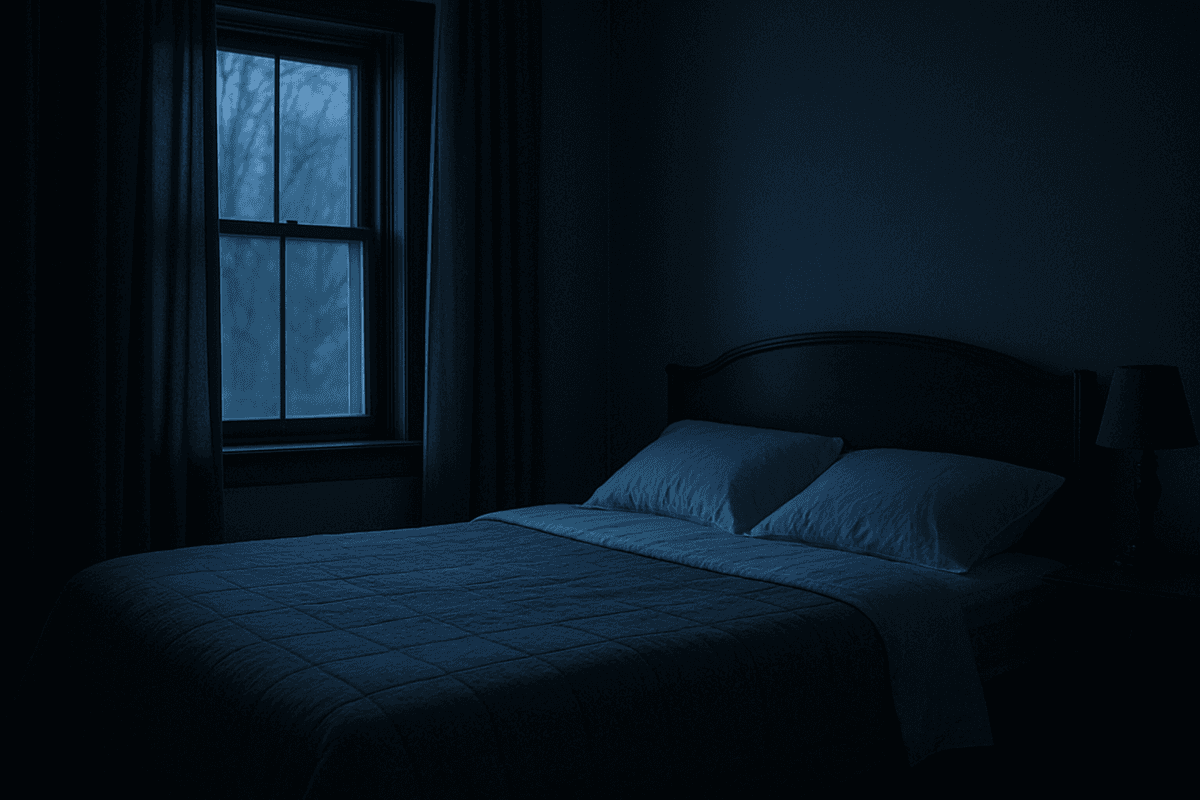
If you change three things, change these: get up at the same time every day, get outside into daylight within an hour of waking, and keep the bedroom dark and cool. Those three do more for your sleep than everything the wellness industry sells for it. They cost nothing.
Everything else here is a fourth priority, or a pleasant addition to a routine that already has those three. That includes the practices readers ask us about most: the evening sauna, the hot bath, the massage, the weighted blanket.
We only recommend what we’d send a friend to, which here means saying where those practices sit: below the fundamentals, with one of them meaningfully higher than the rest.
Why your wake time matters more than your bedtime
Your body runs an internal clock that is close to twenty four hours but not exact. It needs a daily correction, and the correction it uses is light.
Morning light tells that clock the day has started, and sets the timer for when you will feel sleepy, roughly fifteen or sixteen hours later. Light late at night pushes the schedule later instead. That is the mechanism behind the two highest value habits here: a fixed wake time and morning daylight anchor the clock, and the sleepiness follows on its own.
Bedtime is a result, not a lever. You cannot decide to feel tired at 10 p.m. You can decide to get up at 6:30 a.m. every day and stand outside with your coffee. Outdoor light is far brighter than any indoor room, even under cloud, and ten minutes of it beats an hour beside a window.
It is also why standard advice breaks on night shifts. When your sleep block moves, every timing rule moves with it, which is the translation our guide for shift workers works through.
The honest ranking
Qualitative labels only, because the honest comparison is size of effect.
| What it is | How much it moves the needle | Verdict |
|---|---|---|
| Consistent wake time, seven days a week | Large | The highest value habit here |
| Morning daylight within an hour of waking | Large | Free, fast, works with the wake time |
| Dark, cool, quiet bedroom | Large | Fix it once, it keeps paying |
| Caffeine cutoff by early afternoon | Moderate to large | Bigger than people expect |
| Getting out of bed when you cannot sleep | Moderate to large | Counterintuitive, genuinely useful |
| Less alcohol in the evening | Moderate | Helps you drop off, ruins the rest |
| Warm bath or sauna, 60 to 90 minutes before bed | Moderate | Best rationale of any wellness practice |
| Regular daytime exercise | Moderate | Pays over weeks, not tonight |
| Screen free wind down | Small to moderate | Mostly a signal and a habit |
| Weighted blanket | Small, mostly on how you feel | Pleasant, not load bearing |
| Massage | Small for ordinary insomnia | A stress lever, not a treatment |
| Evening cold plunge | Usually negative | Alerting, so move it to the morning |
| Chasing a sleep tracker score | Neutral at best | Can become the problem itself |
The fundamentals almost nobody actually does
Caffeine is the most underrated item on the list. Roughly half a dose is still in you many hours later, so a mid afternoon coffee is working on you at bedtime even if you fall asleep fine.
Alcohol is the mirror image. It makes you fall asleep faster and degrades the back half of the night, which is why a nightcap feels like it helps and does not.
The room is a one time fix people skip anyway. Dark enough that you cannot read, cool enough to want a blanket, quiet or masked.
The rule that surprises people most is the last one. If you have been lying awake and frustrated for what feels like twenty minutes, get up, go somewhere dim, do something dull, and come back when you are sleepy. Lying there teaches your brain that bed is where you lie awake.
Where wellness practices genuinely fit
One belongs high, and it is heat. A bath or a sauna raises your core temperature, and the drop that follows once you get out is a signal your body reads as sleep. That is a real mechanism, not a marketing story, and it is why timing beats temperature. Our piece on a sauna or cold plunge before bed explains the sixty to ninety minute window, and whether an Epsom salt bath does anything makes the same point in a bathtub, where the hot water does the work and the salt gets the credit.
Massage sits lower than spa menus suggest. Our review of whether massage helps you sleep found the strongest results in hospital wards, not in ordinary insomnia, so treat it as a stress lever that may help indirectly.
Weighted blankets are similar: modest, real, mostly about feeling calmer, which our look at whether they actually work covers along with who should skip them.
For a racing mind at lights out, slow breathing beats any purchase. Start with box breathing; our evidence review of breathwork sets expectations honestly. The trend we would not start with is mouth taping, for the reasons in our read on it.
When it is not a habit problem
If you have slept badly several nights a week for months, this page is not your fix. Persistent insomnia is a clinical problem, and its first line treatment is cognitive behavioral therapy for insomnia, usually shortened to CBT-I. It is a short structured program rather than open ended talk therapy, and no sauna, massage or bedtime ritual substitutes for it. Take it to a clinician.
The same goes for loud snoring, gasping, or waking unrefreshed however long you were in bed. Worth investigating, not optimizing around.
People ask about melatonin constantly. Supplements are outside what this site covers, except to say timing matters more than dose, and to ask a clinician rather than guess.
The tracker problem
A sleep score is a measurement that becomes the problem. Fixating on last night’s number makes people anxious about sleep, and that anxiety is itself one of the things keeping you awake.
Trackers are decent at trends over weeks and unreliable about any single night, which our piece on recovery trackers gets into. If checking the app sets the tone for your day, stop checking it.
FAQ: sleeping better
How long before a new sleep schedule feels normal? Usually one to two weeks of holding the same wake time, weekends included. The first few days are the worst, because you are tired at the new wake time before you are sleepy at the new bedtime. Resist sleeping in to catch up.
Is it bad to nap? Not for most people, if it is short and early. Twenty minutes in the early afternoon rarely interferes. Long or late naps eat the sleep pressure you need that night, so if bedtime is a struggle, cut the naps first.
Should I stay in bed and rest if I cannot sleep? No, and this is the most commonly ignored rule here. Lying awake and frustrated trains your brain to associate bed with being awake. Get up, keep the lights low, do something dull, and return when you feel sleepy.
Does a hot sauna before bed really work? The rationale is good, through the core temperature rise and the fall that follows, but timing decides it. Finish sixty to ninety minutes before you want to be asleep and keep the session moderate.
The bottom line on sleeping better
Fix the wake time, get the morning light, sort the room. Then handle caffeine and alcohol, and get out of bed when you cannot sleep. That list is free and it outperforms everything sold to you, the pattern our guide to wellness that costs nothing keeps finding.
With those in place, an evening bath or a moderate sauna is a genuinely good addition that slots into a weekly recovery routine. A massage or weighted blanket is pleasant and may help a little. Neither fixes your sleep.
If something promises to fix your sleep without touching your wake time, your light or your bedroom, our checklist for spotting a nonsense wellness claim usually explains why.