Do TENS units actually work? The honest answer
A small box, two sticky pads, and a tingling sensation that makes pain recede while it runs. Unlike most gadgets we look at, this one started in pain clinics rather than in marketing, which changes the question worth asking about it.
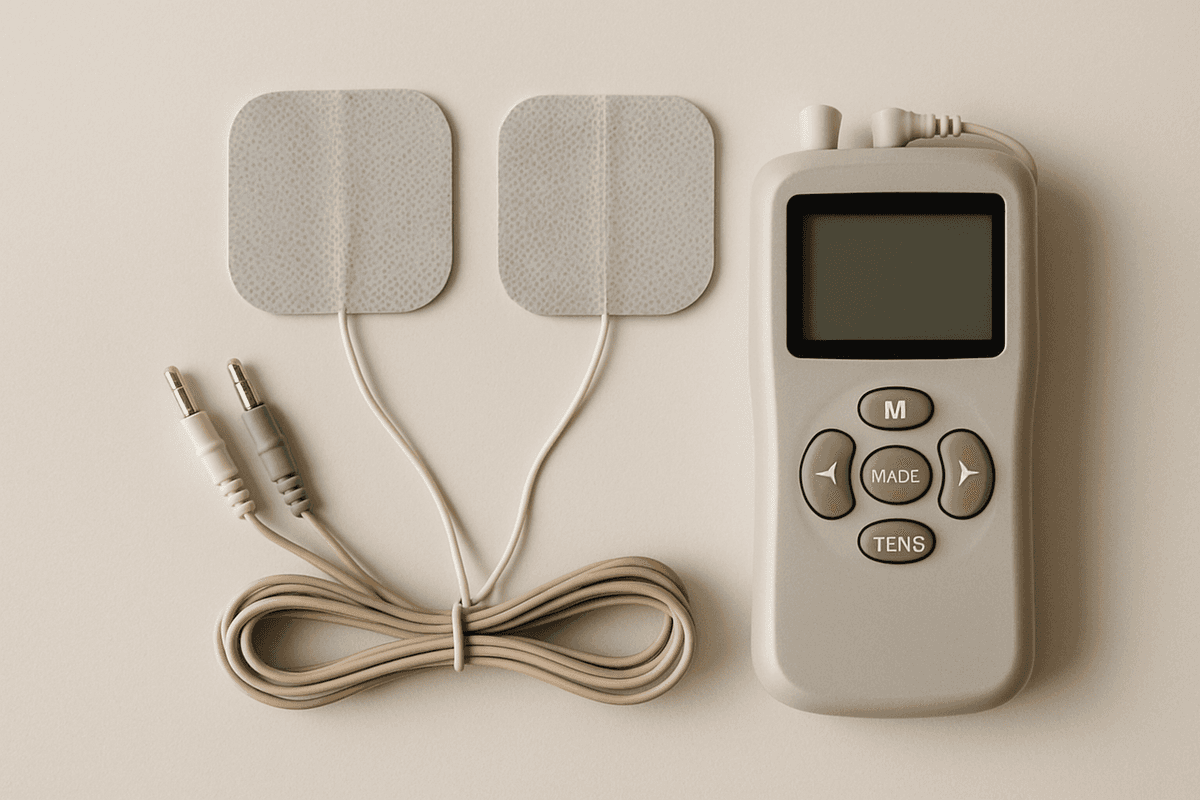
Yes, for some people, in a narrow sense: a TENS unit can reduce how much pain you feel while it runs and for a period after you switch it off. That relief is real, symptomatic, and temporary. It changes the sensation, not the thing causing it.
That makes this category different from most machines we write about. TENS did not arrive from a wellness startup. It has been used in physiotherapy and pain clinics for decades, and over the counter units are consumer versions of a clinical tool.
The question is not whether it is nonsense, but how much relief, for how long, and for whom.
What a TENS unit actually does
It runs a small current across your skin to change how a pain signal is perceived.
TENS stands for transcutaneous electrical nerve stimulation. Sticky pads go on the skin near the painful area, and the unit passes a low level current between them. You feel a tingling or light tapping sensation, and you raise the intensity until it is strong but comfortable.
The usual explanation involves stimulating large nerve fibers in a way that interferes with how pain signals are transmitted and perceived, with a possible contribution from the body’s own pain modulating chemistry. The details are debated; the principle is not.
The category of effect matters. This is pain relief, like taking something for a headache. Nothing repairs tissue.
What the evidence supports, and where it stops
Short-term relief for several kinds of pain, with an unresolved argument about size.
Reviews have looked at TENS across many conditions, and the pattern that keeps repeating is modest, short-lived relief that some people find worthwhile and others barely notice. Better than nothing for many people, and not a large effect on average.
Where it gets contested is quality. Higher-quality trials have often found smaller effects than weaker ones, blinding is hard when the treatment produces an obvious sensation, and parameters vary enough that pooling trials is messy.
We are not going to resolve a debate the literature has not. Anyone quoting a precise number overstates what is known, and our guide on spotting a nonsense wellness claim covers what that signals.
TENS claims at a glance
| Claim | Evidence | Verdict |
|---|---|---|
| Reduces pain while it is on | Most consistent finding | Supported, short-lived |
| Relief lasts a while after | Reported, duration varies | Plausible, variable |
| Helps some, not others | Response is inconsistent | Well documented |
| Beats a convincing placebo | Mixed, hard to test | Contested |
| Effect size is large | Better trials show less | Not supported |
| Heals tissue or injury | Nothing supports this | Not supported |
| Builds muscle or strength | Wrong device category | Not supported |
| Fat loss, “toning”, detox | No credible evidence | Marketing |
TENS is not EMS, and the difference matters
Different devices, different claims, and shoppers get shown both.
EMS is electrical muscle stimulation. It uses current to make muscle contract, and it is the technology behind the abdominal belts sold with before and after photos. TENS targets nerves to alter pain perception and is not trying to contract anything.
Conflating the two is the most common error in consumer coverage, and it runs both directions. People buy a TENS unit expecting a workout, and people buy an EMS belt expecting pain relief. Combination units label their modes, which adds to the confusion rather than settling it.
Clinical muscle stimulation for genuinely weak muscle is real, and physical therapists use it alongside rehabilitation. Our massage versus physical therapy comparison covers why the supervised version has a plan attached.
Who a TENS unit suits
People with a diagnosed, ongoing pain problem who want another lever.
The best case is someone who knows what is wrong, has a management plan, and wants a drug-free option at home during a bad stretch. Units are cheap relative to the rest of this category, and a session then costs nothing.
Desk workers with persistent neck and shoulder tension sometimes find it useful for comfort, though the fix there is usually the desk. Our neck and shoulders guide for desk workers covers what changes the pattern.
The poor case is buying one instead of getting something looked at, or expecting it to speed up recovery the way compression boots and PEMF mats are also sold as doing. We have not tested these units, and we only recommend what we would send a friend to, so there is no product pick here.
Safety first, then sensible use
The exclusions are specific, and they are not soft.
Speak with a clinician first if you have a pacemaker, an implanted defibrillator, or any other implanted electronic device. Pregnancy and epilepsy are standard reasons to ask rather than experiment. Do not place electrodes over the front of the neck, across the head, or so that current crosses the chest, and avoid broken skin, rashes, and numb areas, because you cannot judge intensity on skin that cannot feel properly.
The most important item is not a body part. Pain nobody has assessed should not be managed with a device. This is not medical advice, and the list is not exhaustive.
On use: place pads around or on either side of the painful area rather than on the worst spot, so the current passes through it, and raise intensity until the sensation is strong but never painful. Sessions run in tens of minutes, not hours. The same setting commonly feels weaker over time, so varying intensity or pad position is reasonable, and skin irritation under a pad is a stop signal.
When the pain needs a person, not a device
Muting a signal is not the same as knowing what it means.
New pain, worsening pain, pain following an injury or a fall, pain that wakes you at night, and anything involving numbness, tingling, weakness, or symptoms radiating down an arm or leg belongs with a doctor or physical therapist first. Our decision guide on which bodywork for which complaint lists the same stop signs, and they apply here.
The risk with an effective symptomatic tool is that it works well enough to postpone the appointment. That is worse than the device doing nothing.
For everyday soreness rather than a pain problem, simpler options get you further. Our ice versus heat guide covers what to reach for, and what actually reduces inflammation covers the claim the category leans on.
FAQ
Does a TENS unit heal anything? No. It alters how pain is perceived while it runs and for a period afterwards. Nothing repairs tissue or treats the cause, which is why it belongs alongside a diagnosis rather than instead of one.
Is TENS the same as an EMS abs belt? No. TENS targets nerves to change pain perception, while EMS drives muscle contraction. Being shown one while shopping for the other is common, and the claims do not transfer.
How long does relief last after switching it off? It varies widely, from very little to a few hours. If a properly set up session does nothing, the period after it will not either.
Can I use one for pain I have not had checked? Not sensibly. Undiagnosed, new, or worsening pain needs assessment first, and a device that quiets the signal makes that easier to postpone.
The bottom line on TENS units
TENS is a real clinical modality rather than a wellness invention, and that is the honest thing to say about it. It can reduce pain while it runs and for a period after, cheaply and without drugs, and many people find that worthwhile.
It is also symptomatic, temporary, inconsistent between people, and still argued about in size. It does not heal, strengthen, or reset anything, it is not an EMS belt, and it is not the answer for pain nobody has assessed.
To find recovery studios and wellness venues near you, start with our city wellness maps.