Ice vs heat: which should you use for pain and sore muscles?
The doctor who invented the ice-it advice spent his last years telling people to stop. The honest rule is simpler than the internet makes it, and it hinges on one question: fresh injury, or stiff and sore?
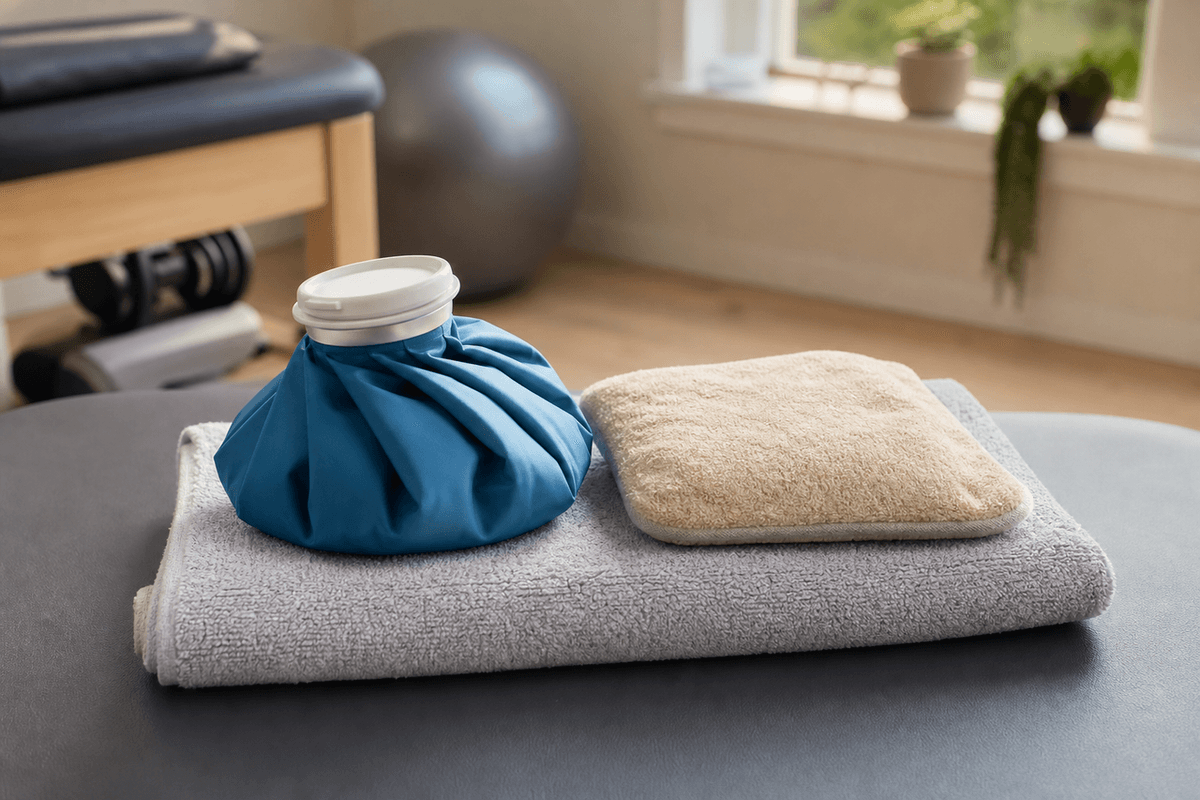
Short answer: Heat for the stiff, tight and chronically sore, because warmth relaxes muscle and raises blood flow. Ice mainly to numb pain and limit swelling in the first day or two of a fresh injury, and more sparingly than RICE suggested, since Mirkin walked it back. Both buy comfort, not repair.
Use heat for stiff, tight, aching muscles and long-standing soreness, because warmth relaxes muscle and increases blood flow. Use ice mainly to numb pain and limit swelling in the first day or two after a fresh, acute injury like a sprain.
That is the practical rule, and it covers almost every everyday case. The one twist worth knowing is that even the classic ice-a-new-injury advice has softened, because the doctor who popularised it later argued that ice may slow healing.
So the honest version is: heat for the sore-and-stiff, ice for fresh pain and swelling, and do not expect either to do more than buy comfort.
What does heat actually do?
It relaxes muscle and opens up blood flow.
Applying warmth to a tight or sore area dilates blood vessels, increases circulation, relaxes muscle tissue, and reduces the sensation of stiffness. That is why a hot shower, a heat pack, or a sauna feels so good on a stiff back or a tight neck.
This makes heat the right tool for the most common everyday complaints: general muscle soreness, chronic tightness, stiffness in the morning, and the ache of tension. It is comfort and mobility rather than repair, but comfort and mobility are often exactly what you want.
A sauna is heat therapy at scale, and its evidence is mostly cardiovascular rather than muscular. Our sauna and heart guide covers that, and our contrast therapy guide covers combining hot and cold.
What does ice actually do?
It numbs pain and slows swelling by constricting blood flow.
Cold does the opposite of heat: it narrows blood vessels, reduces blood flow to an area, numbs the nerves that carry pain, and limits swelling. That is genuinely useful in the immediate aftermath of an acute injury, a rolled ankle, a knock, a strain, when pain and swelling are the problem.
The key word is acute. Ice is a first-response tool for a fresh, painful, swelling injury, not a treatment for a chronically stiff muscle, where the reduced blood flow is the last thing you want.
Cold water immersion is the intense version of this, and its recovery evidence is mixed and comes with its own trade-offs. Our cold plunge and muscle gains guide covers why icing hard after strength training can backfire.
Why did the RICE advice change?
Because the person who coined it changed his mind, in public.
The famous RICE protocol, Rest, Ice, Compression, Elevation, was popularised by Dr Gabe Mirkin in 1978 and became the standard advice for injuries for decades. In 2014 and after, Mirkin publicly walked it back, noting that the inflammation ice suppresses is actually part of how the body heals, so aggressive icing may delay recovery rather than speed it.
The current thinking has shifted toward gentle early movement and using ice sparingly, mainly for pain relief in the first day or two, rather than icing constantly to kill all inflammation.
This does not make ice useless. It makes it a short-term comfort tool for fresh injuries, not a healing accelerator. The nuance matters, and it is why blanket ice-everything advice is outdated.
What about sore muscles after a workout?
Heat for comfort, and keep your expectations modest either way.
For the delayed soreness that shows up a day or two after hard training, gentle heat, light movement, and time are the sensible, comfortable options. Warmth eases the stiffness and feels good.
Cold immersion can reduce the soreness sensation, but as noted, doing it hard right after strength training may blunt the very adaptation you trained for. If muscle growth is the goal, do not ice it down immediately. Our massage recovery guide covers the same pattern for soreness relief.
Neither ice nor heat repairs the muscle faster. They manage how it feels while it repairs itself.
When is it not a heat-or-ice question at all?
When the pain is a signal you should not be self-treating.
Ice and heat are for ordinary muscular aches and minor injuries. See a professional if pain is severe, if a joint is badly swollen or cannot bear weight, if there is numbness, tingling, or weakness, if an injury came from significant force, or if pain persists or worsens over weeks.
Heat in particular should be avoided on a fresh injury that is still swelling, over broken skin, or where you have reduced sensation, and ice should not be applied directly to bare skin or left on so long it damages tissue. Wrap either in a cloth and limit sessions to around 15 to 20 minutes.
For anything that might be more than muscular, a diagnosis beats a compress. Our practitioner credentials guide covers finding the right person.
The bottom line on ice vs heat
Heat for stiff, sore, tight, and chronic muscle complaints. Ice mainly to calm pain and swelling in the first day or two of a fresh injury, and more sparingly than the old advice suggested, since even RICE has been walked back.
Both are comfort tools, not repair tools. Match them to the problem, keep sessions short, and get real pain properly assessed.
To find a sauna or recovery studio near you for the heat side, start with our city wellness maps.
If you are weighing a device instead, our review of TENS units covers the one home electrotherapy tool with a real clinical history behind it.