Does yoga help back pain? What the evidence actually says
This is one of the few wellness claims with genuinely good trials behind it. The honest finding is encouraging and slightly deflating at the same time: yoga helps, and so does ordinary stretching.
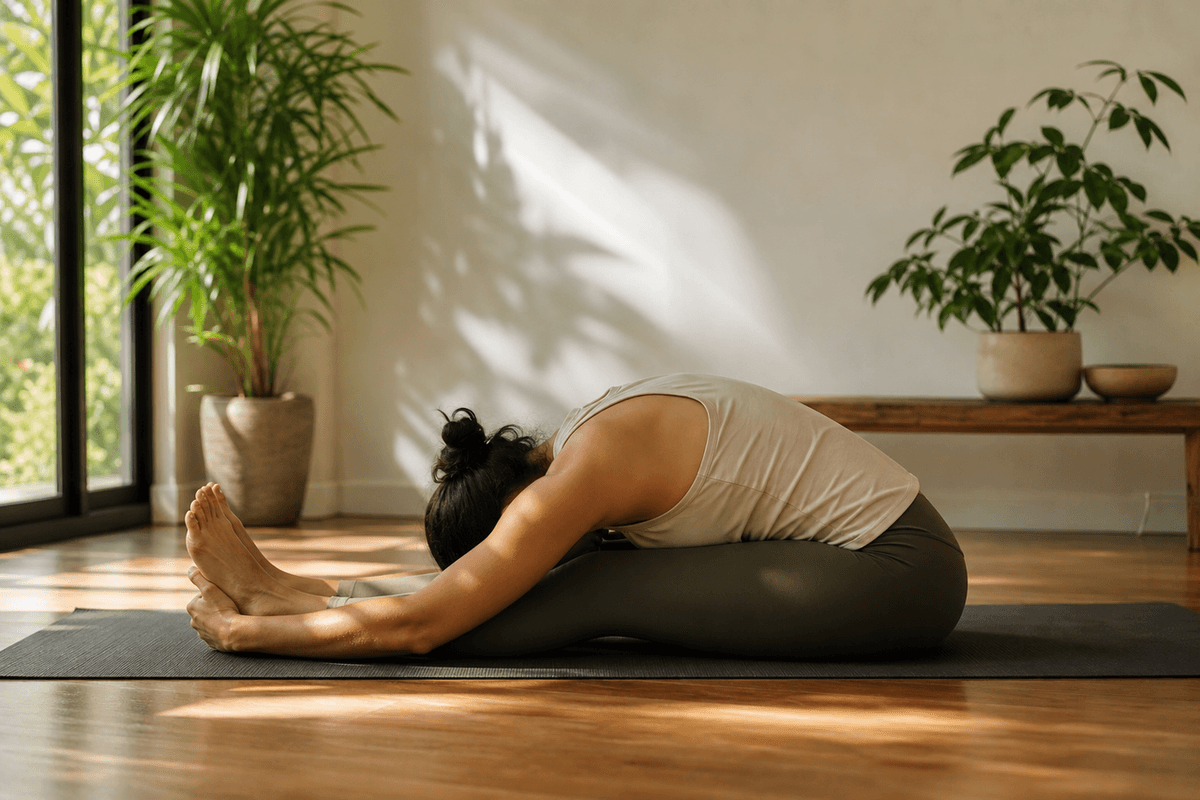
Short answer: Yes, for chronic low back pain. A Cochrane review found yoga produces small to moderate improvements in back function and pain at three and six months. The catch: trials comparing it directly with ordinary stretching found no real difference. Pick the gentle, consistent movement you will keep doing.
Yes, for ongoing low back pain, yoga genuinely helps. It produces modest improvements in pain and in how well your back functions day to day, and this is backed by better evidence than almost anything else in the wellness world.
The honest catch, and it is a useful one, is that yoga works about as well as ordinary exercise or stretching for back pain. It is not uniquely magic. It is one good option among several that all share the same active ingredient: gentle, regular, progressive movement.
So if you like yoga, it is an evidence-backed choice. If you do not, you have not missed a cure.
What the back pain trials show
Real, modest benefit for chronic low back pain, from decent trials.
A Cochrane review led by Wieland and colleagues (2017) pooled the randomized trials of yoga for chronic non-specific low back pain. It found that yoga produced small to moderate improvements in back-related function and pain compared with no exercise, at three and six months.
Cochrane reviews are about as rigorous as evidence synthesis gets, so this is a genuinely well-supported claim, not a studio slogan. The certainty of the evidence was rated low to moderate, mostly because blinding people to whether they are doing yoga is impossible, but the direction is consistent.
The key phrase is chronic low back pain, meaning the persistent, weeks-to-months kind with no serious underlying cause. That is where the evidence sits. Our yoga benefits overview covers the wider picture.
Is yoga better than other exercise?
No, and this is the part studios rarely mention.
When trials compare yoga directly against other active treatments, the differences mostly disappear. A well-known trial by Sherman and colleagues (Archives of Internal Medicine, 2011) compared yoga, conventional stretching classes, and a self-care book. Yoga and stretching both beat the book, and both worked about equally well as each other.
That is the honest summary of the whole field: yoga helps because it is regular, gentle, progressive movement, and other forms of regular gentle movement help for the same reason. The yoga is not doing something the stretching is not.
This is good news, not bad. It means you can pick the movement you will actually keep doing. Our yoga versus stretching guide covers how to choose between them.
Why does it work at all?
A mix of the physical and the very real mind-body part.
Physically, yoga gently strengthens the muscles that support your spine, improves mobility and range of motion, and gets you moving in a condition where fear of movement often makes things worse. Deconditioning and guarding are a big part of why chronic back pain persists.
There is also a genuine psychological component. Chronic pain is strongly modulated by stress, fear, and attention, and yoga’s breathing and mindfulness elements appear to help people relate to pain differently. This is not imaginary relief. It is how pain actually works.
Both parts matter, and they are why a calm, consistent practice tends to beat an occasional intense one.
What kind of yoga, and how much?
Gentle, consistent, and taught by someone who knows you have back pain.
The trials generally used gentle, beginner-appropriate styles with an emphasis on slow movement and breath, not hot power classes or advanced backbends. Tell the instructor about your back before class so they can offer modifications. Our first yoga class guide covers walking in, and our practitioner credentials guide covers finding a competent teacher.
Consistency matters more than intensity. A gentle session a couple of times a week, sustained over months, is closer to what the studies measured than an occasional ambitious class. Pushing into sharp pain is counterproductive.
If a pose hurts in a sharp or shooting way, stop. Yoga for back pain should feel like careful movement, not endurance.
When should you see a doctor first?
Before starting, if there are any warning signs.
Yoga is for ordinary mechanical low back pain. See a doctor first if your back pain comes with numbness, tingling, or weakness in the legs, any loss of bladder or bowel control, pain after a significant injury, fever, or unexplained weight loss. Those can signal something that needs medical attention, not a yoga class.
If pain is severe, new, or radiating down a leg, get it assessed before you start any exercise programme. Our massage versus chiropractic guide covers the same principle: movement therapies are for muscular problems, not undiagnosed ones.
For everyday persistent stiffness and ache with no red flags, yoga is a reasonable and evidence-backed thing to try. If the back has a known curve, our guide to scoliosis and yoga, Pilates or massage covers what a class can and cannot change.
The bottom line on yoga for back pain
Yoga genuinely helps chronic low back pain, with some of the best evidence in wellness behind it, and it works about as well as ordinary exercise or stretching rather than better.
Pick the gentle, consistent movement you will actually keep doing. If that is yoga, the research is on your side.
To find a yoga studio near you, start with our city wellness maps.
Yoga is one option among several. For the wider picture, our guide to what actually helps lower back pain ranks the approaches and names the red flags worth knowing.