Massage for headaches and migraines: what the evidence says
There is a randomised trial of massage for migraine, and its most interesting result was not about pain intensity at all. It was about frequency, which is a more useful outcome than most people ask about.
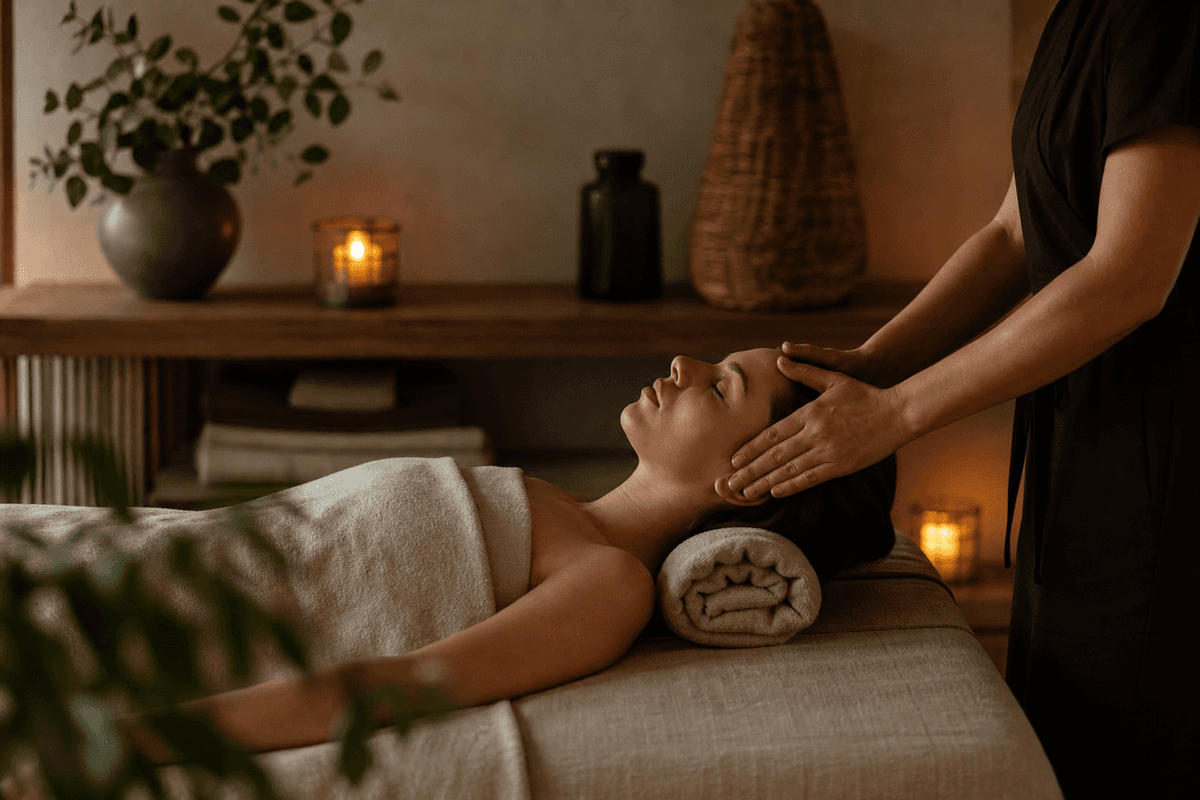
Short answer: For tension-type headaches, the muscular kind, massage helps fairly predictably. For migraine, one small randomised trial found regular massage reduced how often attacks came and improved sleep, rather than easing a headache in progress. Ask for targeted moderate pressure on the neck, shoulders and jaw, not the deepest available.
Massage is one of the most common things people try for headaches, and the evidence is better than the average wellness claim while being narrower than the marketing suggests.
The most useful result is not that massage relieves a headache once it has started. It is that regular massage appears to reduce how often migraines occur, alongside improving sleep quality, which is a different and more valuable claim.
Tension-type headaches, the far more common kind, respond more predictably. Migraine is a neurological condition and deserves to be treated as one. Both distinctions matter for what you should expect.
What did the migraine trial find?
Fewer attacks and better sleep, not just less pain.
The key reference is Lawler and Cameron in Annals of Behavioral Medicine in 2006, a randomised controlled trial of massage therapy as a treatment for migraine.
Participants receiving regular massage over several weeks reported significantly fewer migraine episodes and better sleep quality than the control group. The reduction in frequency, rather than a change in how severe an individual attack felt, was the headline.
The caveats are real. The sample was small, the control was a waitlist rather than a sham, and waitlist controls cannot separate the treatment from the attention and expectation that come with weekly appointments. So read it as encouraging and preliminary rather than definitive, and note that the mechanism may run partly through sleep and stress rather than through anything happening in the muscle.
Are tension headaches different?
Yes, and the case there is stronger.
Tension-type headache, the band-like pressure most people mean when they say headache, is closely associated with sustained muscle tension in the neck, shoulders, and jaw. That is exactly what massage acts on directly, and both trials and clinical practice support manual therapy for it more consistently than for migraine.
If your headaches come with neck stiffness, tenderness in the upper trapezius or at the base of the skull, and worsen through a long working day, that pattern is the one massage most reliably helps.
Migraine is a different mechanism entirely, involving neurological and vascular processes, often with aura, nausea, light sensitivity, and a need to lie down in the dark. Massage may still reduce frequency, but you should not expect it to abort an attack in progress. Our guide on desk-related neck and shoulder tension covers the underlying load problem.
Massage for headaches and migraines at a glance
| Tension-type headache | Migraine | |
|---|---|---|
| Typical feel | Band-like pressure, both sides | Throbbing, often one side |
| Companions | Neck and shoulder tightness | Nausea, light and sound sensitivity, aura |
| Massage evidence | More consistent | One small RCT, on frequency |
| Realistic goal | Relief and fewer episodes | Possibly fewer attacks over weeks |
| During an attack | Often helps | Usually not the moment for it |
| Best cadence | Regular, alongside movement | Regular, as prevention |
What kind of massage, and what should you tell them?
Targeted, not deepest, and say the word headache first.
The relevant work is usually on the upper trapezius, the suboccipital muscles at the base of the skull, the neck, and often the jaw. That is a focused treatment rather than a full-body relaxation hour, so say what you are there for at the start.
Deeper is not better here, and pressure that leaves you sore for two days can itself provoke a headache in sensitive people. Ask for moderate pressure to begin with and adjust. Our guides to types of massage and what to expect at your first massage cover how to ask.
Tell the therapist about the pattern: how often, where it starts, what triggers it, and whether you get aura or nausea. A good therapist will adjust, and will decline to work aggressively on someone mid-migraine. Our guide to checking a practitioner’s credentials covers vetting, which matters more for treatment-based bookings than for a sauna.
What about the alternatives people compare it to?
Acupuncture has more headache-specific data; heat and cold are symptomatic.
Acupuncture has a larger body of headache and migraine research than massage, including trials specifically on migraine prophylaxis, and it is one of the areas where the evidence is taken more seriously than for acupuncture generally. Our acupuncture vs massage comparison covers the trade-off honestly.
Heat and cold are symptomatic tools with a long history and little trial evidence, and people tend to have a firm personal preference. Cold on the head and heat on the neck is a common combination. Our ice vs heat guide covers the general principles.
Craniosacral therapy and similar approaches are frequently marketed for headaches with a much weaker evidence base. Our craniosacral therapy explainer sets out what is and is not supported there.
When is a headache not a wellness question?
Some patterns need a doctor, not a booking.
See a doctor rather than a therapist if a headache comes on suddenly and severely, if it follows a head injury, if it comes with fever and a stiff neck, if it is accompanied by weakness, vision loss, confusion, or difficulty speaking, or if it is new and persistent in someone over 50.
Also worth medical attention: a clear change in your usual pattern, headaches that wake you from sleep, or headaches that steadily worsen over weeks.
Medication-overuse headache deserves a mention because it is common and easy to miss. Frequent use of painkillers for headaches can itself sustain them, and no amount of massage resolves that loop. If you are taking something most days, that is a conversation with a doctor.
FAQ: massage for headaches and migraines
How many sessions before I know if massage helps? The migraine trial ran weekly over several weeks. Judging it on one session is not a fair test, and neither is committing to a year.
Can massage trigger a headache? Occasionally, particularly aggressive neck work or lying face-down for a long period if you are prone. Say so, and ask for a gentler approach.
Is a massage gun a substitute? For general neck tightness it may help. Do not use one on the neck aggressively or near the front of the neck. Our foam roller vs massage gun comparison covers the tools.
What about a sauna for headaches? Not studied for this and mixed anecdotally, since heat helps some people and provokes others. Dehydration is a common headache trigger, so drink properly if you go. Our sauna evidence guide covers what heat does support.
The bottom line on massage for headaches and migraines
A small randomised trial found that regular massage reduced migraine frequency and improved sleep, which is a preventive claim rather than a rescue one, and the waitlist control means it should be read as promising rather than proven.
Tension-type headaches, which are more common and more clearly muscular, respond more predictably. Ask for targeted moderate-pressure work rather than the deepest available, judge it over several sessions, and take any headache that is sudden, new, worsening, or neurologically strange to a doctor first.
If the headache sits at your temples and your jaw is tight in the morning, our guide to jaw pain, TMJ and teeth grinding covers the muscular overlap.