Wellness with multiple sclerosis: heat, cooling, movement and what is actually safe
The sauna, the hot tub and the hot yoga class are sold as restorative. For most people with MS they switch symptoms on within minutes, and the practice with the best evidence, exercise, works better with the room cooler and the pool colder.
The honest verdict first: multiple sclerosis makes most people who have it heat-sensitive, so a small rise in body temperature brings old symptoms back within minutes, blurred vision, weakness, fatigue, numbness, and cooling down reverses them. That puts the sauna, the hot tub, the steam room and the hot yoga class, the restorative end of the wellness menu, on the wrong side of the line for this reader, and puts cool water and cool rooms on the right side.
The practice with the strongest evidence is exercise, which improves walking, fatigue and quality of life, and it works better cooler. Massage is fine with a few things flagged. Immune-modifying medication decides the shared-water rule, and the wet floor matters more than the water.
This is general information, not medical advice. MS is managed by a neurologist, often with an MS nurse and a physiotherapist, and relapses, new symptoms and medication belong with them.
What multiple sclerosis actually is
The immune system attacking nerve insulation, in relapses or steadily, and managed with medication.
Multiple sclerosis is an autoimmune condition in which the immune system damages myelin, the insulation around nerve fibres in the brain, spinal cord and optic nerves, so signals slow or fail. It comes in relapsing forms, where symptoms flare and partly recover, and progressive forms, and it is managed with disease-modifying medication that reduces relapses, alongside rehabilitation and symptom treatment. The symptoms depend on where the damage is: vision, balance, strength, sensation, bladder, fatigue and thinking are all common.
One feature shapes most of this guide. A damaged nerve conducts worse when it is warmer, which is why heat brings symptoms back, and why the old diagnostic test for MS was a hot bath.
Heat, the switch that turns symptoms on
Temporary, reversible, and the reason the spa menu needs reading.
Davis and colleagues in the Journal of Applied Physiology in 2010 review thermoregulation in multiple sclerosis: a majority of people with MS experience a temporary worsening of symptoms when their core temperature rises, even by a fraction of a degree, the phenomenon named after Uhthoff, and the same review covers the cooling strategies that counter it. The worsening is not a new attack and does not damage nerves; it passes as the body cools. It is still frightening, and on a sauna bench or in a hot tub it can mean legs that will not hold you.
On the menu that means saunas, steam rooms, hot tubs, hot springs and hot yoga are the traps, along with a warm float tank and a treatment room kept hot. Not everyone with MS is heat-sensitive, and some enjoy a short, cool-ish sauna with an exit plan, but the honest default is to treat sustained heat as the thing to avoid. Our guide to feeling faint in a sauna covers the sequence if you do try one, and our guide to wellness with POTS and dysautonomia covers the overlapping heat problem some people with MS also have.
Cooling, cool water and cold plunges
The switch in the other direction.
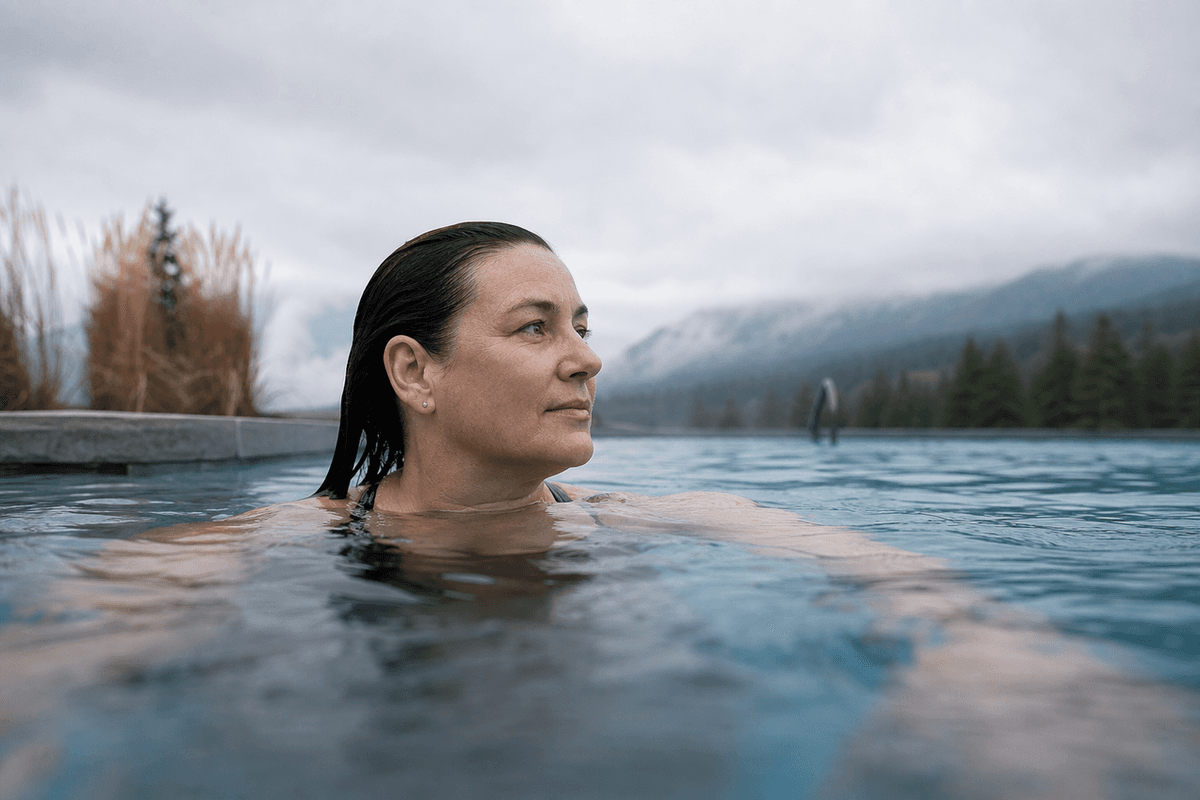
Cooling is the treatment for heat sensitivity, and the same review covers it: cooling garments, cool rooms, cool drinks and cool water before and during activity reduce the symptom worsening and let people do more. On the wellness menu that turns the equation around. A cool pool, a cool shower, a swim in a lake, an air-conditioned studio, all of it works with the condition rather than against it, and many people with MS find cool water immersion one of the few things that makes a hot day possible.
A cold plunge is a stronger version, with the ordinary cardiovascular cautions our guide to who should avoid cold plunging covers, plus two MS-specific points: cold can briefly increase spasticity in some people, and a body with sensation changes needs to be sure of its footing getting in and out. Cool rather than icy is the sensible start, and our guide to which cold format suits which goal covers the gentler formats.
Exercise, the practice with the evidence
Walking, fatigue, strength and mood, and it works better cooler.
Motl and Pilutti in Nature Reviews Neurology in 2012 review the trials of exercise training in multiple sclerosis and find consistent benefits for walking, muscle strength, fatigue, mood and quality of life, with no evidence that it provokes relapses. That makes exercise the wellness practice that treats the condition’s symptoms rather than merely not harming it, and the fear that exertion is dangerous in MS is the myth to retire.
The practical version respects the heat switch: a cool room, a fan, a cool drink, a swim rather than a hot studio, and sessions timed for the cooler part of the day. Water-based movement is close to ideal because the pool cools while it supports. Yoga, Pilates and tai chi with an instructor who knows the condition suit balance and stiffness, and our guide to yoga styles and our tai chi and qigong explainer help pick a calm, cool class. What the program looks like for you belongs with a physiotherapist who works with MS, and our comparison of massage and physical therapy covers why.
Massage, sensation and spasticity
Fine, with three things to tell the therapist.
Massage is welcome and many people with MS find it eases stiffness and the muscle tension that spasticity brings. Tell the therapist three things: where sensation is reduced, because you may not feel pressure that is too firm; where spasticity is, because a limb can jump or resist; and that the room should be cool rather than warm, since a heated table or a hot room can switch symptoms on mid-session. Our first massage guide covers how to ask, and our guide to the types of massage covers which styles use heat.
Immune-modifying and immune-suppressing medication is the other thing to mention, because it decides the communal hot tub and skin-infection questions, which our guide to wellness with an autoimmune condition covers in full.
Balance, floors, fatigue and the building
The wet floor is the hazard, not the water.
Balance and walking problems are common in MS, and a wellness venue is a series of wet, warm floors between changing room, shower, pool and plunge. Rails, non-slip surfaces, a bench to sit on while changing and staff who do not rush you matter more than any modality, and our guide to accessible wellness with a disability covers exactly what to ask. Fatigue, the invisible symptom, argues for shorter visits, morning sessions and pacing, and our guide to chronic fatigue and long COVID covers the pacing method. Bladder urgency is common and a venue with a bathroom close to the pool is a practical question worth asking without embarrassment.
Multiple sclerosis and wellness at a glance
| Practice | Fine as is | Needs adjusting | Avoid |
|---|---|---|---|
| Sauna, steam, hot tub, hot springs | Rarely, short and cool with an exit plan | A neurologist’s view if heat-sensitive | Sustained heat, alone, without a way out |
| Hot yoga, heated rooms | Nothing specific | A cool class instead | The heated version |
| Cool pool, swimming, water movement | Close to ideal | Footing on wet floors | Nothing specific |
| Cold plunge | Cool rather than icy | Spasticity, footing, cardiovascular cautions | Icy water as a first experiment alone |
| Exercise, classes | The best-evidenced practice | Cool room, fan, timing, a physiotherapist’s program | Nothing specific |
| Yoga, Pilates, tai chi | Calm, cool, instructor told | Balance support, no heated studio | Heated studios |
| Massage | Yes | Sensation, spasticity and a cool room flagged | Heated tables, hot stones if heat-sensitive |
| Float tank | Some tolerate it | Ask for cooler water, help getting out | Warm water if heat-sensitive |
| Communal hot tubs, pools | Depends on medication | Ask what you take | Shared warm water on immunosuppressants |
What is oversold
Cures, diets and the clinic abroad.
MS attracts a large cure industry: named diets sold as reversing the disease, bee venom, supplement protocols, “liberation” procedures on neck veins, stem cell clinics abroad, and hyperbaric oxygen, which our hyperbaric oxygen explainer covers honestly. None of it has the evidence the disease-modifying medication has, and some of it has harmed people. Our guide to spotting a nonsense wellness claim is the filter, and any venue that hints its practice could replace your medication has told you what it knows.
What belongs to your neurologist
Relapses, medication, rehabilitation, and the heat answer for you.
Diagnosis, disease-modifying medication, the response to a relapse and the rehabilitation program belong with your neurologist, MS nurse and physiotherapist. Ask them how heat-sensitive you are and what that means for a sauna, what your medication means for shared water, and what a safe exercise program looks like.
Contact them promptly for new or worsening symptoms lasting more than a day that do not resolve with cooling, since that may be a relapse rather than a heat effect, and for fever with any worsening, since infection provokes both. If you book classes or bodywork alongside proper care, check whoever you see with our credential-checking guide. We only recommend what we would send a friend to, and here that means a venue that turns the temperature down before it turns the lights low.
FAQ
Can I use a sauna with multiple sclerosis? For most people with MS, sustained heat brings symptoms back within minutes, so saunas, hot tubs and steam rooms are the things to avoid or keep very short and cool with an exit plan. The worsening passes on cooling and is not a new attack.
Is cold water good for multiple sclerosis? Cooling is the counter to heat sensitivity, and cool water often makes activity possible. A cold plunge adds cardiovascular cautions and can briefly stiffen spastic limbs, so start cool rather than icy and mind your footing.
Is exercise safe with multiple sclerosis? Yes, and it has the strongest evidence of anything on the menu, improving walking, fatigue and mood without provoking relapses. Do it cool, with a fan or a pool, and with a physiotherapist’s program.
Can I get a massage with multiple sclerosis? Yes. Tell the therapist where sensation is reduced, where spasticity is, and that the room and table should be cool, and mention any immune-modifying medication.
The bottom line on multiple sclerosis
Multiple sclerosis makes most people heat-sensitive, so the restorative end of the wellness menu, saunas, hot tubs, hot yoga and warm floats, switches symptoms on, and cooling switches them off. Cool water, cool rooms and pool-based movement work with the condition, and exercise has the strongest evidence of anything here.
Massage is fine with sensation, spasticity and room temperature flagged, immune-modifying medication decides the shared-water rule, and the wet floor between the changing room and the pool is the hazard to plan for.
Symptoms that do not settle with cooling, or any worsening with fever, belong with your neurologist, and a venue that turns the heat down for you is the one to book.