Your first banya: what to expect, including the venik
A banya is the hottest, wettest and most hands-on room in bathhouse culture, and its signature treatment involves someone hitting you rhythmically with a bundle of soaked oak leaves. It is far more pleasant than that sentence suggests.
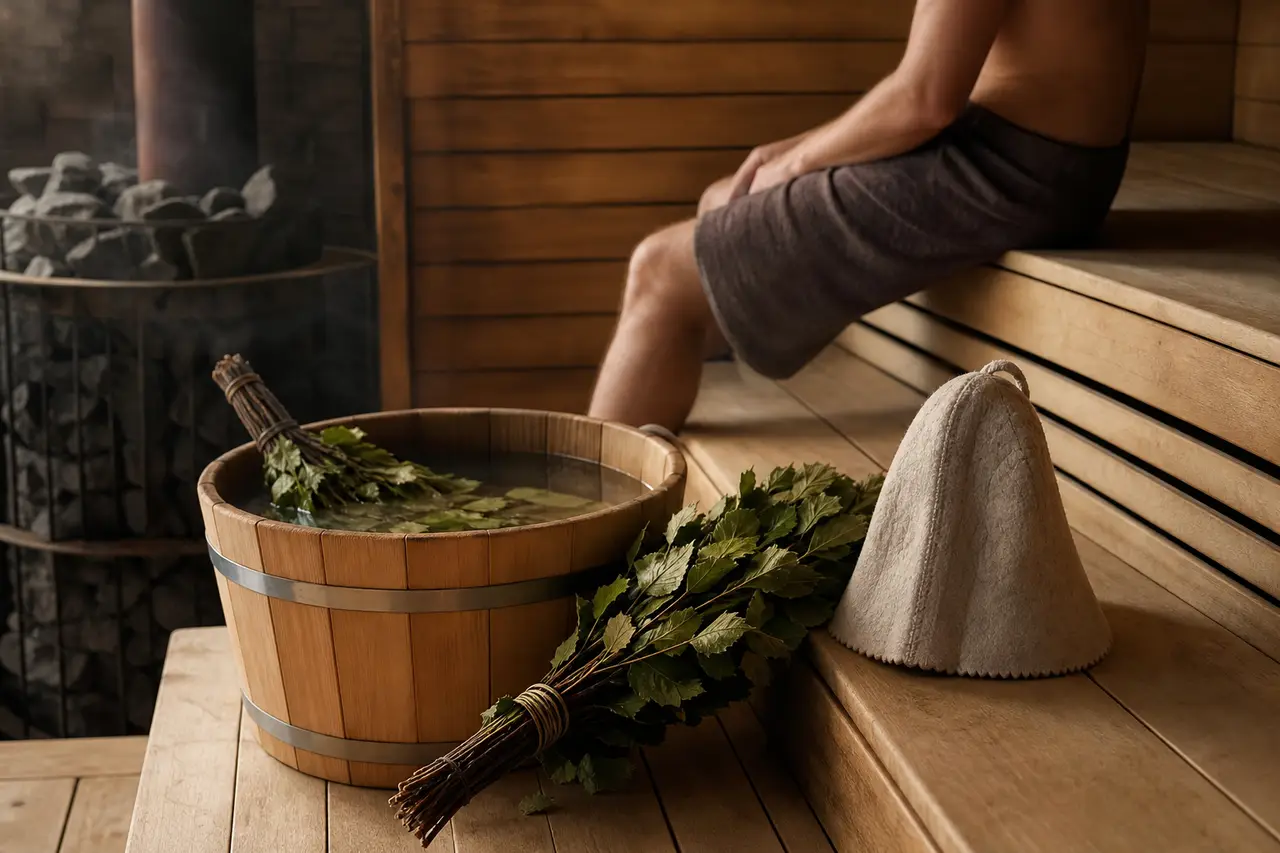
Short answer: A banya runs hotter and wetter than a Finnish sauna, 70 to 90°C at high humidity, cycling heat, cold plunge and equal rest over two to four hours. The venik or platza treatment fans, presses and rhythmically strikes you with soaked birch or oak branches. Wear the felt hat and take the lowest bench.
A banya is the Russian and Eastern European bathhouse tradition, and it is the most intense room most people will walk into. It runs hot like a Finnish sauna but with far more moisture, which makes the perceived heat considerably higher.
Its signature is the venik: a bundle of soaked birch or oak branches that an attendant uses to fan, press, and rhythmically strike you. That treatment is called a platza in many American banyas, and it is the reason people come.
It sounds alarming written down. In practice it is one of the more enjoyable things in bathhouse culture, provided you know how the cycle works and go in with realistic expectations. We don’t take placement fees, so nothing here points you anywhere.
What is the basic cycle?
Heat, venik, cold, rest, repeat.
You start in the parilka, the steam room, sitting quietly to warm up and sweat. The heat is produced by a large masonry stove, and an attendant periodically throws water on the stones to release a burst of steam, which raises the humidity sharply.
Then comes the venik treatment if you have booked one, usually 10 to 20 minutes on a bench with an attendant working over you. After that, straight into cold: a plunge pool, a bucket dump, or a cold shower.
Then you rest properly, in a cooler room, usually for as long as you were in the heat, often with tea. Then you repeat, typically three or four times over two to four hours. The rest between rounds is not an interval in the experience; it is a part of it.
What does the venik treatment actually involve?
Fanning, pressing, and light rhythmic striking.
The branches are soaked in hot water until soft. The attendant uses them first to fan hot air down onto you, which is the part that makes the heat feel enormous, then to press the hot leaves against your skin, then to strike rhythmically along your back, legs, and arms.
The striking is not a beating. It is brisk and percussive rather than painful, and a good attendant is watching your reaction constantly. You lie face down first, then turn over, and it usually ends with cold water poured over you.
Birch is the most common and mildest; oak is firmer; eucalyptus adds a strong aroma that is worth knowing about if you are sensitive to scent or have asthma. Our guide on sauna, steam and asthma covers that specifically.
Banya at a glance
| Banya | |
|---|---|
| Temperature | 70 to 90°C, high humidity |
| Perceived heat | Higher than a Finnish sauna at the same reading |
| Duration | 2 to 4 hours, in rounds |
| Signature | Venik or platza treatment with leafy branches |
| Felt hat | Yes, genuinely useful, wear it |
| Cold plunge | Integral, not optional in the traditional cycle |
| Nudity | Varies widely; often swimwear in US venues |
| Beginner-friendly | Yes, if you take the lowest bench and short rounds |
| Skip if | Cardiac conditions, pregnancy, poorly controlled BP |
Why the felt hat?
It protects your head and it is not a novelty.
The wool or felt hat you see everyone wearing is functional. In a room this hot and humid, the air at head height is dramatically hotter than at chest height, and the hat insulates your head and ears, which is where discomfort builds first.
It genuinely lets you stay longer and more comfortably. Skipping it because it looks silly is the classic first-timer mistake, and most banyas sell or lend them.
The same logic explains the bench hierarchy. Heat stratifies strongly, so the top bench can be many degrees hotter than the bottom one. Start low, always, and move up only when you know how you respond. Our guide on what to wear and bring covers the general kit.
How does it compare to a sauna or a hammam?
Hotter and wetter than both, and more hands-on.
A Finnish sauna is dry and self-directed: you sit, you sweat, you choose when to leave. A banya is wetter, and the parilka with a fresh steam burst is a genuinely intense environment.
A hammam is much cooler and centred on being washed and scrubbed. A banya is much hotter and centred on heat being driven into you. Both are hands-on, and they feel nothing alike.
Our comparison of sauna vs banya vs hammam vs Korean spa covers the four traditions side by side, and our guides to your first hammam and your first bathhouse or Korean spa cover the others as entry guides.
What is banya etiquette?
Rinse first, sit on a towel, keep the door shut.
Shower before entering the parilka, always, and sit on a towel. Close the door quickly and fully behind you, because a slow door dumps the heat everyone has been building and it is the one thing that reliably annoys regulars.
Do not throw water on the stones yourself unless it is clearly the norm and you have watched how it is done. In many banyas one person manages the steam, and an unannounced ladle can make the room unbearable for people on the top bench.
Conversation is normal and often lively in the rest area, quieter in the parilka. Tipping the attendant after a platza is customary in most US banyas; ask at the desk. Our guide on tipping at a wellness studio or spa covers the wider etiquette.
Who should take it carefully?
Anyone for whom heat is already a question, plus first-timers generally.
The heat load in a banya is at the top of what bathhouse culture offers, and the traditional cycle pairs it with cold immersion, which is a second cardiovascular stress. That combination means the usual cautions apply more strongly than for a mild sauna.
Talk to a doctor first if you have a heart condition, an arrhythmia, uncontrolled blood pressure, or are pregnant. Our guides on sauna and the heart and pregnancy safety cover those cases.
Never combine it with alcohol, which many banyas serve. Our guide on alcohol and sauna covers why that is the single clearest risk factor. And read what to do if you feel faint before your first visit rather than after.
FAQ: banya and venik
Does the venik hurt? It should feel brisk and stimulating, not painful. Say so if it crosses that line; attendants adjust routinely and expect first-timers to speak up.
Do I have to do the cold plunge? Not at all, though it is central to the traditional cycle and it is what makes the next heat round feel good. A cold shower is a gentler entry point.
How long should my first round be? Considerably shorter than you think, five to ten minutes on the lowest bench. The humidity means you reach your limit faster than in a dry sauna.
Should I book a platza on my first visit? It is a good idea if you want the full experience, but do one heat round first so you know how the room feels before adding a treatment on top.
The bottom line on your first banya
A banya is hotter and wetter than a Finnish sauna, structured in rounds of heat, cold, and real rest, with the venik treatment as its centrepiece. The leafy branches are used to fan and press heat into you and the rhythmic striking is stimulating rather than painful.
Wear the felt hat, take the lowest bench and a short first round, close the door properly, and treat the cold and the rest as part of the experience rather than optional extras. Skip the alcohol entirely.