What to do after a cold plunge: rewarming, the afterdrop, and mistakes to avoid
The plunge gets all the attention, but the ten minutes after are where people get it wrong. The counterintuitive part is that you keep getting colder after you get out, and how you rewarm matters more than the plunge itself.
Short answer: Get out, dry off fast, put on warm dry layers and rewarm by moving gently, because your core keeps cooling for several minutes after you leave the water. That is the afterdrop. Skip the immediate scalding shower: it dilates vessels and drops blood pressure while you are still cooling, which is how people faint.
Get out, dry off fast, put on warm dry layers, and rewarm gently through movement, because you actually keep getting colder for several minutes after you leave the water. This is called the afterdrop, and it is the single most important thing to understand about the minutes after a plunge.
The counterintuitive rules follow from it: do not rush straight into a scalding hot shower, do not assume you are safe just because you are out, and let your body rewarm from the inside rather than shocking it warm from the outside. How you handle the afterdrop matters more than most of what you did in the tub.
Done right, rewarming is simple and pleasant. Done wrong, it is where dizziness and worse tend to happen.
What is the afterdrop?
Your core temperature keeps falling after you get out.
During the plunge, your body shunts blood away from your cold arms and legs to protect your core, so your limbs get very cold while your core stays warmer. When you get out and start to relax and move, that cold blood from your extremities returns to circulation, and your core temperature actually drops further for several minutes after you leave the water.
That is the afterdrop: the coldest you feel is often a few minutes after the plunge, not during it. It catches people out, because they assume getting out means warming up, when the opposite is happening first.
Understanding this is what makes the rest of the advice make sense. You are managing a body that is still cooling, not one that is already recovering. Our cold plunge safety guide covers the wider cautions.
How should you rewarm?
Gently, actively, and from the inside.
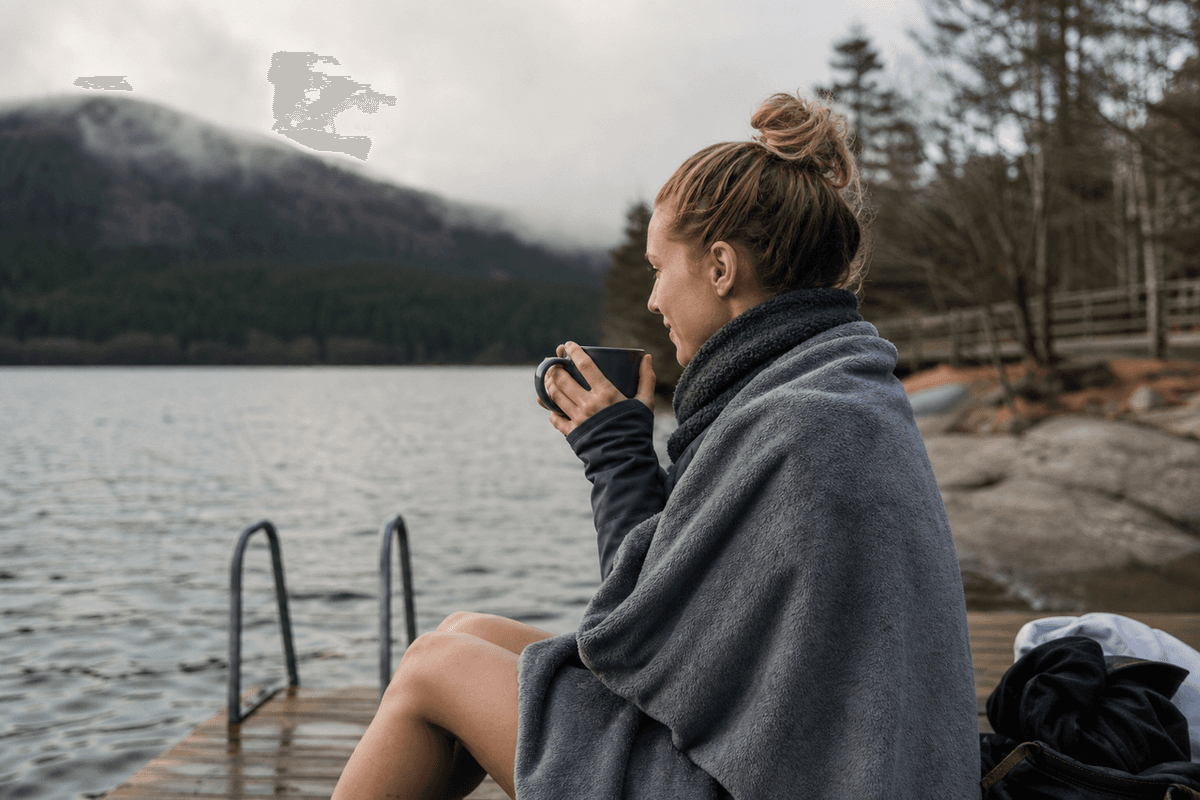
The safest rewarming is gradual and active. Dry off quickly and thoroughly, since wet skin keeps cooling you, then put on warm, dry layers, a hat, and something on your feet. Then move: gentle walking, light activity, or some easy movement generates heat from within and helps your circulation rebalance.
A warm drink is pleasant and helps you feel better, though it is the movement and layers doing most of the work. Give yourself ten to fifteen minutes of unhurried rewarming rather than expecting to be fine instantly.
The Wim Hof community’s habit of doing gentle movement to warm up, rather than reaching for external heat, reflects this: warm from the inside first. Our first cold plunge guide covers the session itself.
Why can a hot shower be a mistake?
Because it can worsen the drop in blood pressure and make you faint.
Jumping straight from a cold plunge into a very hot shower feels tempting, but it can be counterproductive and even risky. A hot shower rapidly dilates the blood vessels in your skin, which can drop your blood pressure sharply while your body is still dealing with the cold and the afterdrop, and that combination is a recipe for dizziness or fainting.
It also, if your goal was the metabolic or brown-fat stimulus of cold, cuts short the mild cold stress your body was responding to, though for most people the safety point matters more.
If you want warmth, a lukewarm-to-warm shower after you have rewarmed a bit is gentler than a scalding one immediately. Better still, rewarm with layers and movement first, then have a normal warm shower once you feel stable.
What about contrast, going into a sauna after?
Fine, but go warm gradually, not shockingly.
Deliberate contrast, alternating cold and heat, is a valid and enjoyable practice, and moving into a sauna after a plunge is part of many routines. The key is that entering moderate heat and warming gradually is different from blasting yourself with the hottest possible water the instant you climb out. Our contrast therapy guide and right order guide cover sequencing.
Even in contrast bathing, respect the afterdrop and how you feel, come out of the cold calmly, and ease into the heat rather than shocking your system. If you feel dizzy at any point, stop and rest somewhere neutral.
The principle is the same: gradual transitions, not violent ones.
What mistakes should you avoid?
A short list that prevents most problems.
Do not stay in wet clothes or a wet swimsuit while you cool further, since that deepens the afterdrop. Do not immediately drive or do anything requiring full coordination if you feel shivery or lightheaded, wait until you are properly warm and steady. Do not do breath-holds or get back in the water while cold and depleted. And never treat feeling faint or unusually cold as something to push through. Our how to breathe during a cold plunge guide covers the in-water side.
If you have a heart condition, high blood pressure, or you are pregnant, all of this matters more, and cold plunging should be cleared with a doctor first. Our pregnancy safety guide covers that case.
Warm, dry, moving, and unhurried is the whole recipe.
The bottom line on rewarming after a plunge
You keep getting colder for minutes after a cold plunge, the afterdrop, so dry off fast, layer up, and rewarm gently through movement from the inside rather than blasting yourself with a hot shower.
The plunge is the easy, dramatic part. Handling the quiet few minutes afterward well is what keeps it safe and pleasant.
To find a cold plunge or sauna studio near you, start with our city wellness maps.