Wellness with eczema or psoriasis: saunas, salt water, floats and what to tell a therapist
The industry sells skin as something to detox, scrub and sweat clean. Skin with eczema or psoriasis needs the opposite: less friction, fewer irritants, and salt water and sun treated as what they are, a treatment with a dose, not a spa day.
The honest verdict first: eczema and psoriasis are inflammatory skin conditions, not dirty skin, and the wellness industry’s reflex to scrub, sweat and detox is the reflex to distrust. Heat and sweat can trigger eczema, skin injury can seed new psoriasis plaques, and the things that genuinely help, salt water and ultraviolet light, are treatments with a dose rather than a spa day.
That leaves more open than it closes. Saunas suit some people and flare others, floats and hot springs are often fine on intact skin, massage is fine with the right oil, and cold water is often soothing. The things to skip are the scrubs, the wraps, and anyone promising to cleanse a condition that is not about cleanliness.
This is general information, not medical advice. Which condition you have, and what treats it, belongs with a dermatologist.
What eczema and psoriasis actually are
Two different conditions, one industry reflex.
Eczema, or atopic dermatitis, is a chronic inflammatory condition in which the skin barrier does not hold moisture or keep irritants out the way it should, so the skin dries, itches and flares. Langan and colleagues in The Lancet in 2020 review it as a barrier and immune problem together, with heat, sweat, irritants and stress among the common triggers, and emollients and anti-inflammatory treatment as the foundation of care.
Psoriasis is an immune-mediated condition in which skin cells are produced far too fast, forming the thick, scaled plaques most people recognise. Griffiths and colleagues in The Lancet in 2021 describe its triggers, including stress, infections and injury to the skin, and its treatments, from topical creams through phototherapy to systemic and biologic medication. Some people with psoriasis also develop joint disease, which our guide to rheumatoid and psoriatic arthritis covers.
Neither is contagious. Neither is caused by being unclean. Both are worse with friction and irritation, which is the whole reason the spa menu needs reading carefully.
Heat, sweat and the sauna question
Some people flare, some do not, and rinsing matters either way.
Heat and sweat sit on the trigger list for eczema, and plenty of people find a sauna or a hot yoga class sets off the itch. Others find dry heat perfectly comfortable and steam gentler still, because humid air is kinder to a dry barrier. There is no rule that fits everyone, so the honest approach is a short first session, a lukewarm rinse afterwards to get sweat off the skin, and moisturiser while the skin is still damp. Our read on whether a sauna helps your skin covers the general claims and why heat is a recognised trigger for some conditions.
Hot tubs add chemistry to heat. Chlorine and bromine strip and irritate a compromised barrier, so a chlorinated tub is more likely to bother eczema than the sauna next to it. Rinse, moisturise, and keep sessions short. Our guide to feeling faint in a sauna applies to everyone and is not skin-specific.
Salt water, floats and hot springs
Real evidence, modest size, and intact skin is the condition.
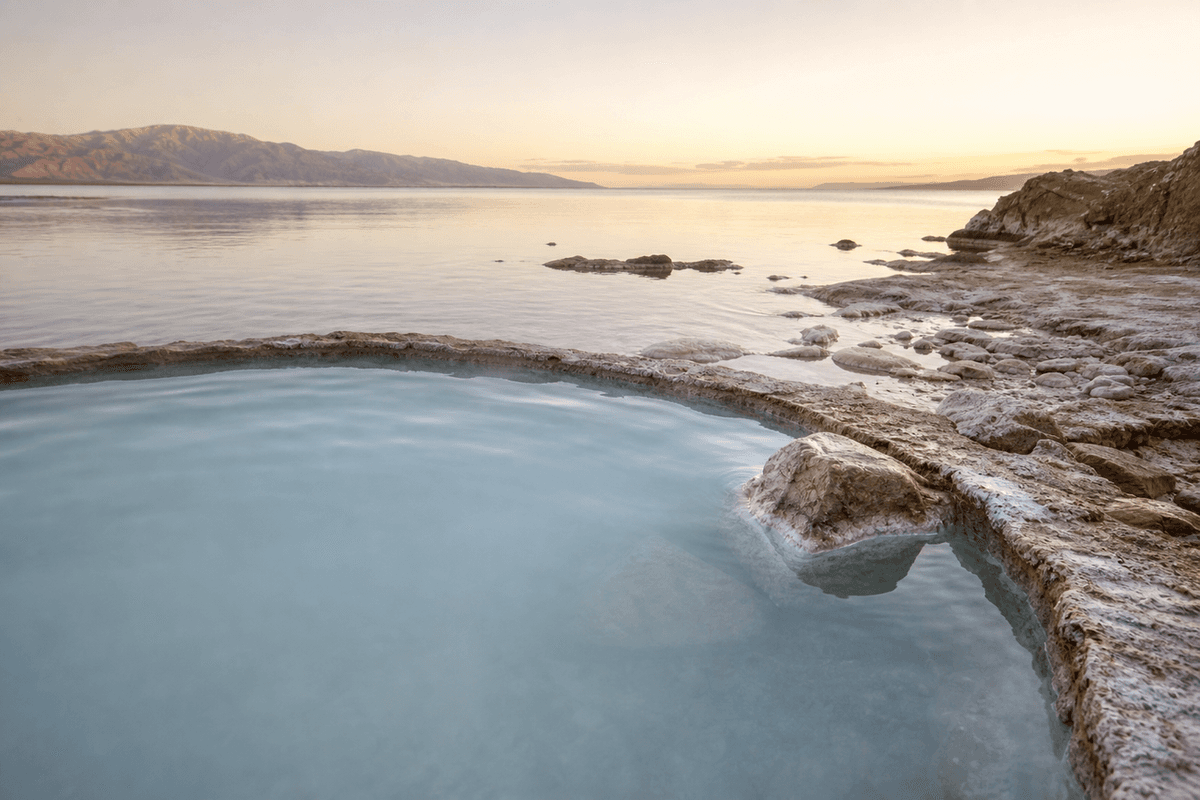
Salt water has a longer record here than most of the spa menu. Emmanuel and colleagues in Frontiers in Medicine in 2020 followed people with psoriasis through Dead Sea climatotherapy, salt water and sun together, and recorded improvement in severity over the stay, in a cohort without a comparison group. Moini Jazani and colleagues in the International Journal of Dermatology in 2022 reviewed hydrotherapy, spa therapy and balneotherapy for psoriasis and atopic dermatitis and found some benefit on low-quality, mixed evidence. Read both as encouraging and imprecise: salt water can help, and nobody can tell you the dose from a spa brochure.
A float tank is a very strong Epsom salt solution at skin temperature. On intact skin it is usually fine and some people with psoriasis like it. On cracked, weeping or freshly scratched skin it stings and can dry things further, which is why our float tank guide lists eczema among the things to ask about first. Cover small cuts with the barrier cream centres provide, and skip a float during a raw flare.
Hot springs combine warmth with minerals, and some sulphur springs have a folk reputation for skin. Treat them like the sauna: try short, rinse, moisturise, and watch for the reaction. Our guide to hot springs covers choosing one. An Epsom bath at home is the same principle at lower strength, and our read on what an Epsom salt bath does is honest about how little that is.
Sun, sunbeds and why phototherapy is a prescription
Ultraviolet light treats psoriasis. The spa version is not the treatment.
Narrowband ultraviolet light is an established treatment for psoriasis, and Elmets and colleagues in the Journal of the American Academy of Dermatology in 2019 set out the dermatology guidelines for it: a measured dose, delivered under medical supervision, with the skin cancer risk tracked. That is why sun improves many people’s psoriasis on holiday, and why a sunbed or an afternoon by the pool is not a substitute. The dose is unmeasured, sunburn is itself a skin injury, and injury is exactly what psoriasis responds to with new plaques.
If light helps you, the conversation is with a dermatologist about phototherapy, not with a spa about a tanning room. Salt rooms sit in the same bucket of plausible-sounding help without a dose, and our halotherapy explainer covers how thin that evidence is.
Scrubs, wraps, brushes and the skin-injury problem
Friction is the thing psoriasis punishes.
Psoriasis has a habit of appearing where the skin has been injured: a scratch, a scrape, a sunburn. That makes the exfoliating end of the spa menu a bad idea during a flare and a questionable one at any time. A hammam scrub, dry brushing, gua sha over a plaque, cupping on affected skin, all create exactly the kind of irritation that seeds new patches, and our hammam guide already tells you to skip the scrub during a flare. Eczema does not seed plaques the same way, but a stripped barrier itches more, so the advice converges.
Body wraps and “detox” wraps belong here too. Their ingredients, from clay to essential oils, are common irritants, and our read on body wraps and detox wraps already lists active eczema and psoriasis among the reasons to decline one.
Massage, oils and what to tell the therapist
Fine, with a plain oil and a therapist who knows plaques are not contagious.
Massage is welcome with both conditions. The adjustments are the oil and the pressure. Fragranced oils, essential-oil blends and anything with a long ingredient list are the usual eczema irritants, so ask for a plain, fragrance-free oil or bring your own emollient. Over plaques, lighter pressure and no dragging, and over weeping, cracked or infected skin, nothing at all until it has settled.
Tell the therapist what you have. A good one adjusts the oil and the pressure. One who refuses on the assumption that psoriasis spreads by touch has told you they need a different client. Our guide to the types of massage covers which styles use the most oil and friction, and our credential-checking guide covers vetting.
Cold water, medication and shared water
Cold often soothes. Immune-suppressing medication changes the shared-water rules.
Cold water is soothing for itch for many people, and a cool shower after a flare-prone activity is a reasonable habit. A cold plunge carries its own cardiovascular cautions, none of them skin-specific, and our guide to who should avoid cold plunging covers them. Cold urticaria, hives on cold exposure, is a separate condition and a reason to skip plunges entirely.
If your psoriasis or eczema is treated with immune-suppressing or biologic medication, the shared-water and skin-infection cautions change, and our guide to wellness with an autoimmune condition covers that side in full rather than repeating it here.
Eczema, psoriasis and wellness at a glance
| Practice | Fine as is | Needs adjusting | Avoid |
|---|---|---|---|
| Sauna and steam | Often, especially steam | Short first session, rinse, moisturise | Nothing specific, unless it flares you |
| Hot tubs | Intact skin, short | Rinse the chlorine off, moisturise | Long soaks during a flare |
| Float tanks | Intact skin | Barrier cream on small cuts | Raw, cracked or weeping skin |
| Hot springs, salt water | Usually, with the same rinse | Watch the reaction, short first | Open skin |
| Sun and sunbeds | Ordinary sun protection | Ask about phototherapy instead | Sunburn, tanning as treatment |
| Scrubs, brushing, gua sha, cupping | Nothing specific | Only on unaffected skin, gently | Over plaques or a flare |
| Body wraps | Nothing specific | Nothing specific | The whole category |
| Massage | Fragrance-free oil, lighter over plaques | Bring your own emollient | Weeping, cracked or infected skin |
| Cold water | Often soothing | Standard plunge cautions | If you have cold urticaria |
What is oversold
Detox for a condition that is not about dirt.
“Detox your skin” is the pitch, delivered through wraps, cleanses, teas and scrubs, and it rests on the idea that the skin is holding something it needs to release. Eczema and psoriasis are immune and barrier conditions. Nothing in a wrap reaches that, and the friction and ingredients make things worse. Our guide to spotting a nonsense wellness claim is the filter.
Salt caves, colloidal silver, “healing” oils and diets sold as cures are the second tier. Some people notice food triggers, and that is a conversation with a dermatologist or dietitian, not a retreat that sells an elimination program.
What belongs to your care team
Diagnosis, treatment, and the flare that is not just a flare.
Which condition you have, what treats it, whether phototherapy suits you and what your medication means for shared water are a dermatologist’s questions. See one promptly for skin that is weeping, crusting, painful or spreading fast, for fever with a flare, for eczema around the eyes that affects vision, and for joint pain or stiffness alongside psoriasis, which can be psoriatic arthritis and deserves an early diagnosis. We only recommend what we would send a friend to, and here that means a therapist who asks about your skin before reaching for the scrub.
FAQ
Is a sauna good for eczema or psoriasis? Some people find heat flares eczema and others find dry heat or steam comfortable. Try a short session, rinse the sweat off with lukewarm water and moisturise straight away. For psoriasis the sauna itself is usually fine; sunburn and scrubs are the problems.
Can I float with eczema or psoriasis? On intact skin, usually yes, and some people with psoriasis find the salt soothing. On cracked, weeping or freshly scratched skin it stings and dries, so skip a float during a raw flare and cover small cuts.
Can I get a massage with psoriasis? Yes. Psoriasis is not contagious. Ask for a fragrance-free oil, lighter pressure over plaques and nothing over weeping or infected skin, and tell the therapist before you start.
Does salt water help psoriasis and eczema? The evidence is real and modest: Dead Sea climatotherapy and balneotherapy studies show benefit on low-quality evidence. Salt water is a treatment with a dose, and the dose is a dermatologist’s conversation, not a spa’s.
The bottom line on eczema and psoriasis
Eczema and psoriasis are inflammatory conditions of the skin barrier and immune system, not dirty skin, and the wellness reflex to scrub, sweat and detox is the one to distrust. Heat and sweat trigger some people’s eczema, skin injury seeds psoriasis plaques, and salt water and ultraviolet light help with a dose that a spa cannot give you.
Saunas and steam are worth a short trial with a rinse afterwards, floats and hot springs are fine on intact skin, massage is fine with a plain oil, and cold water often soothes. Scrubs, wraps, sunbeds and detox pitches are the things to walk past.
Diagnosis, treatment, phototherapy and any flare that weeps, spreads or comes with fever or joint pain belong with a dermatologist, and a venue that wants to exfoliate a flare has told you what it knows.