Dry needling vs acupuncture: what's the difference, and which do you need?
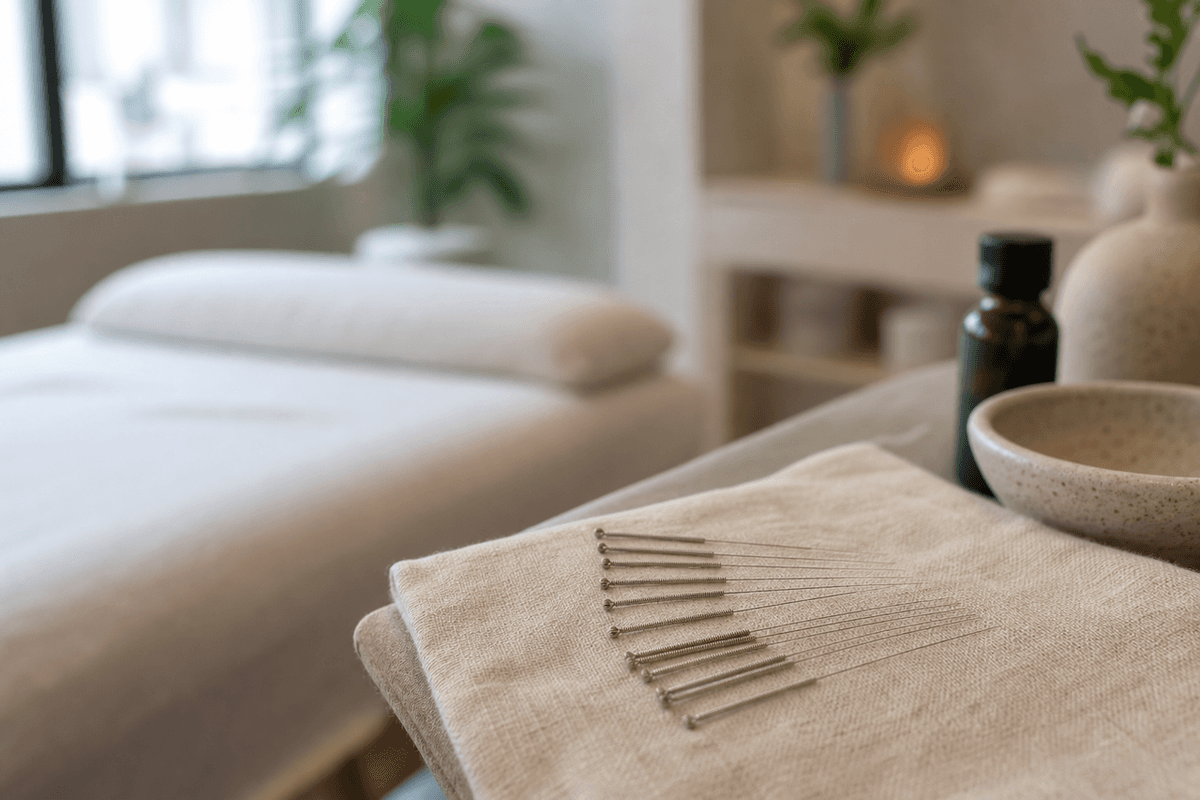
They use the same needles and look almost identical from the table. The theory behind them, the training of the person holding the needle, and what they are trying to do could hardly be more different.
Short answer: Same needles, different systems. Dry needling is a Western physiotherapy technique aimed at specific muscle trigger points; acupuncture is a traditional Chinese medicine system treating the whole person, delivered by licensed acupuncturists with far longer needle training. For a localised knot, dry needling. For broader or chronic issues, acupuncture. Evidence is modest for both.
They use the same thin needles, so on the table they look nearly identical. Underneath, they come from completely different worlds. Acupuncture is part of traditional Chinese medicine and treats the whole person along meridians. Dry needling is a modern Western technique, usually done by physiotherapists, that targets specific tight muscle knots.
Choose based on your actual problem and who is holding the needle, not the label. For a specific, localised muscle knot from training or posture, dry needling by a physio is the closer fit. For broader or chronic issues, or if you prefer the traditional framework, acupuncture.
Neither is a magic cure, and the evidence for both is more modest than either camp claims.
What is acupuncture, in one paragraph?
An ancient system that treats the whole person.
Acupuncture is a core part of traditional Chinese medicine, thousands of years old. Its theory involves inserting fine needles at specific points along channels called meridians to influence the flow of qi, the body’s vital energy. A practitioner takes a broad history and treats the person, not just the sore spot, often for things ranging from pain to stress to digestion.
You do not have to believe the traditional theory for it to be worth trying, and modern research tends to explain any effects through nerves, connective tissue, and expectation rather than qi. Our acupuncture explainer covers what a session is like and what the evidence honestly shows.
The needles are typically left in place for 15 to 30 minutes while you rest.
What is dry needling, then?
A modern muscle technique wearing the same needles.
Dry needling was developed within Western physiotherapy in recent decades. It targets myofascial trigger points, the tight, tender knots in muscle that refer pain elsewhere. The practitioner inserts a needle directly into the knot, often aiming to provoke a brief twitch response, which is thought to help the muscle release.
The word dry just means nothing is injected, unlike a wet injection of anaesthetic or steroid. It is usually brief and more locally intense than acupuncture, and it is grounded in anatomy and muscle physiology rather than meridians.
It is typically one part of a broader physiotherapy plan that includes exercise, not a standalone treatment.
Who actually performs each one?
This is one of the most practical differences.
Acupuncture is performed by licensed acupuncturists, who complete years of dedicated training in a distinct profession, often carrying a licence such as L.Ac. Dry needling is usually performed by physiotherapists, and sometimes chiropractors, who add it to their existing scope with a shorter certification.
That training gap is genuinely debated. Acupuncturists argue that dry needling is acupuncture with far less needle training. Physiotherapists argue it is a different technique within their anatomical expertise. Regulations vary by state, and in some places dry needling by physios is restricted or contested.
Either way, check the specific person’s qualifications. Our practitioner credentials guide covers how to verify a licence in a couple of minutes.
What does the evidence say for each?
Modest and mixed for both, which is worth hearing plainly.
For acupuncture, the better evidence is for certain chronic pain conditions and migraine prevention, where it tends to beat no treatment but only modestly beats sham needling, which is the crux of the ongoing debate about how much is a specific effect versus a powerful placebo.
For dry needling, reviews suggest it can produce short-term reductions in muscle pain and improve range of motion, but the evidence is limited, the studies are small, and the long-term benefit over other physiotherapy is unclear.
The honest summary for both: possibly helpful, mainly short-term, and best as part of a wider plan rather than a cure. Our acupuncture versus massage guide covers another common comparison for pain.
So which should you choose?
Match it to your problem.
If you have a specific, localised muscle knot, a tight trapezius from desk work, a sore calf from running, and you want it addressed within a rehab plan, dry needling by a physiotherapist is the more targeted choice, and you get the exercise prescription with it.
If your issue is broader, more chronic, or stress-related, or you specifically want the traditional Chinese medicine approach and a whole-person assessment, book a licensed acupuncturist.
If you just want to try needles for general wellbeing, acupuncture is the more established, better-regulated path for that. And if needles frighten you, a good practitioner of either will talk you through it first.
The bottom line on dry needling vs acupuncture
Same needles, different philosophies, different practitioners, and modest evidence on both sides. Dry needling is a localised muscle technique from Western physio, acupuncture is a whole-person system from traditional Chinese medicine.
Pick by the problem you actually have and by the qualifications of the person treating you, not by which word sounds more scientific.
To find an acupuncturist or recovery studio near you, start with our city wellness maps.