Gym sauna vs a dedicated studio: is the upgrade worth it?
Your gym sauna is already paid for, which makes it the best-value heat in the country if it is any good. The question is whether yours is actually hot, and that is answerable in one visit with a thermometer on the wall.
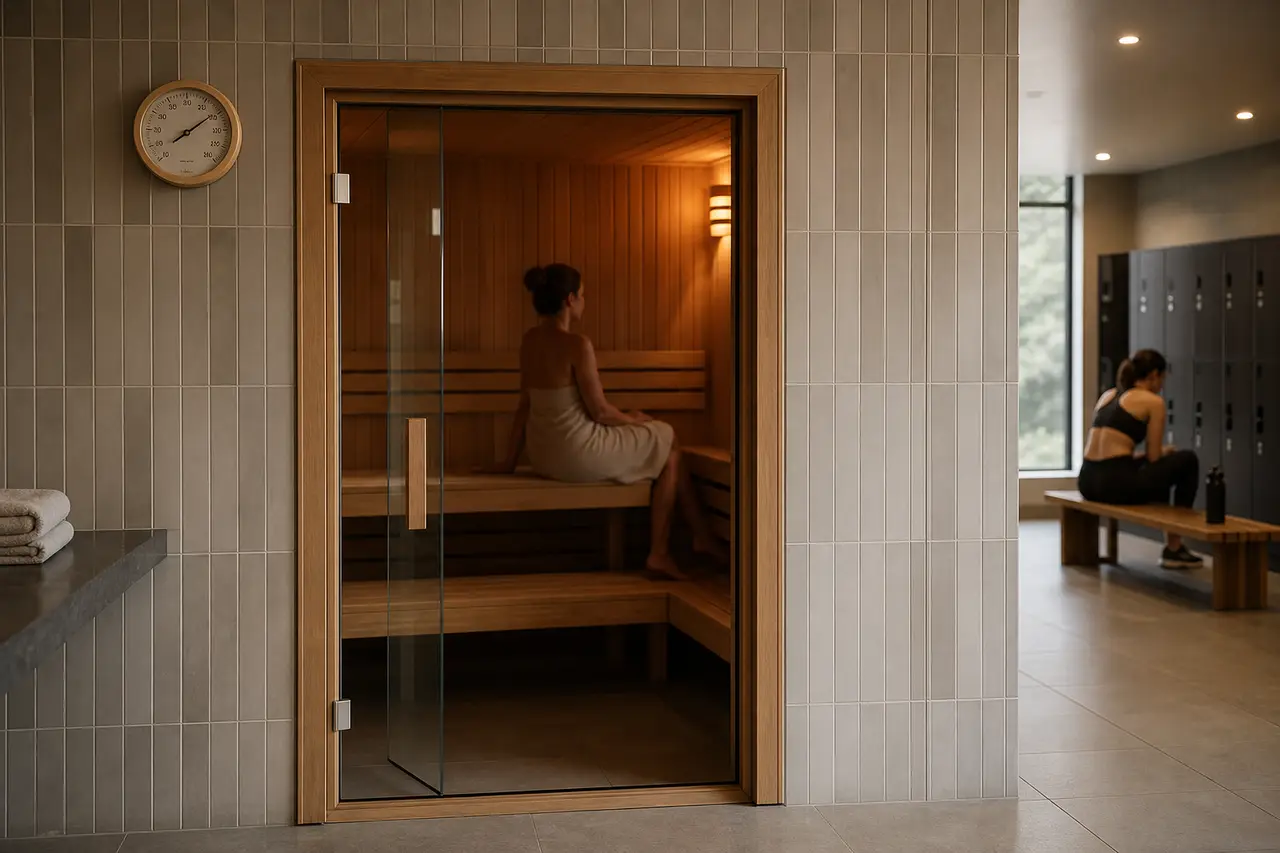
Short answer: Read the wall thermometer at the top bench. At a genuine 80°C and kept clean, your included gym sauna beats paying $30 to $60 a session for a nicer room you visit less often. At 60 to 70°C it is a warm room, and that plus wanting contrast is the case for a studio.
If your gym has a sauna, you are already paying for it, which makes it the cheapest heat available to you by a wide margin. Plenty of people ignore it and pay $40 a session elsewhere.
Sometimes that upgrade is justified and sometimes it is buying a nicer room for the same physiological stimulus. The deciding factor is boring and measurable: how hot yours actually gets.
Here is how the two compare, and the four checks that settle it in one visit.
The one thing that decides it
Temperature, and most people have never looked.
The cardiovascular research everyone cites was done in traditional Finnish saunas at roughly 80 to 100°C, for around 15 minutes, several times a week. A gym sauna running 60 to 70°C is a pleasant warm room delivering a meaningfully smaller stimulus.
Many do run cool, either because the thermostat is set conservatively for liability or because the unit is undersized for how often the door opens.
So look at the wall thermometer on your next visit. If it reads 80°C or above, you have a real sauna and paying for another one is buying ambience. If it reads 65°C, that is the gap a studio might close. Our guide on types of sauna explained covers why the number matters more than the label.
Gym sauna vs dedicated studio at a glance
| Gym sauna | Dedicated studio | |
|---|---|---|
| Cost | Included in membership | $30 to $60 a session |
| Temperature | Highly variable, often 60 to 75°C | Usually 80 to 95°C |
| Cold plunge | Rare | Usually included |
| Maintenance | Variable; wood and benches often tired | Purpose-built, better upkeep |
| Crowding | Peak hours are busy | Booked slots, controlled |
| Time available | Unlimited during your visit | Booked, usually 30 to 60 min |
| Löyly (water on stones) | Frequently not permitted | Usually part of the format |
| Best for | Regular short rounds after training | Contrast practice, a proper session |
What the gym version genuinely lacks
Cold, water on the stones, and upkeep.
A cold plunge. This is the biggest structural gap. Most gyms have neither a plunge nor a cold shower worth the name, so contrast practice is off the table. If contrast is what you want, that alone justifies a studio. Our guide on where to find a cold plunge covers the venue types.
Löyly. Many gym saunas are electric units where pouring water is prohibited, which removes the humidity bursts that make a sauna feel like a sauna rather than a hot cupboard.
Maintenance. Gym saunas take heavy use and are rarely anyone’s priority. Grey cracked benches, a stove that struggles, and a door that has never sealed properly are common. Our guide on choosing a sauna or cold plunge studio covers what good upkeep looks like.
What it does have is availability and price, and those beat almost everything for building an actual habit.
When the gym one is enough
More often than the industry would like.
If your gym sauna runs 80°C or hotter, it is clean, and you are already there several times a week, that is a better arrangement than paying elsewhere, because frequency is what the cohort research associates with benefit. Four short rounds a week in a mediocre room beats one perfect session a month.
Our guides on how often to use a sauna and what the sauna evidence supports cover the dosing, and the honest summary is that regularity matters more than the room.
One caveat on timing: if you are training for strength, keep cold away from the hours after lifting. Heat does not carry that problem. Our guide on whether a cold plunge after your workout blunts gains covers it.
When to pay for the studio
Four situations where it is genuinely better.
You want contrast. The gym cannot give you the cold half.
Your gym sauna is cool. Under about 70°C, you are getting a milder stimulus than the research describes.
You want unhurried time. A bathhouse gives you hours and a rhythm that a locker-room sauna does not. Our comparison of private vs communal sauna covers the formats.
Hygiene is poor. Cloudy plunge water, mould, a smell, or benches that are visibly past it. That is a reason to go elsewhere rather than a reason to tolerate it.
You do not need a membership to test this. Our guide on trying wellness without a membership covers day passes and class packs.
The four checks, on one visit
Two minutes, no equipment.
Read the wall thermometer at the top bench, not the door.
Ask whether you may pour water on the stones. The answer tells you the unit type and the house culture.
Look at the wood and the floor. Grey, cracked, or a persistent smell means low maintenance and probably low temperature too.
Check the cold options. Is there a cold shower that actually runs cold, which is a legitimate substitute for a plunge. Our comparison of cold plunge vs cold shower covers what you lose.
If it passes all four, you have been sitting on the best-value wellness in your life. If it fails two or more, the studio is worth the money.
FAQ: gym sauna vs dedicated studio
Is a gym steam room a substitute? Different thing rather than a lesser one. Our comparison of sauna vs steam room covers the difference.
Can I ask the gym to run the sauna hotter? Worth asking; sometimes it is a thermostat setting and sometimes a liability policy. Staff often do not know which.
What if the gym sauna is always crowded? Off-peak hours change the experience entirely, and mid-morning or mid-afternoon is usually empty.
Is an infrared cabin at a studio better than a hot gym sauna? Generally not, if the gym one is genuinely hot. Infrared is a milder stimulus with a thinner evidence base. Our infrared vs traditional comparison covers it.
The bottom line on gym sauna vs dedicated studio
An included gym sauna running a genuine 80°C, kept clean, and used several times a week is the best value in this entire category, and it beats paying for a nicer room to do the same thing less often.
Check the thermometer at the top bench, whether you may pour water, the state of the wood, and whether any cold option exists. Contrast practice and a cool sauna are the two clear reasons to pay for a studio instead.
If the studio side wins for you, our city guides name the dedicated places worth the money: Dallas-Fort Worth, Houston and Atlanta each list venues with addresses and official sites.