Recovery for runners: what actually helps after a long run
A meta-analysis ranked the common recovery methods against each other, and the winner is the cheapest and least glamorous one on the list. The expensive options are not useless, they are just further down.
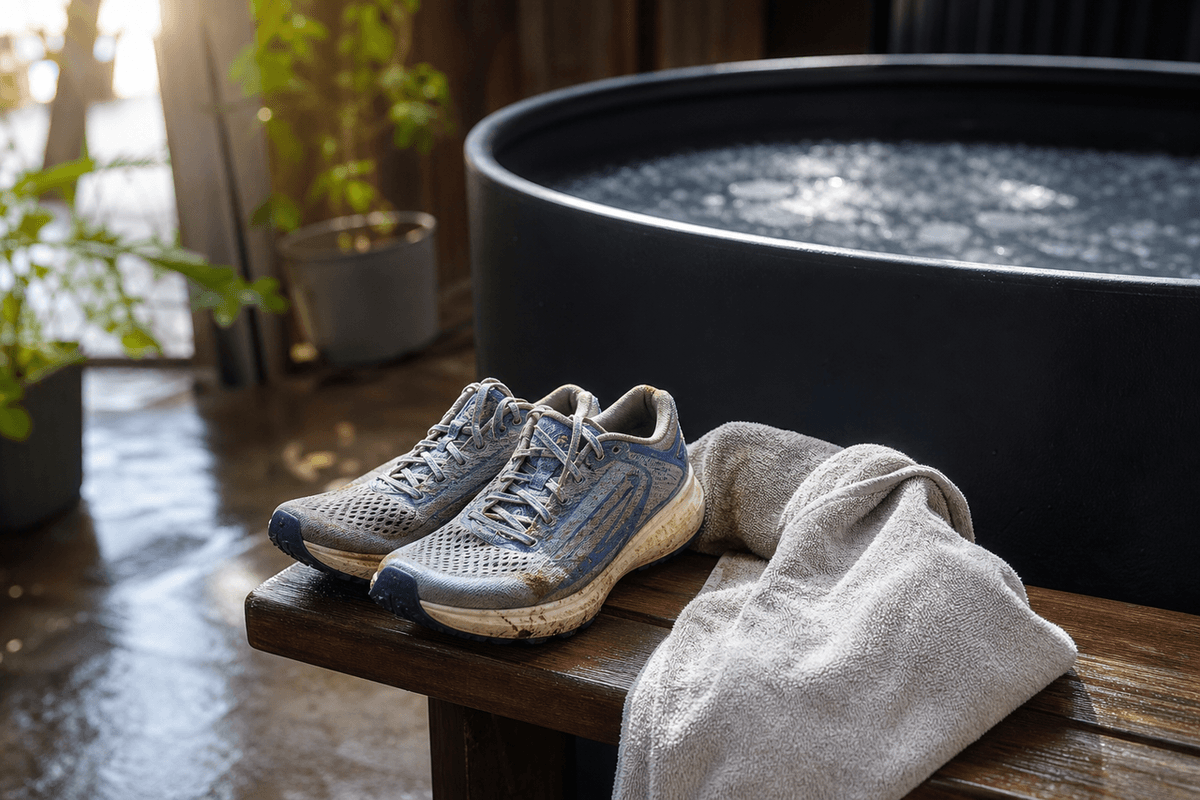
Short answer: Massage produced the largest reductions in soreness and fatigue in the pooled evidence, ahead of cold-water immersion and contrast, with stretching last. Sleep outranks all of it. Use cold when you need to feel fresh fast, but keep it away from the hours after strength work, where it can blunt adaptation.
Most of the recovery advice aimed at runners is sold rather than tested. There is a reasonable body of research comparing methods head to head, and the ranking it produces is not the one the marketing implies.
Massage performs best across the outcomes people actually care about, cold-water immersion works for soreness but carries a timing catch, compression is modest but real, and sleep beats all of it while being the thing everyone skips.
What follows is what the comparative evidence supports, and where the caveats sit. We don’t take placement fees, so nothing here is written to send you anywhere.
What does the comparative evidence say?
Massage came out on top across most outcomes.
The most useful single reference is Dupuy and colleagues in Frontiers in Physiology in 2018, a systematic review with meta-analysis comparing post-exercise recovery techniques against markers of muscle damage, soreness, fatigue, and inflammation.
Massage showed the largest effects for reducing delayed-onset muscle soreness and perceived fatigue, ahead of cold-water immersion, contrast therapy, compression garments, active recovery, and stretching. Cold immersion and contrast also performed reasonably, particularly on soreness.
The honest caveats: these are pooled short-term outcomes, largely soreness and perception rather than next-day performance, and the studies vary a lot in quality and protocol. A ranking of effect sizes on soreness is not a ranking of what makes you a better runner. But it is far better than guessing.
Where does cold-water immersion fit?
Good for soreness, with a timing problem.
Cold immersion reliably reduces soreness in the days after hard training, and if your next session is soon and you need to feel better fast, that is a real and useful effect. Runners in stage races or heavy training blocks have a legitimate case for it.
The catch is adaptation. Routine cold-water immersion immediately after resistance training appears to blunt long-term strength and muscle gains, which matters if your programme includes the strength work that actually keeps runners uninjured. Our guide on whether a cold plunge after a workout blunts gains covers that evidence in detail.
The practical resolution is to time it rather than ban it: use cold when recovering fast is the priority, such as during a race block or between same-week sessions, and keep it away from the hours right after strength work when adaptation is the priority. Our cold plunge safety guide covers who should skip it entirely.
Recovery for runners at a glance
| Method | Evidence for soreness/fatigue | Best used | Watch out for |
|---|---|---|---|
| Sleep | Not in the ranking; foundational | Always | The thing most runners actually skip |
| Massage | Largest pooled effect | After hard sessions, 24 to 48h | Cost and access |
| Cold-water immersion | Good for soreness | Race blocks, back-to-back sessions | Can blunt strength adaptation if used right after lifting |
| Contrast (hot/cold) | Reasonable | General recovery days | Same adaptation caution as cold |
| Compression garments | Modest but real | Travel, after long runs | Oversold relative to effect |
| Active recovery | Modest | Day after a hard effort | Easy means easy |
| Stretching | Smallest effect | Mobility, not recovery | Does not prevent injury |
| Sauna / heat | Not a soreness tool | Heat acclimation, rest days | Hydration |
What about the tools, boots, and guns?
Real but modest, and priced well above their effect.
Compression boots have a genuine short-term effect on perceived soreness and are pleasant to use, but the evidence does not support the claims made at the price point. Massage guns produce a similar short-term soreness effect to other forms of local pressure and are far cheaper than a course of massage, which is the honest case for them.
Our guides on whether compression boots work and foam roller vs massage gun go through the evidence for each.
The general rule for recovery products: the effect tends to be on how sore you feel rather than on how fast tissue actually repairs, and feeling better is worth something without being the same claim. Our guide on whether massage helps recovery or just feels good makes that distinction properly.
Does heat do anything for runners?
Yes, but for adaptation rather than recovery.
A sauna after a run is not a soreness treatment, and it does not appear in recovery rankings for a reason. Its case is different: repeated heat exposure produces heat acclimation, including plasma volume expansion, which can help performance in hot conditions and is a legitimate tool before a summer race.
There is also a general cardiovascular case for regular heat that has nothing to do with running specifically. Our guides on whether a sauna after training makes you fitter and sauna vs exercise cover both angles.
One practical note: you finish a long run already dehydrated, and a sauna on top of that compounds it. Rehydrate first, keep the session shorter than usual, and skip it entirely if you feel lightheaded.
What should a week actually look like?
Sleep first, then match the method to the session.
Prioritise sleep, because it outranks every method in this article and no amount of cold water compensates for six hours. After that, the structure is straightforward.
After a hard interval session or a long run, easy movement the next day and, if soreness is limiting you, cold or massage. After strength work, avoid immediate cold and let the adaptation happen. Around a race, cold is fair game for feeling fresh. On genuine rest days, heat is pleasant and does no harm.
Stretching belongs in your week for mobility reasons, not as a recovery intervention or an injury preventive, both of which it has repeatedly failed to demonstrate. Our guides on stretching before a workout and building a weekly recovery routine cover the structure.
FAQ: recovery for runners
Should I ice after every run? No. Ice is for acute soreness management, not a default. Routine use after strength work works against you, and there is no benefit to icing a normal easy run.
Is a cold shower as good as a plunge? Not equivalent, but not useless either. The temperature and immersion depth are both lower, so the stimulus is smaller. Our cold plunge vs cold shower comparison covers it.
How soon after a run should I get a massage? The recovery studies generally applied it within a couple of hours to a day after. A deep session right before a key workout is a bad idea; leave a day. Our guide on Swedish vs deep tissue vs sports massage covers which to book.
Is ice or heat right for a specific sore spot? Different question with a different answer. Our ice vs heat guide covers it.
The bottom line on recovery for runners
In the pooled comparative evidence, massage produced the largest reductions in soreness and fatigue, with cold immersion and contrast therapy behind it and stretching last. Sleep is not in the ranking because it is the foundation the ranking sits on.
Use cold when feeling fresh quickly is the goal, keep it away from the hours after strength work, treat compression and percussion tools as modest comfort rather than repair, and use heat for acclimation rather than soreness.
Heel pain is the complaint runners ask about most, and our guide to what actually helps plantar fasciitis separates the parts that ease symptoms from the loading that resolves it.
The three injuries runners ask about most get their own guide: shin splints, IT band and Achilles separates them and names the stress-fracture lookalike worth ruling out.