Sauna, steam and asthma: what's safe and what to avoid
A large Finnish cohort found regular sauna users developed fewer respiratory diseases, which sounds like a green light. The practical picture is more specific: dry heat and wet heat affect airways differently, and cold is the one to be careful with.
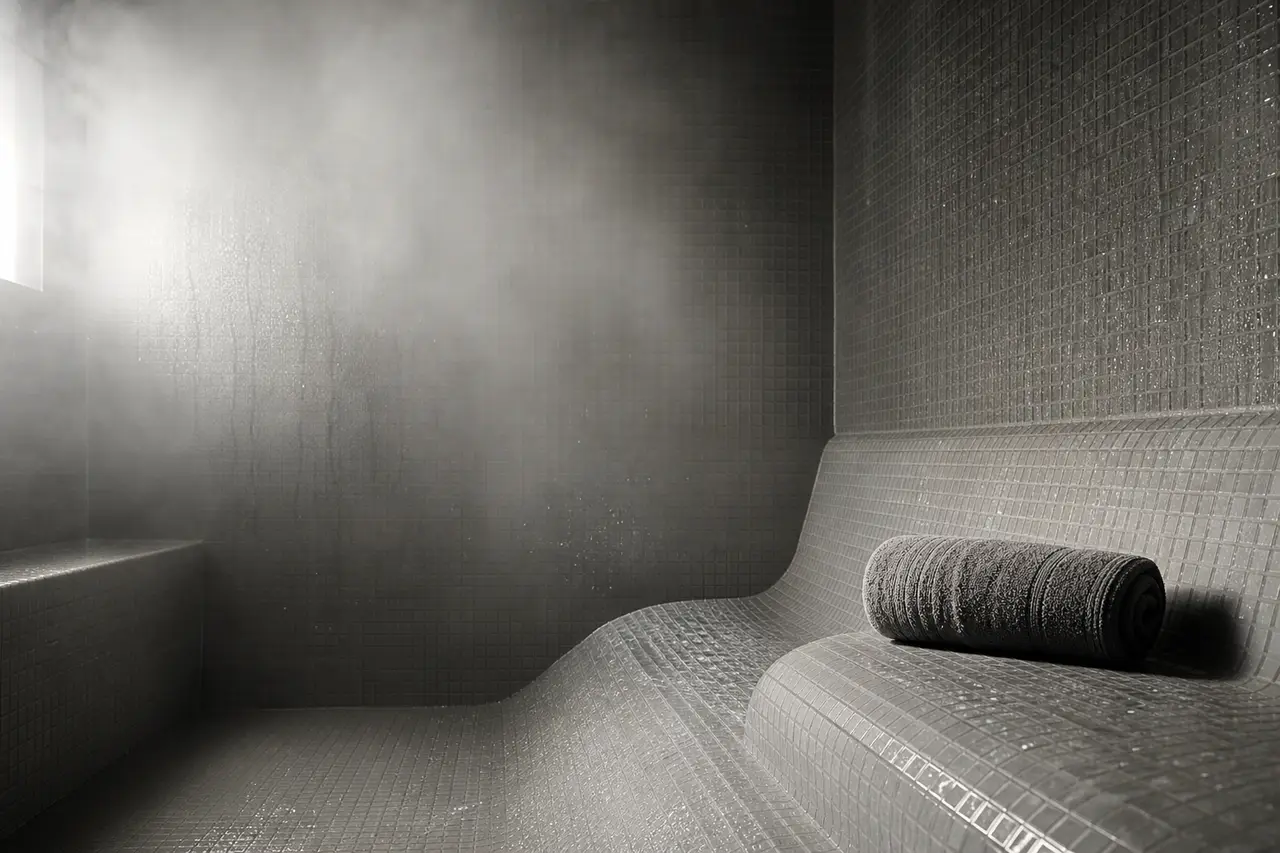
Short answer: Asthma rarely rules out a bathhouse. Warm humid air is usually well tolerated and many people find it eases a tight chest; very dry heat can feel harsh but is not a classic trigger. Cold is the real issue, because cold dry air causes bronchospasm and the plunge gasp pulls it in fast. Bring your reliever inhaler.
Asthma does not rule out saunas, steam rooms, or most of a bathhouse. What it changes is which parts of the experience are comfortable, which are worth approaching carefully, and what you should have in your locker.
The general pattern surprises people: the very hot dry room is usually fine, the humid room is often actively pleasant, and the cold plunge is the element most likely to cause you trouble.
This is orientation, not medical advice. Your asthma plan and your doctor’s guidance override anything here, particularly if your asthma is poorly controlled or you have had a recent flare.
What does the evidence show?
A large cohort found fewer respiratory diseases among frequent users.
The relevant study is Kunutsor, Laukkanen and colleagues in the European Journal of Epidemiology in 2017, a long-term prospective cohort finding that sauna bathing was associated with a reduced risk of respiratory diseases, with more frequent use associated with lower risk.
That is a genuine and interesting association, from the same Finnish cohort that produced the cardiovascular findings.
It is also observational, which means it cannot tell you that a sauna will help your asthma. People who use a sauna frequently differ from people who do not in ways that are hard to fully adjust for, and the outcome was respiratory disease incidence across a population rather than symptom control in people who already have asthma. Read it as reassuring rather than as a treatment.
Which is better, dry heat or steam?
Both are usually fine; steam is often more comfortable.
Warm humid air is generally well tolerated by people with asthma and many find it eases a tight chest or loosens mucus, in the same way a hot shower does. Steam rooms and hammams sit at the comfortable end for most people.
Very dry, very hot air can feel harsh on the airways for some people, though it is not a classic trigger the way cold dry air is. If a hot sauna makes your chest feel tight, use a lower bench and a shorter round rather than deciding heat is off-limits.
The variable that catches people out is not temperature but additives. Eucalyptus, menthol, and strong essential oils are common in steam rooms and in sauna ceremonies, and strong scents are a well-recognised asthma trigger for a subset of people. Our guide on what Aufguss involves covers the scented-steam format specifically, and it is worth asking what oil is being used before a ceremony.
Sauna, steam and asthma at a glance
| Element | With asthma |
|---|---|
| Steam room, plain | Usually well tolerated, often comfortable |
| Traditional dry sauna | Usually fine; lower bench if it feels harsh |
| Infrared sauna | Milder, generally easy |
| Eucalyptus or menthol steam | Common trigger for some; ask first |
| Aufguss with strong oils | Approach carefully or skip |
| Cold plunge | The main caution; cold is a classic trigger |
| Cold outdoor air after heat | Same caution, often overlooked |
| Breath-hold breathwork | Not in or near water, ever |
| Reliever inhaler | In the locker, not the car |
Why is cold the bigger issue?
Cold dry air is a classic bronchospasm trigger.
Breathing cold dry air narrows the airways in many people with asthma, which is why exercise-induced symptoms are worse in winter. A cold plunge adds a second element: the cold shock response produces an involuntary gasp and rapid breathing, which pulls cold air in fast and deep.
That combination is the one genuinely predictable problem in a bathhouse for someone with asthma. It does not mean you cannot plunge, and plenty of people with well-controlled asthma do so without issue.
It means going in slowly rather than plunging, controlling your breathing, keeping it short, and stopping at the first sign of chest tightness or wheeze. Our guides on how to breathe during a cold plunge and cold plunge safety cover the technique and the exclusions.
Stepping outside into cold air straight after a sauna deserves the same care, and it is the version people forget because it does not feel like a plunge.
What about salt rooms and breathwork?
One is oversold, the other needs a hard rule.
Halotherapy is marketed heavily to people with asthma, and the evidence is thin and low-quality. It is unlikely to harm you and it is not a treatment, and it should never replace your prescribed inhalers. Our halotherapy explainer covers what is and is not supported.
Breathwork needs a firmer line. Techniques built on hyperventilation followed by breath-holds can provoke symptoms in some people with asthma, and the hard rule applies to everyone regardless: never do them in or near water, because of shallow water blackout. Our guides on whether breathwork is safe and the Wim Hof Method cover both points.
Slow paced breathing, by contrast, is gentle and widely used. Buteyko and similar approaches are sometimes taught for asthma; treat them as adjuncts to your medication, never replacements, and discuss with your doctor. Our pranayama explainer covers the yogic techniques and their cautions.
How should you plan a session?
Inhaler close, start mild, go with someone.
Keep your reliever inhaler in your locker rather than in the car, and know how fast you can reach it from wherever you will be. In a large bathhouse that is worth actually checking on arrival.
Start with the mildest element and short exposures on a first visit, so you learn how your airways respond before committing to a long round or a plunge. Tell whoever you are with, so someone knows what is happening if you need to step out.
Skip the visit entirely if you are having a flare, have a chest infection, or your peak flow is down. Our guide on saunas when you are sick covers why chest involvement is the clear stop signal, and what to do if you feel faint covers the other reason to leave a hot room promptly.
What should you tell the venue?
If your diagnosis is COPD rather than asthma, our guide to wellness with COPD covers the different questions that condition raises, from altitude to the breathwork class.
Enough to be found if you step out.
You do not owe anyone a medical history, but mentioning at the desk that you have asthma and may need to leave a room quickly is sensible, especially at venues with quiet rooms where you might be alone.
Ask two specific questions: whether the steam room uses eucalyptus or scented additives, and whether any scheduled sauna ceremonies use strong oils. Both are easy to answer and both are the most likely triggers on site.
Our guides on choosing a studio and finding a good one in a new city cover the questions worth asking generally, and you can browse day experiences by city to see which venues offer which formats.
FAQ: sauna, steam and asthma
Can a sauna help my asthma? There is a population-level association with fewer respiratory diseases, but no evidence it treats existing asthma. Enjoy it for what it is and keep taking your medication.
Is steam better than dry heat for a tight chest? Many people find warm humid air more comfortable, in the same way a hot shower helps. That is symptomatic comfort, not treatment.
Should I avoid cold plunges completely? Not necessarily. Enter slowly, keep it short, control your breathing, and stop at any chest tightness. If cold reliably triggers you, skip it; the sauna is the part with the evidence anyway.
What about a child with asthma? Same principles, shorter and cooler, and discuss with their doctor first. Our guide on sauna and cold plunge with kids and teens covers the general rules.
The bottom line on sauna, steam and asthma
Warm air, wet or dry, is usually well tolerated with asthma, and a large cohort found regular sauna users developed fewer respiratory diseases, which is reassuring without being a treatment claim.
Cold is the element to plan around, because cold dry air plus the gasp reflex is a predictable trigger. Keep your reliever inhaler in the locker, ask whether the steam is scented, never do breath-hold work in water, and stay home if you are flaring.
If you are deciding which room to spend your time in, our sauna vs steam room comparison covers the temperature, humidity and session-length differences that decide how each one feels to breathe in.