Booking a couples massage: what to expect before you go
Two tables in one room sounds simple, and most of the disappointment comes from things nobody tells you at booking: the two of you are getting different therapists, different pressure, and often a shorter session than the price implies.
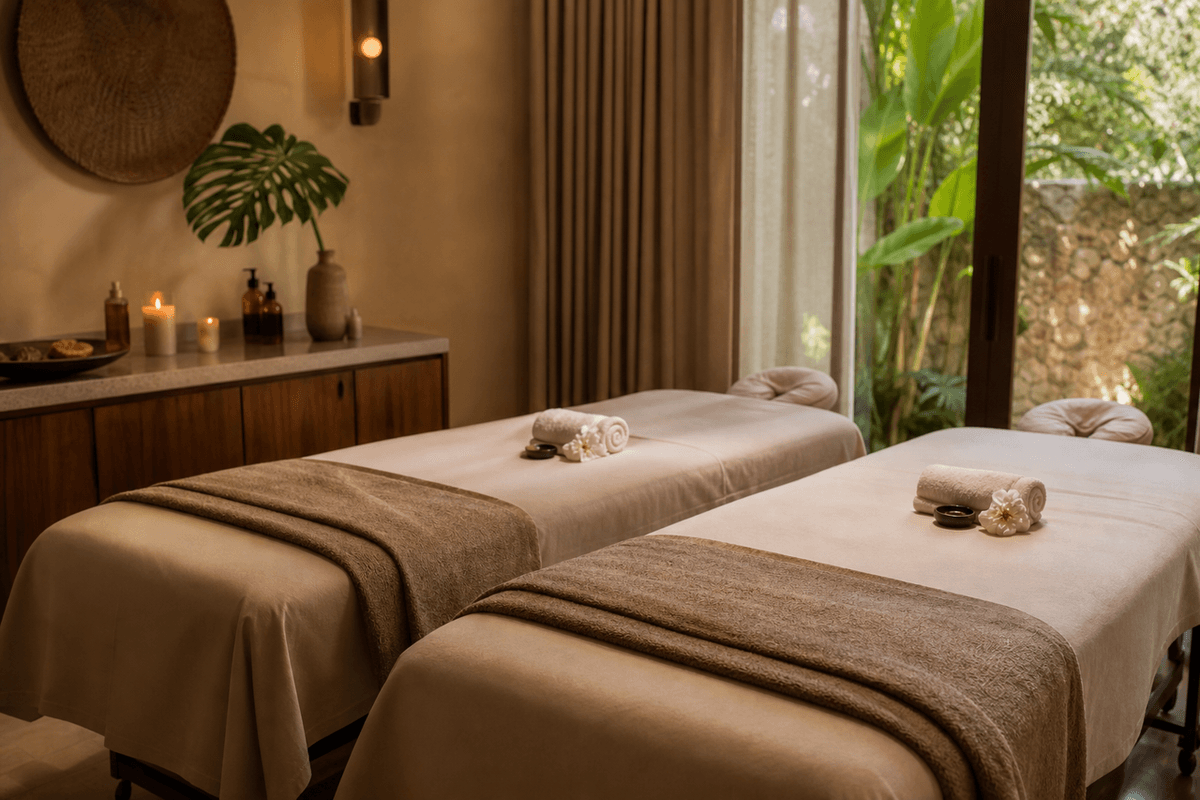
Short answer: Two therapists, one room, two separate massages at the same time: you are buying the shared setting, not a shared treatment. You can ask for different styles and pressure. Ask for actual table time, because a 60-minute booking is often closer to 50 minutes of work, and check which add-ons appear at checkout.
A couples massage is two people receiving separate massages from two therapists at the same time, in the same room. That is the whole format, and it is worth stating plainly because most of the confusion starts there.
You are not sharing a therapist, you are not being worked on in sync, and the two treatments do not have to be the same. What you are buying is the shared setting, not a shared treatment.
The disappointments people report are almost all logistical, and almost all avoidable with three questions at booking. We don’t take placement fees, so nothing here points you anywhere.
What actually happens in a couples massage?
Two therapists, one room, a shared start and finish.
You typically arrive together, fill in intake forms separately, and are shown to a room with two tables. The therapists step out while you undress to your comfort level and get under the sheet, then return and begin at the same time.
You will be draped throughout, with only the area being worked on uncovered, exactly as in a solo massage. Both therapists usually finish around the same time and leave you to get dressed together.
What varies is the room. Some venues use a purpose-built suite with a fireplace, a tub, or a private lounge; others simply put two tables in a standard room. That difference is usually not obvious from the booking page and is worth asking about, because it is often what you are paying the premium for.
What should you ask before booking?
Three questions that prevent most complaints.
How long is the actual hands-on time? A “60-minute couples massage” sometimes means 60 minutes in the room including intake, undressing, and dressing, which lands closer to 50 minutes of work. Ask for the table time.
Can we choose different styles and pressure? You should be able to. One of you can have deep tissue while the other has a light Swedish. If a venue insists both treatments must be identical, that is a scheduling convenience, not a rule.
What is included, and what is extra? Aromatherapy, hot stones, scalp work, room upgrades, and a glass of something at the end are frequently add-ons that appear at checkout. Our guides on what a session costs and tipping at a wellness studio cover the money side.
Couples massage expectations at a glance
| Expectation | Reality |
|---|---|
| One therapist for both | No, two therapists working simultaneously |
| Identical treatments | Not required; ask for different pressure and styles |
| 60 minutes of massage | Often 50 minutes hands-on; ask for table time |
| A special suite | Sometimes just two tables in a normal room; ask |
| You can chat throughout | You can, though most people go quiet after five minutes |
| Price is per couple | Usually per person; check |
| Tipping handled together | Tip each therapist; ask how they prefer it |
Is it a good first massage?
Often yes, and with one caveat.
For someone nervous about a first massage, having their partner in the room removes most of the anxiety, and it is a genuinely good reason to choose this format. Our guide to what to expect at your first massage covers the basics that still apply.
The caveat is that the shared setting makes people less likely to speak up. If the pressure is wrong, if you are cold, or if something hurts, you should say so, and people stay quiet because their partner is right there and the room is silent.
Agree beforehand that both of you will speak up if something is not right. A good therapist would far rather adjust than have you endure it politely, and this is the single most common reason people leave a massage disappointed. Our comparison of Swedish, deep tissue, and sports massage covers choosing pressure in advance.
What about etiquette?
Quieter than people expect, and that is fine.
Most couples start out talking and stop within a few minutes, because it turns out to be hard to hold a conversation face-down through a face cradle while someone works on your back. That is normal and not a sign anyone is doing it wrong.
Phones stay away, including for photos of the room. Undress to your comfort level; you are draped throughout and nobody will comment either way.
If one of you finishes early or wants to stop, that is fine and the therapists will handle it without drama. And do not treat it as a competition to take more pressure than your partner, which is a real and slightly absurd pattern that ends with someone sore for two days. Our guide on why you feel sore afterwards covers what that soreness actually is.
When should you book separate sessions instead?
When one of you actually needs treatment.
If one of you has a specific problem, a recurring injury, chronic neck pain, headaches, or a condition needing careful handling, a couples session is the wrong container for it. The room is set up for a pleasant shared hour, not for focused clinical work, and the pace is fixed by both tables.
Book that person a dedicated session with a therapist chosen for the problem. Our guides on massage for headaches and migraines, desk-related neck and shoulder tension, and checking a practitioner’s credentials cover that route.
The same applies to pregnancy and to anyone in or recently out of medical treatment, where a specifically trained therapist matters more than the shared room. Our guides on pregnancy safety, postpartum wellness, and massage during cancer treatment cover those cases.
Is it worth it as a gift?
Yes, with the usual gift caveats.
It is one of the easier wellness gifts because the format is social and low-commitment, and it does not require the recipient to know anything in advance.
Check expiry terms before buying, since spa gift certificates frequently carry them and the rules vary by state. Book the slot rather than handing over an open voucher if you can, because unbooked vouchers are the ones that expire. Our guide on gifting a wellness experience without getting it wrong covers the pitfalls.
And confirm the recipient actually wants a massage. It is a more intimate gift than a class pass, and not everyone is comfortable with it.
FAQ: couples massage
Do we have to undress completely? No. Undress to your comfort level; you stay draped and only the area being worked is uncovered.
Can we get different treatments? Usually yes. Ask at booking so they schedule therapists accordingly.
Is a couples massage more expensive than two separate massages? Often slightly, because of the room. Compare the per-person price rather than the package headline.
Can friends or family book a couples massage? Yes. Despite the name, plenty of venues take friends, siblings, or a parent and adult child. Say so at booking so nobody assumes otherwise.
The bottom line on couples massage
A couples massage is two separate treatments happening simultaneously in one room, and you can and should request different pressure and styles. What you are paying extra for is the room, so find out whether that room is a suite or just two tables.
Ask for actual hands-on time, confirm what is included, and agree in advance that both of you will speak up about pressure. If one of you has a real problem to treat, book that person a dedicated session instead.