How to read a spa menu: what the words actually mean
Spa menus are written to make a 60-minute massage sound like six different treatments at six different prices. Once you know which words describe a technique and which describe a marketing tier, the list gets much shorter.
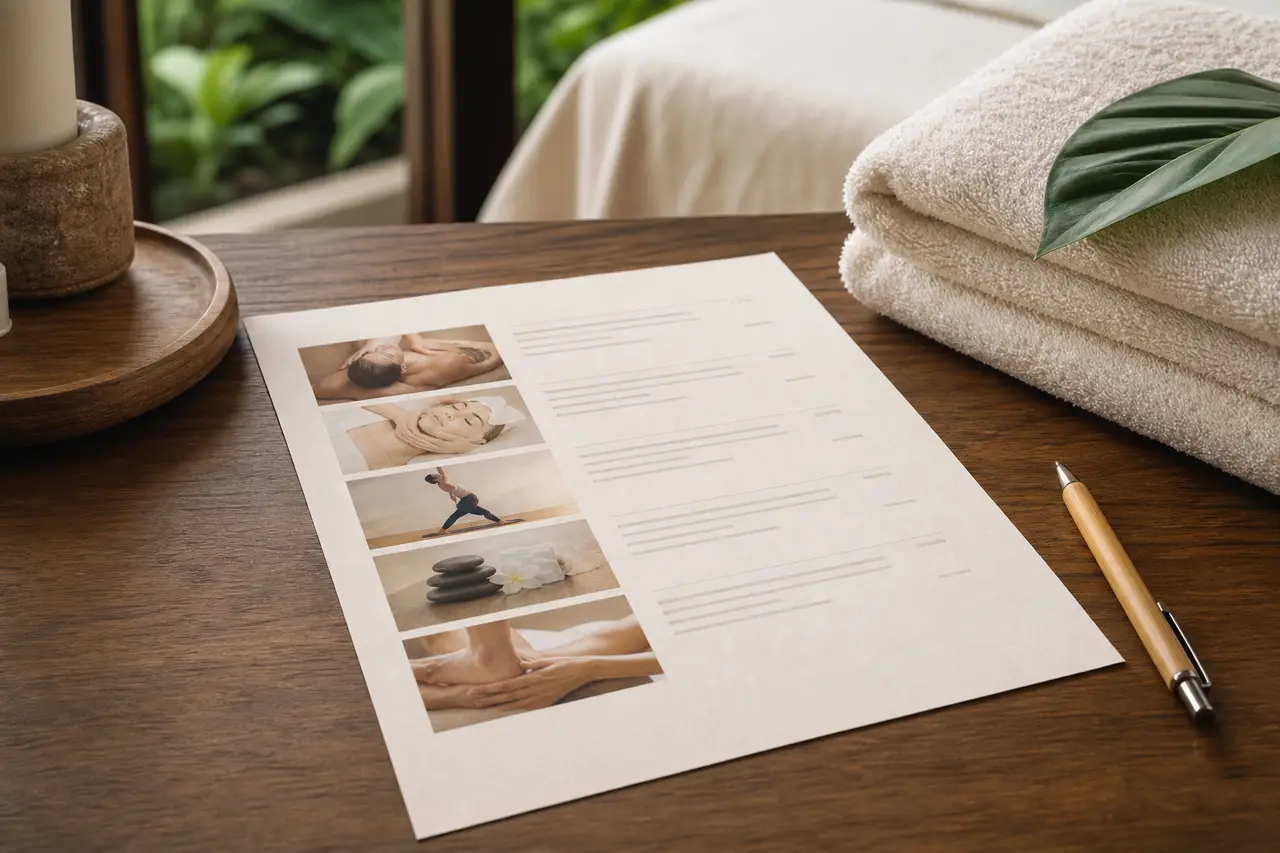
Short answer: Swedish, deep tissue, lymphatic drainage, shiatsu, Thai, myofascial release, hot stone, cupping and gua sha name real techniques. Signature, bespoke, ritual, journey, holistic, luxury and platinum name price tiers and tell you nothing about what will actually happen. Most add-ons are margin; hot stones are the usual exception.
A spa menu is a sales document. It is written to create the impression of many distinct treatments, most of which are the same hands-on hour with different oil, different framing, and a different price.
That is not fraud, and it does make the list very hard to read. Three treatments that differ by $80 may differ by an aromatherapy blend and a name.
Once you can tell which words describe a technique, which describe a tier, and which describe a promised outcome, choosing gets straightforward. Here is the decoder. We don’t take placement fees, so nothing here points you anywhere.
Words that describe a real technique
These tell you what will actually happen.
Swedish, relaxation, classic: flowing, moderate-pressure full-body work. The default, and the right choice for stress and general tension.
Deep tissue, sports, therapeutic: firmer, slower, more focused on specific areas. Appropriate for dense tight areas in a robust body; a poor default. Our comparison of Swedish, deep tissue and sports massage covers choosing.
Lymphatic drainage: very light rhythmic work with a specific technique and specific clinical uses. Our guide on lymphatic drainage massage covers what is supported.
Shiatsu, Thai: pressure-point and assisted-stretch work, usually clothed, on a mat. Genuinely different from table massage. Our guides on shiatsu and Thai massage cover both.
Myofascial release: slow sustained pressure without oil. Our guide on myofascial release covers what changes.
Hot stone, cupping, gua sha: real distinct modalities with their own guides on this site.
Words that describe a price tier
These tell you nothing about the treatment.
Signature means the house version, priced above standard. Sometimes it includes a genuine extra; often it is the same massage with a scalp finish.
Bespoke, customised, tailored means the therapist will ask what you want, which every competent therapist does anyway.
Ritual, journey, experience means a sequence of two or three services bundled at a premium, usually a scrub, a wrap, and a massage. Sometimes good value, often not; price the components separately.
Holistic, restorative, rebalancing, grounding are mood words with no technical content.
Luxury, royal, ultimate, platinum are the top of the pricing ladder. Our guide on what a massage costs covers what the tiers actually buy, which above the clinical level is mostly setting.
Spa menu phrases at a glance
| Menu phrase | What it usually means |
|---|---|
| Signature massage | House standard, priced up |
| Bespoke / customised | The therapist will ask questions, as they should anyway |
| Ritual / journey | Two or three services bundled at a premium |
| Detox / cleanse / purifying | Marketing; nothing is being removed |
| Lymphatic sculpting / debloat | Aesthetic framing of a light-pressure technique |
| Aromatherapy upgrade | Scented oil, usually $15 to $30 |
| Hot stone add-on | A real technique, genuinely different |
| CBD oil upgrade | Little evidence of topical benefit at these amounts |
| Scalp / foot / hand “enhancement” | Ten minutes reallocated, not added |
| Access / facility fee | Charged on top; ask before booking |
The add-ons: which are worth it?
One usually is; most are margin.
Hot stones are a genuinely different sensation and a legitimate upgrade if you like heat. Our guide on hot stone massage covers it.
Aromatherapy is pleasant and the therapeutic claims attached to it are thin. Buy it because you like the smell. Our aromatherapy explainer covers the evidence.
CBD oil upgrades carry little evidence for meaningful topical effect at the concentrations used.
Scalp, foot, or hand enhancements are frequently not additional time at all. Ask the crucial question: does this extend the session or come out of the existing hour? Very often it is reallocated, which means you are paying extra for less back work.
Detox wraps, body polishes sold for inches lost, and anything promising measurements before and after are the highest-margin and least supported. Our guides on body wraps and whether sweating detoxes your body cover why.
The five questions that decode any menu
Ask these and the list resolves itself.
“Is the stated time hands-on, or does it include changing?” Frequently a 60-minute booking is 50 minutes of work.
“What is the actual difference between these two?” If the answer is about the oil or the name, you have your answer.
“Does this add-on extend the session or come out of it?” The single most useful question on this page.
“What is the total including gratuity and any facility fee?” Resort spas often add 18 to 20 percent automatically. Our guide on tipping at a wellness studio or spa covers the conventions.
“Can I have this at moderate pressure?” You can order a deep tissue at moderate pressure or a Swedish firmer. The name is a starting point, not a contract.
What should you actually book?
Describe the problem, not the product.
The most reliable approach is to ignore the menu names and tell them what is going on: “my neck and shoulders are tight from desk work, I want moderate pressure, an hour.” A competent therapist builds the session from that and it will beat anything you pick off a list.
If you have a specific complaint, that changes the answer more than the menu does. Our guide on which bodywork for which complaint sorts by symptom, and massage vs physical therapy covers when a class of treatment is the wrong route entirely.
And say anything relevant at booking rather than on the table: pregnancy, recent surgery, medication, skin conditions, or a condition needing adjusted pressure. Our guides on pregnancy safety, wellness after surgery, and massage during cancer treatment cover the cases that change what is appropriate.
What about the heat facilities?
Ask what is included, because it is often the better value.
Many day spas include sauna, steam room, and pool access with any treatment, and some charge a separate facility fee whether or not you use them. Ask which applies.
If the facilities are included and good, the cheapest treatment on the menu plus three hours of heat is frequently better value than an expensive ritual. Our guides on planning a wellness day and private vs communal sauna cover making use of them.
Also ask what the sauna actually is, since “sauna” covers rooms from 45°C to 100°C. Our guide on types of sauna explained covers the difference.
FAQ: spa menus
Is the signature massage worth the upgrade? Ask what is in it. If the answer is a scalp finish and a nicer oil, the standard massage plus a good therapist is better value.
Why are there six massage names at the same price? Menu length is a merchandising decision. Several will be the same hour with different framing.
Should I book the longest option? 90 minutes is often better value per minute of actual work than 60, since the changing time is fixed. It is the one upsell that frequently is worth it.
What if I book the wrong thing? Say so at the start. Therapists routinely adjust, and the treatment name is not binding.
The bottom line on reading a spa menu
Signature, bespoke, ritual, and holistic are pricing and mood language. Swedish, deep tissue, shiatsu, Thai, lymphatic drainage, and hot stone describe actual techniques. Learn which column a word sits in and half the menu disappears.
Ask whether the time is hands-on, whether add-ons extend the session or come out of it, and what the total is including gratuity and facility fees. Then ignore the names and describe your actual problem, which gets you a better session than anything on the list.
And for the single most mysterious line on many menus, our explainer on what a Vichy shower is has the answer.