Plantar fasciitis: what actually helps
Stretching, gradual loading and patience do most of the work. Massage and rolling the sole change how the foot feels, which is genuinely useful and is not the same thing as fixing it.
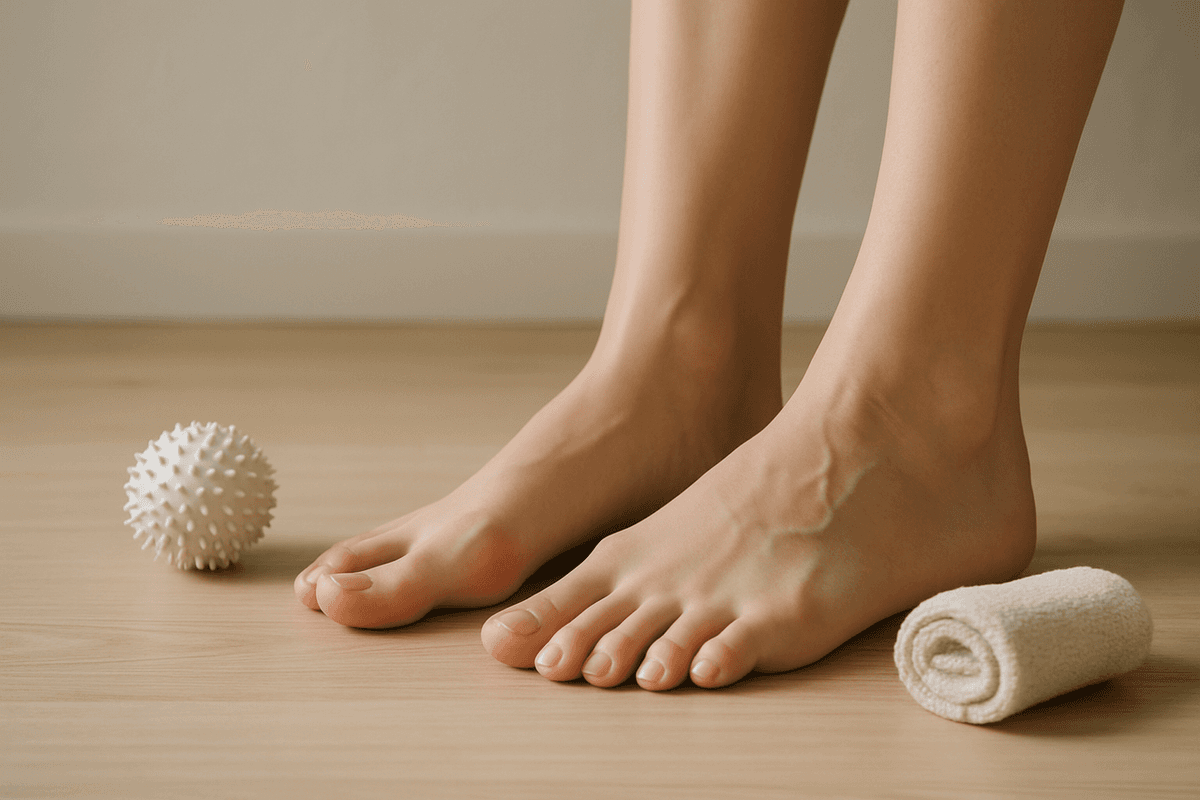
The honest verdict first: what has real support is stretching the calf and the sole, gradually loading the tissue rather than resting it completely, sorting out your footwear, and giving it months rather than weeks. That last part is the one nobody wants to hear and the most important thing on the page. Most cases do improve, slowly.
Everything a wellness studio can offer sits alongside that, not instead of it. Massage on the calf and foot, rolling the sole on a ball, heat, cold: these change how the foot feels, sometimes considerably. They are not what resolves the problem.
This is general information, not medical advice. Plantar fasciitis is a clinical complaint that gets confused with several other causes of heel pain, and the version of it belonging to a doctor is described further down.
The morning-first-steps signature
The pattern is more recognizable than the pain.
The classic presentation is sharp pain under the heel or along the arch on the first few steps out of bed, easing after a few minutes of walking, then returning after you have been sitting a while. People describe it as a bruise, a stone, or a tearing feeling at the front edge of the heel.
That start-up pattern is the signature. It reflects irritation of the thick band of tissue running along the sole, which stiffens while you are off your feet and then gets loaded abruptly.
Pain that does not follow that pattern deserves a second look rather than a self-diagnosis. Our decision guide to which bodywork suits which complaint covers getting assessed before booking anything.
What genuinely has support
Stretching, loading, footwear, and time.
Calf stretching and plantar-specific stretching are the most consistently recommended starting point, and the cheapest. A tight calf changes how much strain the sole takes with every step, so the two are usually treated together.
Progressive loading is the part people skip. Complete rest feels better in the short term and leaves the tissue less able to tolerate walking when you go back to it. Building tolerance gradually, under guidance if you are unsure how, is what changes the trajectory rather than the day.
Footwear matters more than its glamour suggests. Supportive shoes, fewer long barefoot spells on hard floors during a flare, and cushioning if you stand all day are low-risk. Night splints and orthotics exist, some people find them helpful, and whether either suits you is a clinician’s call rather than ours.
Time is the uncomfortable one. Judging any approach on a fortnight is not a fair test, and anyone selling a fix measured in days is telling you something the evidence does not support.
Where massage and foot work actually fit
They help how it feels, and that is worth having.
Soft tissue work on the calf and the sole is a reasonable adjunct. Practitioners commonly work the calf, the Achilles region and the plantar surface, and people frequently report the foot feeling looser afterward. That is a real benefit if it lets you walk more comfortably and keep up the stretching.
Rolling the sole on a ball or a frozen bottle is the home version of the same idea and is widely used for symptom relief. It is cheap, easy to overdo, and the sensible dose is gentle and brief rather than grinding into the sorest spot.
Here is the distinction that matters. Massage and rolling act on symptoms. Loading acts on capacity. Do only the first and you get a good afternoon and the same morning. Our pieces on what massage does for recovery and massage versus physical therapy cover that split.
Heat and cold are comfort tools with no structural effect here. Use whichever you prefer, and read our ice versus heat guide rather than overthinking it.
Plantar fasciitis approaches at a glance
| Approach | What it does | Verdict |
|---|---|---|
| Calf and plantar stretching | Reduces strain through the sole | Best-supported starting point |
| Progressive loading | Builds tolerance in the tissue | The part that changes the trajectory |
| Footwear and cushioning | Lowers daily load | Sensible, low-risk |
| Time | Most cases settle over months | Unwelcome but real |
| Massage on calf and foot | Eases symptoms and stiffness | Adjunct, not the fix |
| Rolling on a ball or bottle | Short-term relief | Fine, easy to overdo |
| Heat or cold | Comfort only | Personal preference |
| Complete rest alone | Feels better, builds nothing | Counterproductive |
| Cure-in-a-week gadgets | Sell hope | Not supported |
What is oversold
Anything promising to fix it fast, and anything promising to break something up.
Gadgets marketed as a cure are the largest category of nonsense here, because the condition is common, painful and slow enough that people will try anything. Our guide to spotting a nonsense wellness claim is the filter, and a cure claim for a months-long condition fails it immediately.
The language about “breaking up” fascia or scar tissue is not a description of what hands or a tool can do to connective tissue, whatever the relief feels like. Our myofascial release explainer covers why that effect is more plausibly neurological than mechanical.
Detox framings and anti-inflammatory promises attached to foot treatments belong in the same bin, and our piece on what actually reduces inflammation explains why. Reflexology can feel lovely on tired feet and is not a treatment for this. Passive treatment alone is the subtler version of the same mistake: a course of appointments with nothing changing about how you load the foot.
When this is not a wellness question
Some of this needs a clinician, not a booking.
Get it assessed rather than self-managed if the pain began after a specific injury or a fall, if there is numbness, tingling or burning, if the heel pain does not follow the classic morning start-up pattern, or if it is worsening despite months of sensible self-care. Add swelling, redness, warmth, fever, or pain in both heels alongside other joint symptoms.
The same applies if you have diabetes or any neuropathy. Foot pain there should be assessed by a clinician rather than worked on by a therapist or managed at home, and our guide to wellness with diabetes explains the caution.
If you do book bodywork alongside proper care, say what you are dealing with at the start, and check the practitioner is qualified using our credential-checking guide. We only recommend what we would send a friend to, and here that includes sending them to a clinician first.
FAQ
How long does plantar fasciitis usually take to improve? Months rather than weeks, for most people. That expectation stops you abandoning a reasonable approach at week three and buying something with a bolder promise.
Does massage cure plantar fasciitis? No. It can ease symptoms in the calf and foot, and easier symptoms make it likelier you keep up the stretching and loading that change things. Support rather than treatment.
Is rolling my foot on a frozen bottle a good idea? It is a common, low-cost way to get symptom relief, and the sensible version is gentle and short rather than aggressive. If it leaves the foot more sore, ease off.
Can I keep running with it? A question for a clinician who can see the foot, not for us. Our recovery guide for runners covers load management, and a massage gun is not a workaround, as our foam roller versus massage gun comparison explains.
The bottom line on plantar fasciitis
What works is unglamorous: stretch the calf and the sole, load the tissue gradually instead of resting it entirely, fix your footwear, and expect months rather than weeks. Most cases do settle.
Massage, rolling the sole, heat and cold belong in the supporting cast. They make the foot feel better, which is not the same as making it better. Anything promising a fast cure or claiming to break fascia up is selling to your impatience.
Take heel pain to a clinician if it followed an injury, comes with numbness, does not match the morning start-up pattern, is worsening despite sensible self-care, or if you have diabetes or neuropathy.
The same load-management logic runs through the other running complaints: shin splints, IT band and Achilles applies it to each.