Sauna or cold plunge first? The right order for contrast therapy
Everyone has an opinion and most of them are confident. The honest answer depends on one thing: what you actually want the session to do for you.
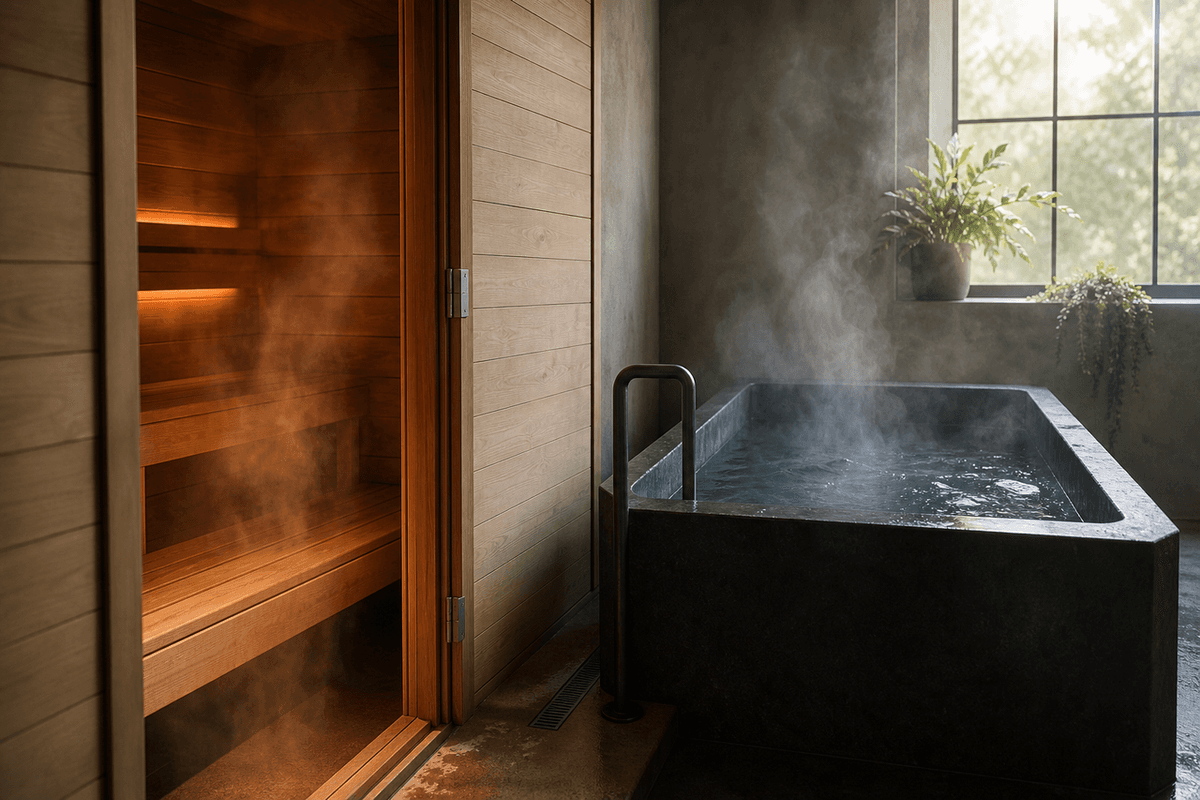
Short answer: Sauna first, then cold, cycled two or three times, is the sensible default: heat relaxes you and makes the cold tolerable. A round is roughly 10 to 15 minutes hot and 1 to 3 minutes cold. End on cold to feel alert, end on heat to wind down for sleep.
For most people, start with the sauna, then take the cold plunge, and cycle two or three times. Heat first opens you up, relaxes the muscles, and makes the cold far more tolerable, and the contrast is the point.
But the “right” order genuinely depends on your goal: end on cold for alertness and a mood lift, end on heat if your only aim is relaxation and sleep.
There is no universal rule beyond one that actually matters: warm up before you ever get into very cold water, and never plunge cold when you are already chilled.
Why do most people start with heat?
Because it works with your body instead of against it. The sauna raises your core and skin temperature, relaxes muscle tension, and dilates blood vessels. Stepping into cold from that warmed state produces the sharp, invigorating contrast that people chase, and, just as important, the heat makes the cold psychologically bearable.
Jumping into a cold plunge from a normal or already-cool state is simply harder and, for beginners, more likely to trigger the involuntary gasp of cold shock. Heat first is the gentler on-ramp.
When should you start with cold instead?
A few honest cases. If your session is short and your main goal is a fast alertness and mood boost, a brief cold plunge up front delivers the catecholamine and adrenaline spike immediately. Some athletes also plunge before heat to reduce acute swelling first.
And some people simply prefer to “get it over with.” None of these are wrong; they are just optimizing for something other than the classic warm-into-cold contrast. If you cold-plunge first, still warm up briefly beforehand with light movement so you are not entering cold water genuinely chilled.
Does the order you finish on matter?
This is where the goal actually decides it. Ending on cold leaves you alert, energized, and mood-lifted, the sympathetic nervous system is activated, so this suits a morning session or a pre-work reset.
Ending on heat leaves you relaxed and parasympathetic-dominant, which suits an evening wind-down; finishing warm and then cooling gently is better for sleep than ending on a jolt of cold.
So the real question is not just “which first” but “which last,” and that depends on whether you want to be switched on or switched off afterward.
How many rounds, and how long?
A typical contrast session is two to three full cycles. A reasonable round is 10 to 15 minutes in the sauna followed by 1 to 3 minutes in the cold plunge, then a short rest.
Beginners should shorten both ends; our first cold plunge and ice bath guide covers safe cold temperatures and timing, and our first sauna session guide covers the heat side. Leave when your body says done, not when a protocol says so. More rounds and more extreme temperatures are not automatically better.
What if you can only do one?
Everything above assumes you are doing both. Plenty of people are not, because of time, budget, access or nerve, and the honest pick then depends on what you want to feel rather than which one sounds tougher.
Choose the sauna for relaxation, sleep and general health. Heat downshifts the nervous system, eases muscle tension and, timed in the evening, helps you fall asleep through the cool-down that follows. It also carries the deepest evidence base in this field, with large observational studies linking frequent sauna use to better cardiovascular outcomes, more than anything comparable that exists for cold water; our heart guide covers the strengths and the limits of that data.
Choose the cold plunge for a fast, reliable jolt of alertness and mood. The best-supported effect of cold water is the immediate one: a surge of focus and elevated mood driven partly by a large norepinephrine release, which leaves many people switched on for hours after a morning plunge. There is a real psychological payoff too, in doing something uncomfortable and staying calm through it. Be sceptical of the bigger claims, though, particularly around lasting metabolic or fat-loss effects; our cold plunge benefits guide is honest about what holds up.
If you are choosing on which habit will survive, take the sauna, by a wide margin. A cold plunge asks you to override a strong instinct every single time, and plenty of enthusiastic beginners quietly stop after a few weeks. A sauna asks you to sit somewhere warm. The one you keep doing beats the one you admire and avoid, and our habit guide covers making either stick. Cost and access tilt the same way: saunas are more common and often cheaper per session, which our session cost guide breaks down.
The safety profiles differ too, and they point in different directions. Heat lowers blood pressure and loads the cardiovascular system gradually, which is usually manageable but matters for some heart conditions. Cold produces a sharp shock response, a spike in heart rate and blood pressure in the first seconds, which is the riskier moment for people with cardiac issues; our cold plunge safety guide covers who should be cautious.
Treat this as sequencing rather than a permanent verdict. Start with whichever fits your goal and your temperament, get consistent, then add the other and come back to the order question above. One thing done regularly beats two done occasionally. To see what is bookable near you, use our city wellness maps.
What actually matters more than the order?
Consistency and safety, not sequence. The health signals from heat and cold, covered honestly in our sauna benefits explainer and the contrast therapy guide, come from doing this regularly, not from nailing a perfect order once.
And two safety rules override any protocol: never combine cold plunge with alcohol, and warm up before very cold water so you avoid cold shock. One honest caveat for athletes: if building muscle is a goal, heavy cold immersion right after strength training can blunt gains, so save the long cold plunge for rest days.
The bottom line on sauna or cold plunge first
Sauna first, then cold, cycled two or three times, is the sensible default for most people. Adjust by goal: end on cold to feel switched on, end on heat to wind down. The order is worth getting right, but it is a refinement, not the foundation. The foundation is doing it consistently and safely.